
So you’re thinking about a low taper fade. Good call.
It’s the one haircut that works no matter what your hair does. Curly, straight, thick, thin, doesn’t matter. The fade adjusts, not the other way around.
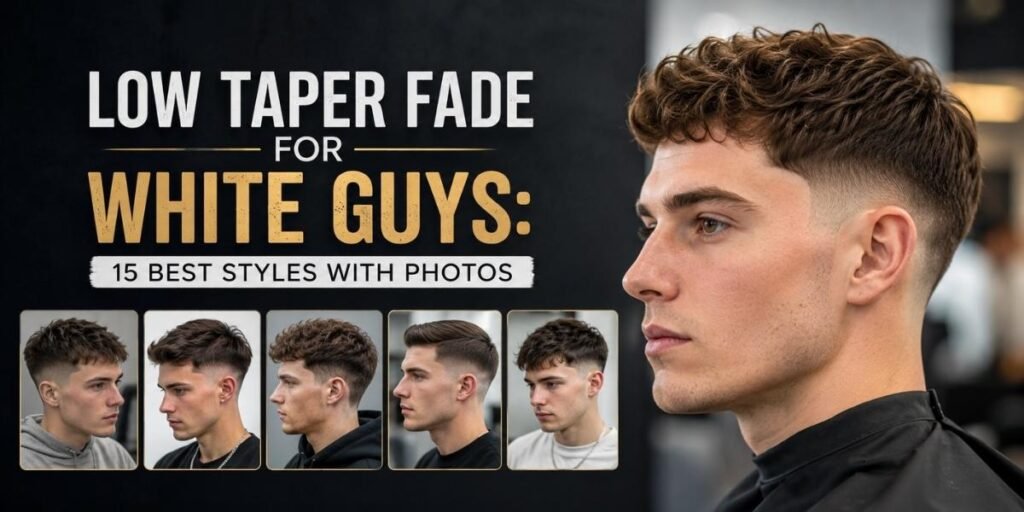
Here’s the short answer if you’re in a rush: a low taper fade for white guys is a haircut where the hair gradually shortens near the hairline, ears, and neck, while leaving more length up top. It’s subtle. It’s clean. And it’s the safest bet if you want a haircut that won’t look dated in two years.
Now let’s get into the good stuff. Fifteen ways to wear it, what makes it work, and how to actually get it right at the barbershop.
Best Low Taper Fade White Guy Hairstyles
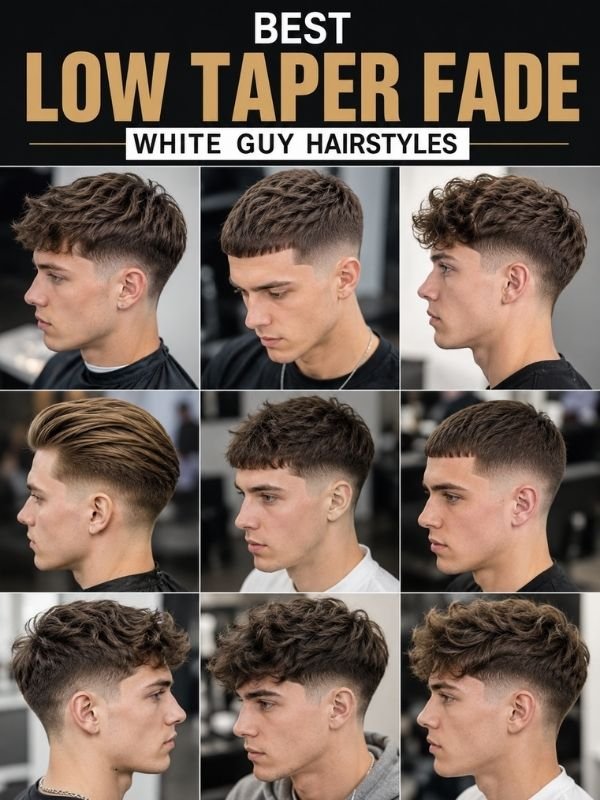
Every guy’s hair is different, and that’s exactly why this cut has fifteen solid variations. Below, you’ll find combos that suit different hair types, face shapes, and how much effort you’re willing to put in on a Tuesday morning.
Some of these need a comb and five minutes. Others need a blow dryer and a little patience. Pick based on your lifestyle, not just what looks cool in a photo.
Low Taper Fade + Curly Hair
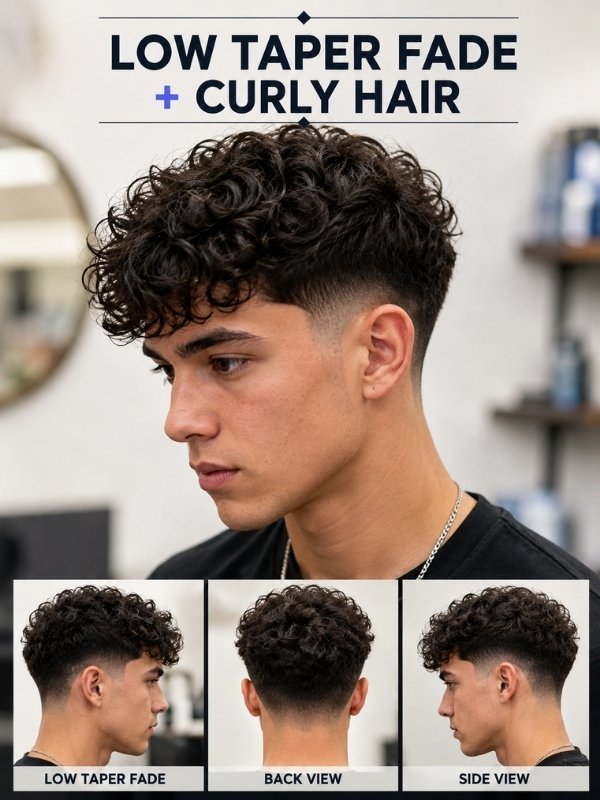
Curls and a low fade are a genuinely great match.
The fade keeps things tidy on the sides, so your curls up top get to be the main event. You’re not fighting bulk near your ears, and the whole look stays proportional instead of turning into a triangle by 2 PM.
If you’ve got tighter curls, ask your barber to keep a bit more length on top for shape. Looser curls can go shorter and still hold a nice, bouncy finish. A curl cream works better than gel here, it defines without turning your hair crunchy.
Low Taper Fade + Slick Back
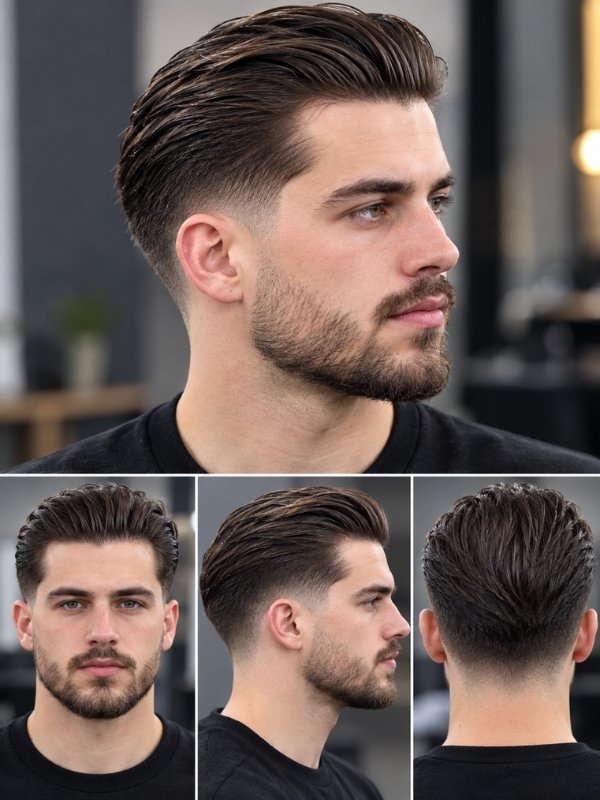
This one’s for guys who want to look like they tried, even if they only spent ninety seconds on it.
Low taper fade slick back styles work best with straight to wavy hair. You’ll need a bit of length up top, comb it back, and a medium hold product to keep it in place without looking wet all day.
It reads polished for the office, but it’s flexible enough for a night out too. Add a touch of pomade for shine if you want that vintage barbershop finish.
Low Taper Fade + Comb Over
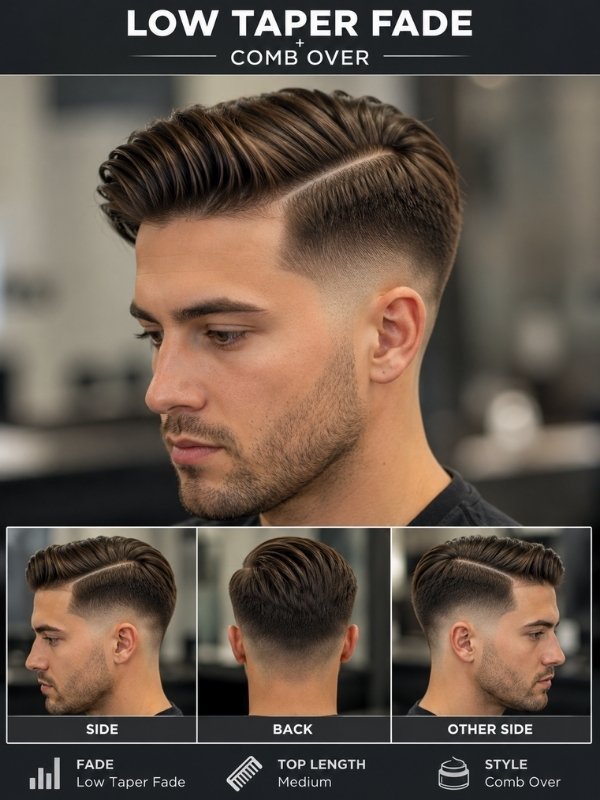
The comb over with a low fade is the haircut equivalent of a good pair of jeans. Always in style, never trying too hard.
You get a defined side part, hair swept to one direction, and blended sides that don’t scream for attention. It’s a favorite for job interviews, weddings, and basically every situation where you want to look put together without looking fussy.
Ask for a sharp haircut with a slight taper, and keep about two to three inches on top for the sweep.
Low Taper Fade + Textured Crop / Fringe
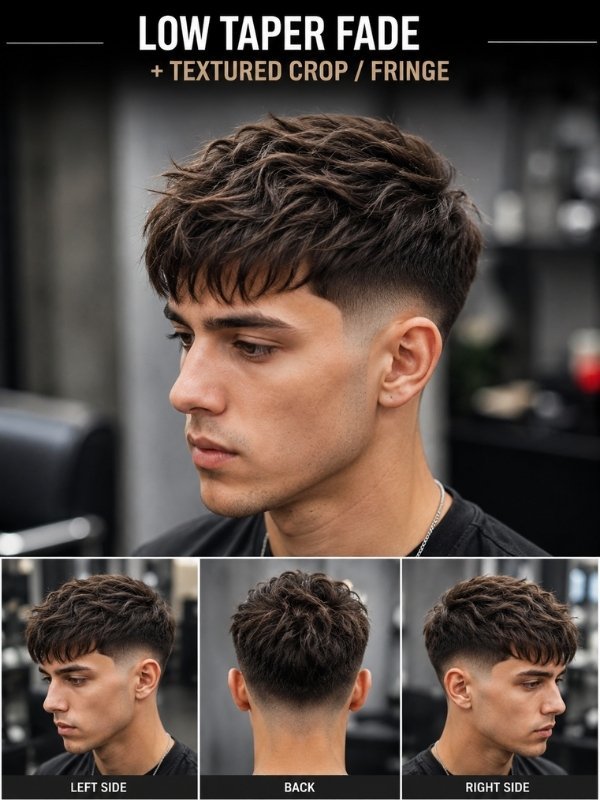
If you’re tired of combing anything, this is your cut.
A textured crop keeps the top short and choppy, with a bit of matte clay worked through for that lived-in, slightly messy look. Add a fringe (that’s the front piece dropping toward your forehead) and you’ve got a modern haircut that takes zero styling skill.
It works especially well if your hair has some natural texture already. You’re not fighting it, you’re using it.
Low Taper Fade + Buzz Cut
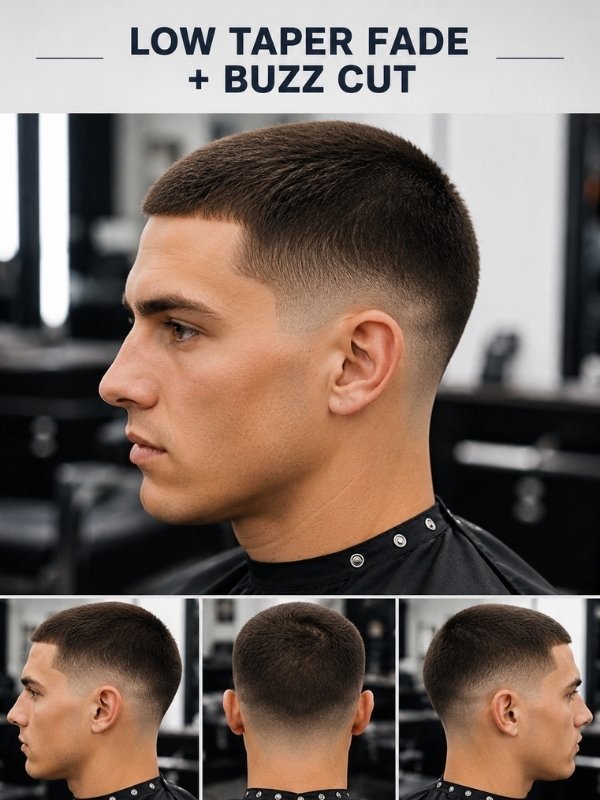
Short, sharp, and about as low-maintenance as haircuts get.
The low taper fade buzz cut keeps everything close to the scalp, with the fade doing subtle work near the ears and neckline. No product needed most days. Just wash, maybe a towel dry, and you’re out the door.
It’s a great option if you’ve got a busy schedule or you’re just done spending time in front of a mirror every morning. It also tends to suit strong jawlines particularly well, since there’s nothing up top competing for attention.
Low Taper Fade + Undercut
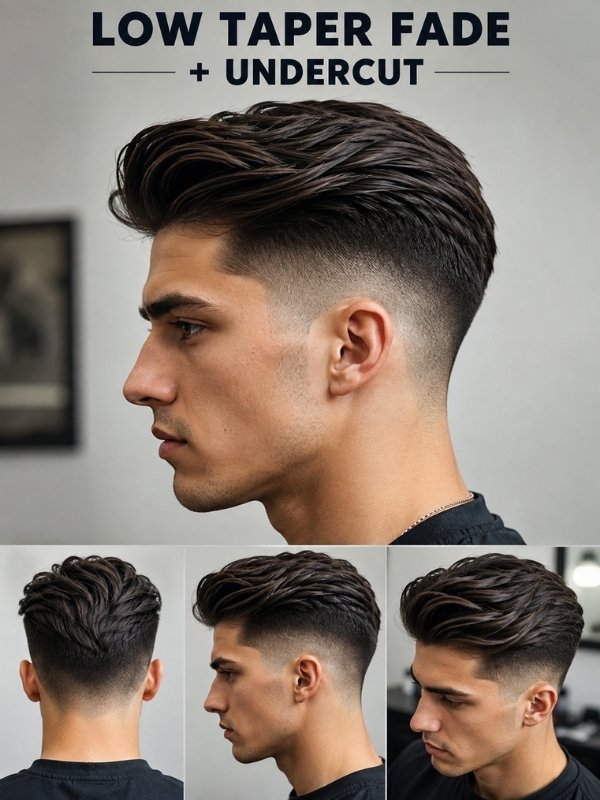
This is a sharper, more contrast-heavy version of the taper.
With a low taper fade undercut, the sides go shorter than a standard taper, while the top stays noticeably longer. The contrast is the whole point here, it makes the top look fuller and gives you more styling options, from slicked back to messy and textured.
If you want a haircut that photographs well, this is a strong pick.
Low Taper Fade + Dreads
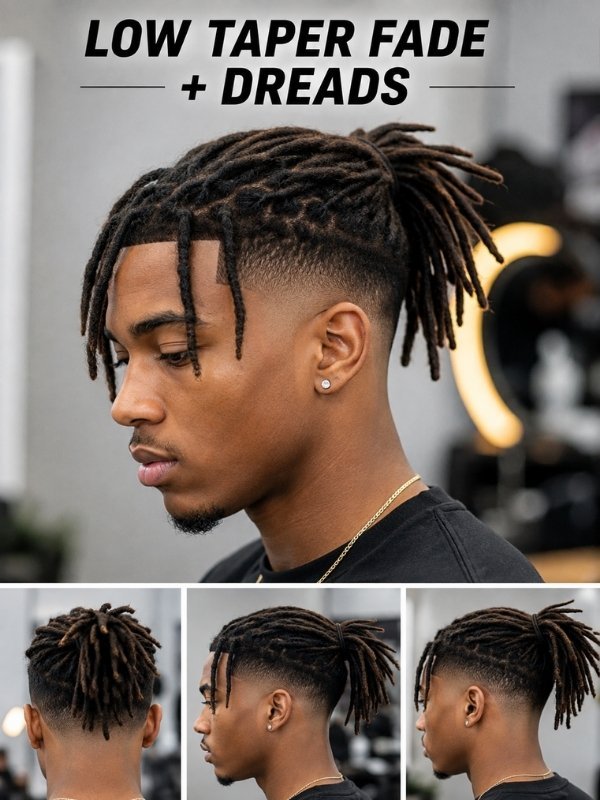
Yes, this combo absolutely works on white guys with the right hair texture and often requires the hair to be grown out and properly loc’d beforehand.
A low taper fade dreads style cleans up the sides while letting your locs do their thing up top. It’s less about a specific texture and more about maintenance commitment, dreads take time to form and even more time to maintain, so go in with realistic expectations and find a barber who’s experienced with the style.
Low Taper Fade + Afro
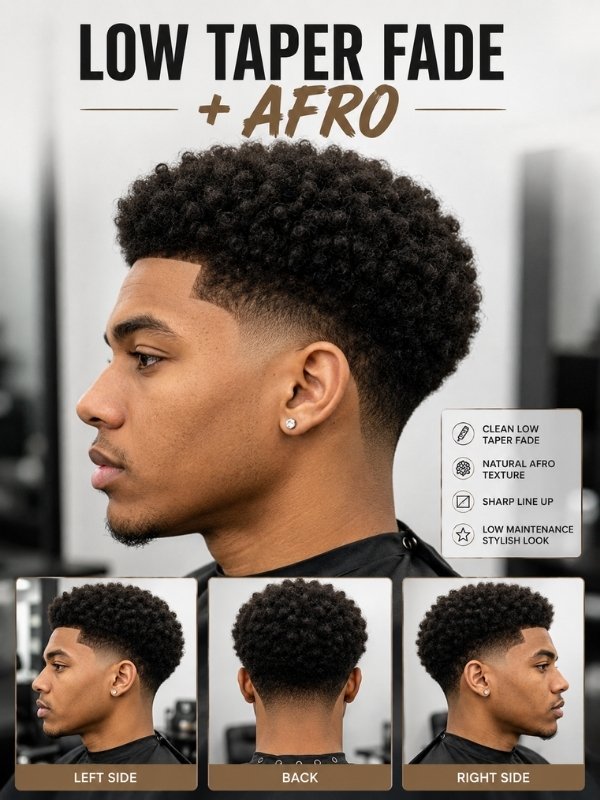
Naturally curly or coily hair up top, tapered sides underneath. Simple concept, great results.
The fade keeps the hair volume from turning into an uncontrolled mess, while your natural curl pattern gets room to shine. A little curl cream in the morning, maybe a pick to fluff things up, and you’re set.
This look tends to suit rounder or square face shapes especially well, since the volume up top balances things out.
Low Taper Fade + Side Part
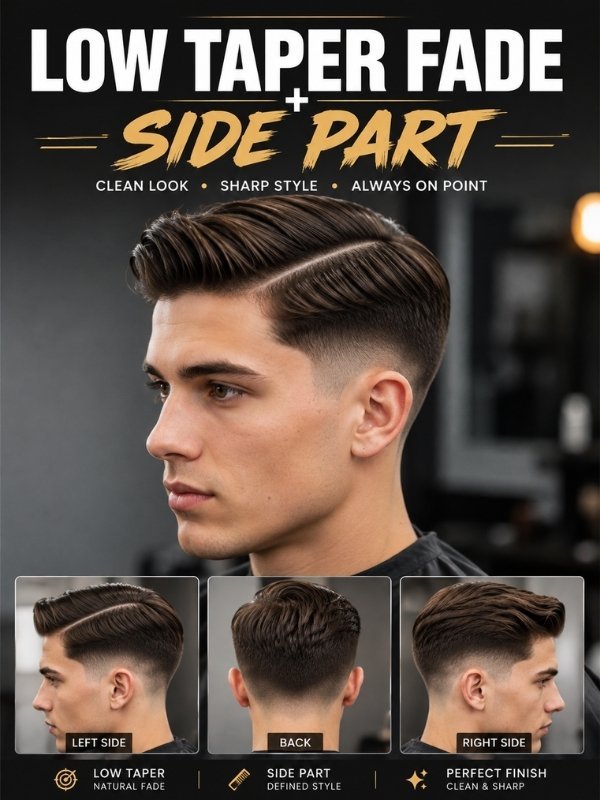
Clean, classic, and honestly a bit underrated these days.
A hard or soft part line, combined with a low taper fade side part, gives you a haircut that looks intentional without being flashy. It’s the kind of cut your barber can do with their eyes closed, and it suits basically every hair type as long as you’ve got some length on top to work with.
Low Taper Fade + Blowout
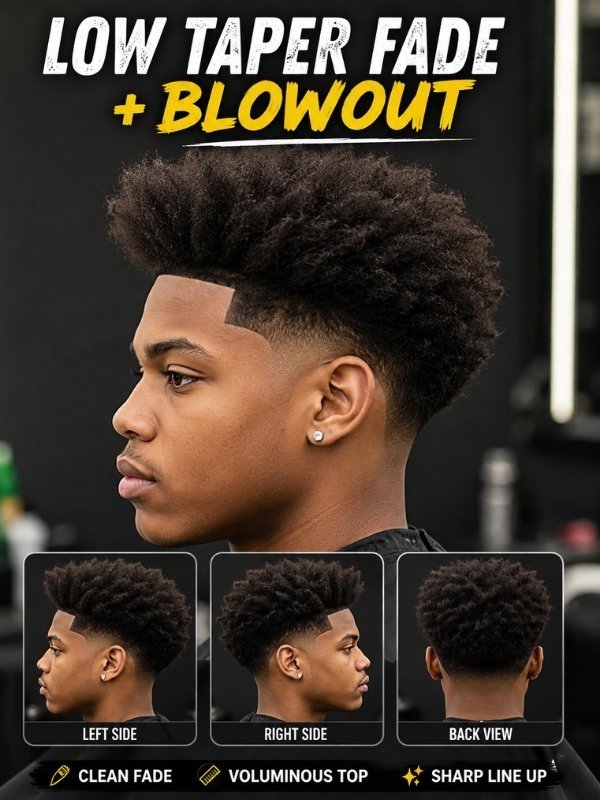
Height, volume, and a fade that keeps the whole thing from looking top-heavy.
The low taper fade blowout is popular for a reason. You get noticeable lift at the front, hair swept up and back, and sides that taper down cleanly. It does require a blow dryer and round brush, so budget an extra few minutes in your morning routine.
Low Taper Fade + Wavy Hair
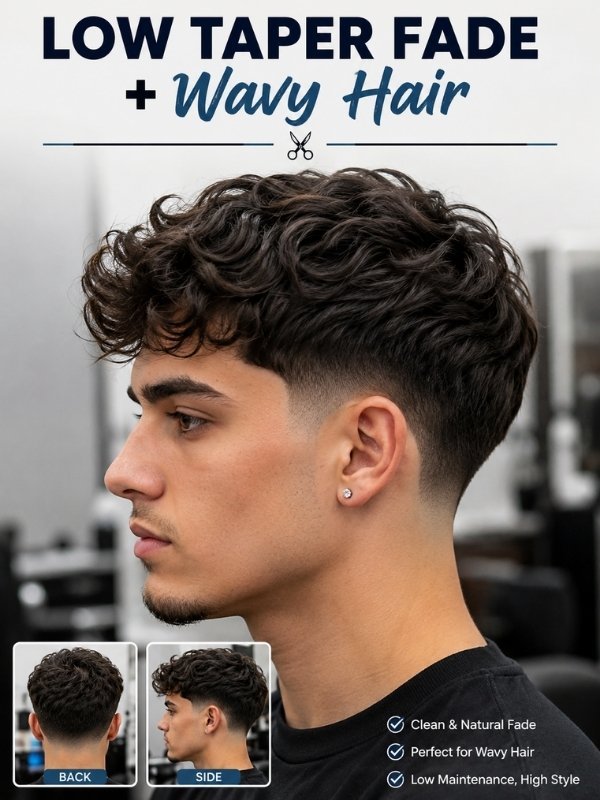
Wavy hair might be the easiest texture to pair with a low fade, honestly.
There’s enough texture for the hair to hold shape without much product, but it’s not so curly that it fights styling. A low taper fade wavy hair combo looks effortless because, frankly, it mostly is.
Sea salt spray or a light matte clay brings out the wave pattern without weighing it down.
Low Taper Fade + Long Hair
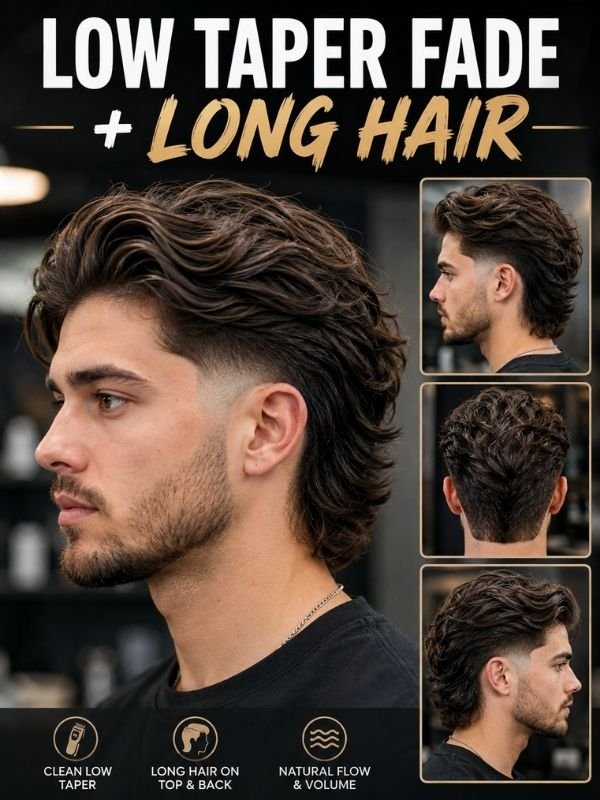
Longer on top doesn’t mean you can’t fade the sides. It actually makes the length look more deliberate.
The contrast between short, blended sides and flowing length up top is a strong combination, especially for guys growing their hair out but not ready to lose the clean look entirely. It takes longer to style some mornings, but the payoff is a haircut that stands out.
Low Taper Fade + Medium Hair
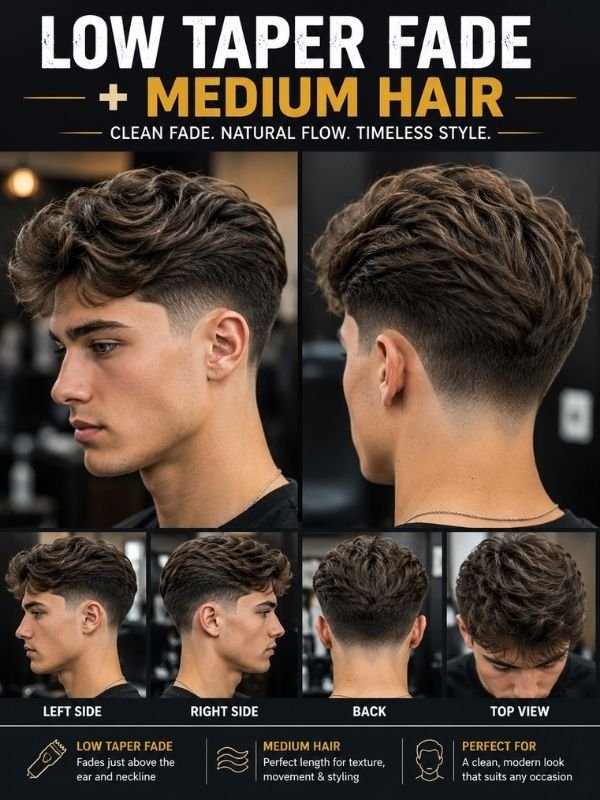
The sweet spot for guys who want options without full commitment.
Low taper fade medium hair length gives you enough to slick back, leave textured, or even part, depending on your mood. It’s the most versatile length on this list, honestly, and it grows out gracefully too, so you’re not rushing back to the barber every two weeks.
Low Taper Fade + Straight Hair
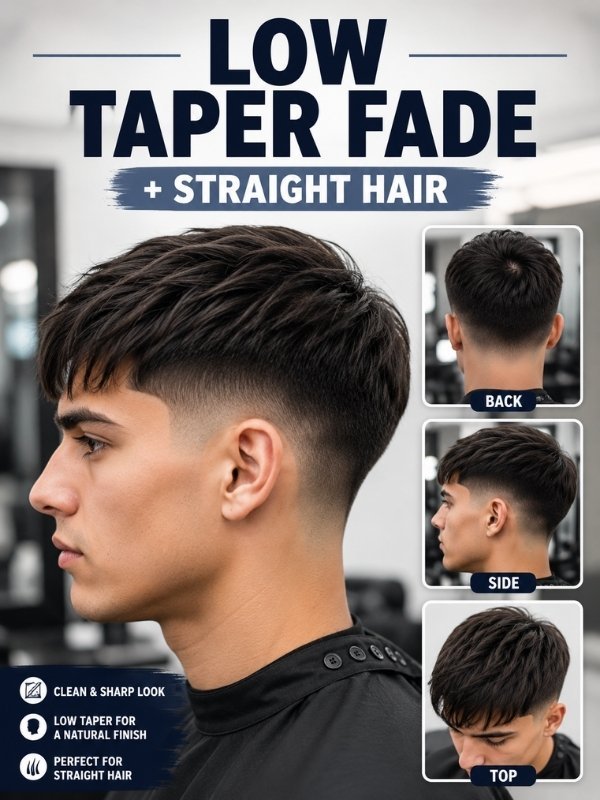
Straight hair takes a low fade incredibly well because it holds whatever shape you cut into it.
Whether that’s a sharp side part, a slicked back finish, or a textured crop, low taper fade straight hair styles tend to look crisp and defined. The only downside is straight hair can go a bit flat without product, so a light pomade or matte clay helps keep shape through the day.
Low Taper Fade + Beard
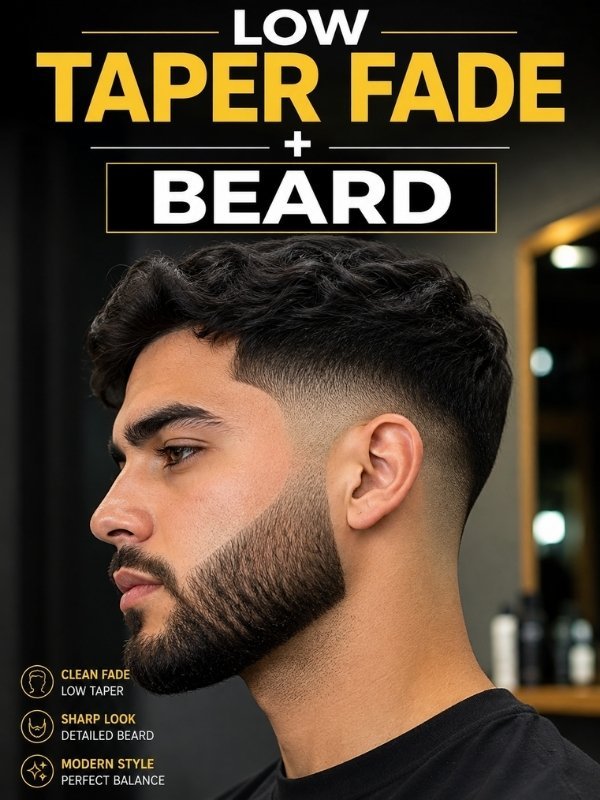
Not a haircut on its own, but pairing your fade with a well-groomed beard changes the whole look.
A low taper fade with beard styling ties your face and haircut together, especially when the beard fade blends into the hair fade. Talk to your barber about connecting the two, it’s a small detail that makes a big difference in how polished the final look feels.
What Is a Low Taper Fade for White Guys?
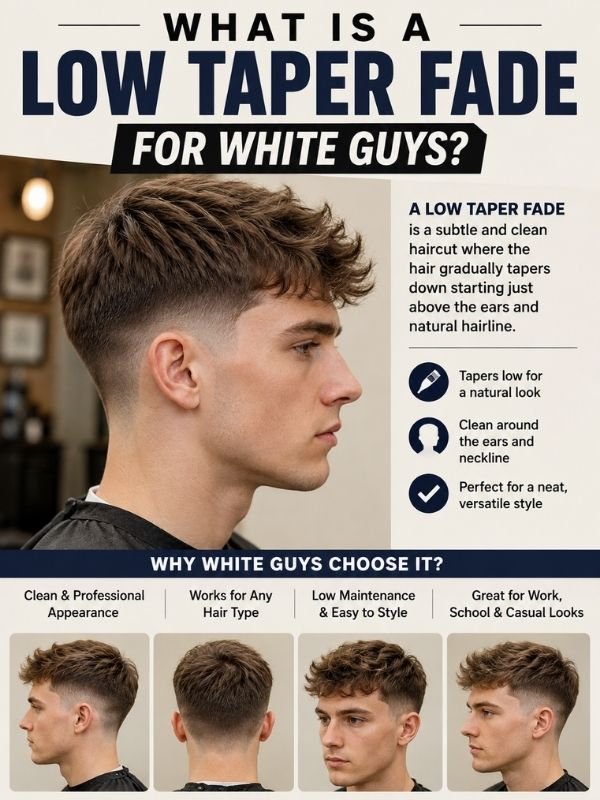
Let’s back up and actually define this thing properly.
A taper fade is a haircut where hair gradually gets shorter as it moves down toward the skin, usually around the ears, neckline, and sideburns. A low taper fade keeps that fade close to the bottom, meaning it starts lower than a mid or high fade and covers less area overall.
For white guys specifically, hair texture tends to lean straighter or wavier on average, though obviously that varies a ton person to person. That texture affects how the fade blends and how the top styles. A low fade tends to be more forgiving here because it’s subtle. There’s no dramatic line where short meets long, just a smooth transition that works with pretty much any hair type.
Why Low Taper Fades Work Well for White Guys
There’s a reason barbers recommend this cut so often, and it’s not just because it’s trendy.
First, it’s genuinely low-maintenance compared to higher fades. You don’t need touch-ups every two weeks to keep the line sharp, since the fade sits lower and grows out more gracefully. Second, it suits a wider range of face shapes. Because the taper is subtle, it doesn’t create hard geometric lines that only work with certain jaw or cheekbone structures.
Third, and this one’s underrated, it works with pretty much any hair type and length up top. Curly, straight, thick, or thin, the low taper fade adjusts around your natural texture instead of forcing you into a specific mold. That’s exactly why this list has fifteen variations and could honestly have more.
How to Choose the Right Low Taper Fade Style
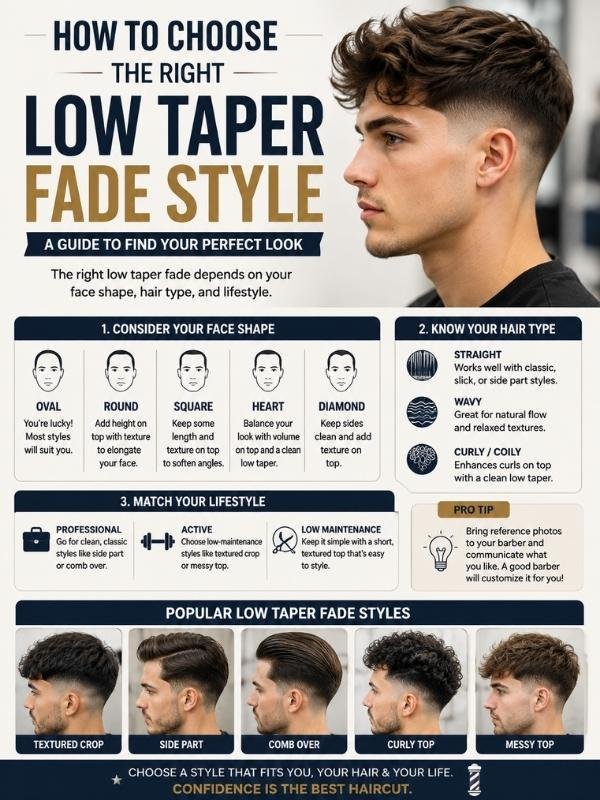
Picking a style shouldn’t just come down to what looks good in a photo. A few things matter more than trend appeal.
Start with your hair type. Curly and wavy hair naturally suit textured, looser styles, while straight hair pairs well with sleeker looks like a slick back or comb over. Fighting your natural texture every morning gets old fast, so work with what you’ve got.
Next, think about your face shape. Rounder faces often benefit from added height, like a blowout or textured crop, since it elongates things visually. Square or angular faces can usually pull off more length and softer styles without issue. And finally, be honest about your morning routine. If you’re not a person who owns a round brush and blow dryer, skip the blowout and go for something like a buzz cut or textured crop instead.
How to Ask Your Barber for a Low Taper Fade
Communication at the barbershop makes or breaks the haircut. Here’s how to actually get what you want.
Bring a reference photo, always. Verbal descriptions get lost in translation more than you’d think, and “low fade” means different things to different barbers. Show them exactly where you want the fade to start, usually right above the ear.
- Specify the length on top in inches or finger-widths, not just “a bit longer”
- Mention your hair type and any texture concerns upfront
- Ask them to keep the fade blended sides, not a harsh line, unless you specifically want contrast
- Bring up beard blending too, if that applies to you
A good barber will ask questions back. If they don’t, that’s usually a sign to find someone more experienced with fades specifically.
How to Maintain a Low Taper Fade
Low taper fade maintenance isn’t complicated, but a little consistency goes a long way.
Because the fade sits low, it grows out more gracefully than higher fades, so you’re generally looking at a touch-up every three to four weeks rather than every two. That said, don’t stretch it too far, or you’ll lose the clean line entirely and end up needing a bigger correction.
Day to day, styling depends on your chosen look. A buzz cut needs basically nothing beyond washing. A slick back or comb over needs a medium hold to strong hold product depending on how humid your climate is. And curly or wavy styles benefit from a light curl cream to keep frizz down without flattening your natural texture. Regular trims, decent product, and washing your hair with something that won’t dry it out are really the whole formula here.
Low Taper Fade for Different Face Shapes
Worth digging into a bit more, since this genuinely changes which style suits you best.
Round faces generally look better with more height and less width, so blowouts, textured crops, and undercuts tend to work well. Oval faces are lucky, honestly, since almost every style on this list suits them fine. Square faces can handle sharper lines and shorter styles like buzz cuts or comb overs, since the strong jaw balances things out nicely.
If you’re not sure what shape you’ve got, stand in front of a mirror and look at the widest points, your forehead, cheekbones, and jaw. Whichever’s widest usually points you toward the right category.
Common Mistakes to Avoid With a Low Taper Fade
A few things trip guys up more often than you’d expect.
Going too long between trims is the big one. The fade loses its shape gradually, and by week five or six, it just looks like an awkward grow-out rather than an intentional style. Using the wrong product is another common issue, heavy pomade on fine straight hair can weigh it down, while light sprays won’t do much for thick curly hair.
Lastly, not communicating clearly with your barber leads to more disappointment than anything else on this list. Bring photos, be specific about length, and don’t be afraid to speak up mid-haircut if something’s going in the wrong direction.
Conclusion
The low taper fade earns its popularity honestly. It’s flexible, it’s low-maintenance compared to flashier fades, and it genuinely works across pretty much every hair type and face shape out there.
Whether you’re drawn to the clean simplicity of a buzz cut, the height of a blowout, or the natural texture of a curly top, there’s a version of this cut built for you. Find a barber who knows fades, bring a reference photo, and keep up with regular trims.
That’s really all it takes to keep this haircut looking sharp, week after week.
