

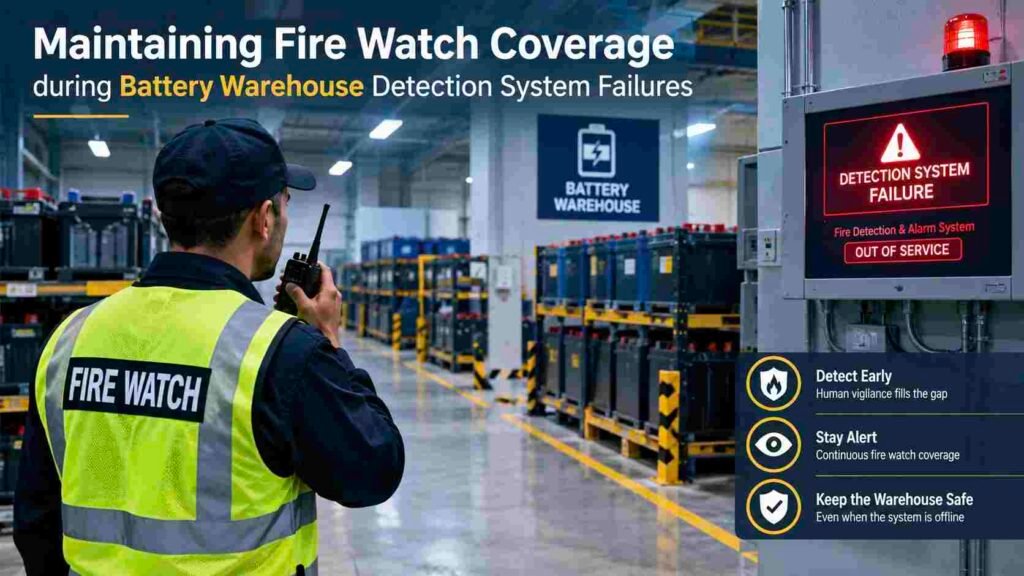
Battery storage areas need dependable supervision when detection equipment stops working correctly. Fire safety depends on prompt observation and clear responsibility during these periods. Warehouse managers can maintain oversight by assigning trained staff who understand battery hazards and reporting procedures. Each worker should know the assigned area and the steps required when conditions change. A lithium-ion warehouse fire watch helps maintain observation while damaged equipment is repaired and tested.
Assigning Trained Warehouse Personnel
Suitable staff members need a clear understanding of battery storage risks before beginning their duties. Supervisors should select workers who can recognise unusual heat or signs of battery damage. Each assignment should define the area under observation along with the reporting procedure. Written instructions help staff maintain consistent attention throughout their shifts. Proper staffing also supports smooth coordination with warehouse operations.
Defining Daily Monitoring Duties
Assigned personnel should follow an inspection routine suited to the affected storage area. Their responsibilities include checking visible battery conditions and reporting unusual changes to the supervisor. Consistent attention from trained personnel makes lithium-ion warehouse fire watch an important part of maintaining safety throughout the approved monitoring period. Shift handovers should include recorded observations so incoming workers understand the current conditions.
Coordinating Equipment Repair Work
Repair activities require close coordination between maintenance teams and warehouse supervisors. Managers should identify affected areas before work begins and arrange suitable monitoring for the full repair period. They should also confirm staff availability, review progress updates, and ensure coverage continues until authorised technicians complete testing and confirm proper equipment operation. The following actions help maintain organised coverage:
Record equipment faults before assigning temporary monitoring duties.
Confirm incoming personnel arrive before outgoing staff leave.
Keep communication devices available for contacting the designated supervisor.
Record unusual battery conditions during scheduled warehouse inspections.
Confirm successful equipment testing before restoring normal operating arrangements.
Matching Coverage With Storage Risks
Monitoring arrangements should reflect the warehouse layout and the condition of stored batteries. Supervisors can use a basic assessment to direct attention towards areas requiring closer observation.
| Warehouse condition | Monitoring priority |
| Detection equipment failure | Continuous observation under the approved safety plan |
| Damaged battery identified | Prompt reporting with focused observation |
| Repair work underway | Coordination between technicians and assigned personnel |
| Equipment testing completed | Confirmation of normal operation before coverage ends |
Managers should reassess staffing whenever conditions change. This approach helps direct attention towards the areas requiring additional supervision.
Maintaining Clear Staff Responsibilities
Every assigned worker needs clear instructions about reporting unusual conditions. Supervisors should explain who receives reports and who can authorise changes to warehouse operations. Staff should also understand the approved exit routes and the steps required when evacuation becomes necessary. Brief shift meetings help workers understand their responsibilities before taking over. Accurate records support smooth handovers throughout the monitoring period.
Returning To Normal Operations
Normal arrangements can resume after authorised personnel confirm that detection equipment works correctly. Managers should review repair records and verify completed testing before approving the change. Written records should show when temporary monitoring began and when the equipment returned to operation. These checks help maintain accountability and support future safety reviews. A clear approval process ensures warehouse protection remains organised throughout equipment repairs.
Maintaining reliable oversight during equipment repairs requires careful planning and responsible supervision. Warehouse managers should ensure trained staff remain assigned until authorised checks confirm normal detection functions.
FAQs
What causes temporary monitoring in battery warehouses?
Detection equipment failures may require additional observation under approved safety procedures.
Who coordinates temporary warehouse monitoring duties?
Warehouse supervisors assign trained personnel and coordinate with maintenance teams.
When can temporary monitoring duties stop?
Authorised personnel verify successful equipment testing before normal arrangements resume.
