

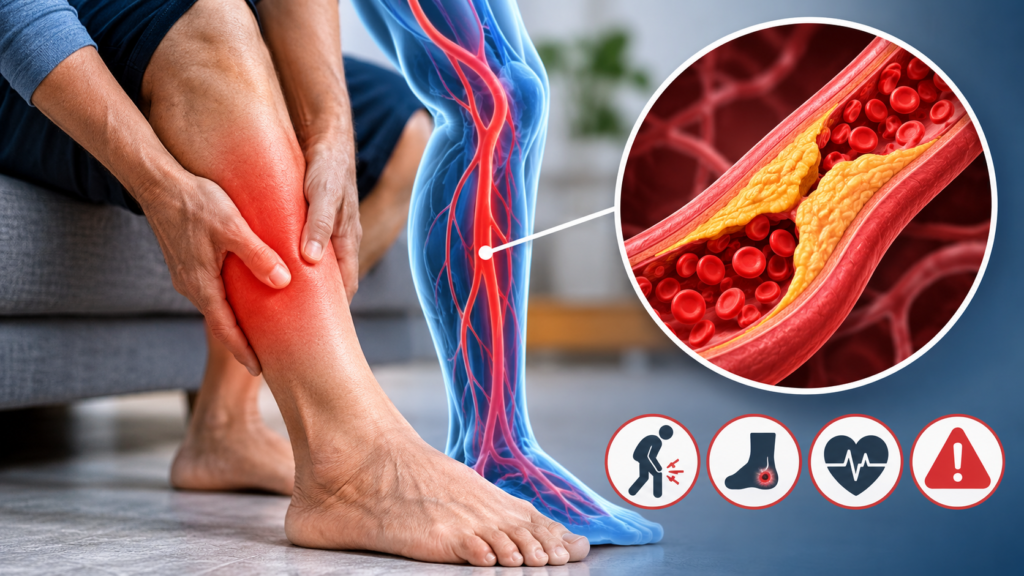
Leg pain that appears when you walk and fades when you rest is easy to blame on age or tired muscles. In many cases, though, it is a sign that blood is not flowing freely through the arteries in your legs. Understanding the blocked artery in leg causes and risk factors can help you recognize the problem early, protect your mobility, and lower your risk of heart attack and stroke.
What Is a Blocked Leg Artery?
Arteries carry oxygen-rich blood from the heart to the rest of the body. When an artery in the leg becomes narrowed or blocked, the muscles and tissues below the blockage receive less blood. The most common form of this condition is called peripheral artery disease, or PAD.
PAD affects millions of Americans, and many of them do not know they have it. Because it develops slowly, symptoms can be mild or mistaken for other problems until the disease is advanced.
Main Causes of Blocked Leg Arteries
Atherosclerosis. This is by far the most common cause. Over time, fat, cholesterol, calcium, and other substances build up inside the artery walls and form plaque. Plaque narrows the artery and makes it stiff, which reduces blood flow. The same process causes heart attacks and strokes, which is why PAD is a warning sign for the whole cardiovascular system.
Blood clots. A clot can form on top of existing plaque or travel from the heart and lodge in a leg artery. A sudden blockage causes acute limb ischemia, a medical emergency that needs immediate treatment.
Inflammation of the blood vessels. Conditions known as vasculitis can inflame and narrow arteries.
Injury or radiation. Trauma to the leg, or past radiation treatment in the area, can damage arteries and lead to narrowing.
Unusual anatomy. In rare cases, especially in younger athletes, muscles or ligaments compress an artery behind the knee.
Key Risk Factors
Some risk factors can be changed, and others cannot. Knowing both helps you understand your overall risk.
Risk factors you can change:
- Smoking: Smoking is the strongest risk factor for PAD. Smokers develop PAD earlier and have a higher risk of amputation.
- Diabetes: High blood sugar damages blood vessels and raises the risk of severe PAD and foot wounds.
- High blood pressure: Constant pressure on artery walls speeds up plaque buildup.
- High cholesterol: Excess LDL cholesterol feeds plaque formation.
- Obesity and inactivity: Extra weight and little exercise worsen blood pressure, cholesterol, and blood sugar.
Risk factors you cannot change:
- Age: Risk rises sharply after age 50 and is highest after 65.
- Family history: A family history of PAD, heart disease, or stroke increases your risk.
- Chronic kidney disease: Kidney disease is closely linked with artery damage.
Having several risk factors at once multiplies the danger. A person who smokes and has diabetes, for example, faces a much higher risk than someone with only one of these factors.
Symptoms to Watch For
The classic symptom is claudication: cramping, aching, or tiredness in the calves, thighs, or hips when walking or climbing stairs, which eases after a few minutes of rest. Other signs include:
- Leg pain at rest, especially at night when lying flat
- Numbness or weakness in the legs
- A cold foot or lower leg compared with the other side
- Sores on the feet, toes, or legs that heal slowly or not at all
- Shiny skin, hair loss, or slow toenail growth on the legs
- A weak or missing pulse in the feet
- Erectile dysfunction in men
Pain at rest and non-healing wounds suggest severe disease and need prompt medical attention.
How Doctors Diagnose a Blocked Artery
Diagnosis usually starts with a simple, painless test:
- Ankle-brachial index (ABI): This test compares blood pressure at your ankle with blood pressure in your arm. A lower ankle pressure suggests a blockage.
- Doppler ultrasound: Sound waves show blood flow and pinpoint where arteries are narrowed.
- CT angiography or MR angiography: These scans create detailed images of the arteries.
- Catheter angiography: A contrast dye is injected through a thin catheter to map the arteries. Doctors can often treat the blockage during the same procedure.
Treatment Options
Treatment aims to relieve symptoms, prevent the disease from getting worse, and lower the risk of heart attack and stroke.
Lifestyle changes. Quitting smoking is the single most important step. A supervised walking program can greatly improve how far you can walk without pain. A heart-healthy diet and good control of diabetes, blood pressure, and cholesterol also help.
Medications. Doctors commonly prescribe antiplatelet drugs to prevent clots, statins to lower cholesterol, and sometimes medicines that improve walking distance.
Minimally invasive procedures. Vascular specialists and interventional radiologists can open blocked arteries through a small puncture, without open surgery. Options include balloon angioplasty, stent placement, and atherectomy, which removes plaque. Most patients go home the same day or the next day.
Bypass surgery. For long or complex blockages, a surgeon may create a new path for blood flow using a vein or a synthetic graft.
Vascular Care in Prescott, Arizona
Prescott and the surrounding Yavapai County area are home to many active retirees, and age is a major risk factor for PAD. Local vascular specialists and radiology teams offer screening, imaging, and minimally invasive procedures close to home. Early testing, such as an ankle-brachial index, can catch PAD before it limits your walks, hikes, or daily routines.
Frequently Asked Questions
Is leg pain when walking always PAD? No. Arthritis, nerve problems, and muscle strain can cause similar pain. A simple ABI test can help tell the difference.
Can a blocked leg artery be reversed? Plaque usually cannot be fully removed with lifestyle changes alone, but treatment can stop progression and restore blood flow.
Who should be screened for PAD? People over 65, and those over 50 with diabetes or a history of smoking, should ask their doctor about screening.
Final Thoughts
A blocked artery in the leg is more than a leg problem. It is a sign that arteries elsewhere in the body may also be at risk. Knowing the causes and risk factors, watching for warning signs, and getting checked early can protect your legs, your heart, and your independence.
