

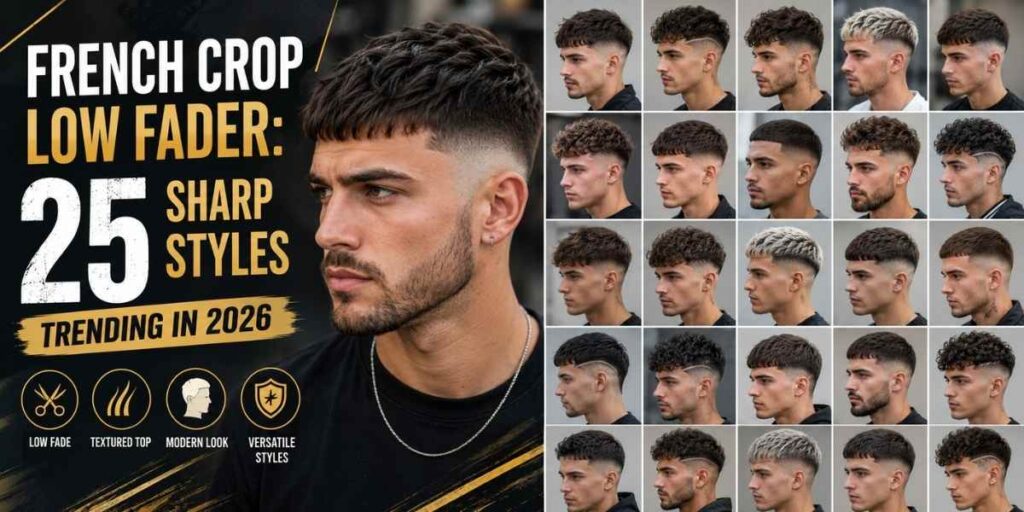
The French crop low fade haircut pairs a short, textured top with a fade that drops close to the ear, and it’s one of the sharpest men’s cuts heading into 2026.
If you’re wondering which version fits your face, your hair type, or your daily routine, you’re in the right spot. This guide walks through 25 takes on the French crop with low fade, plus styling steps, maintenance tips, and barber talk so you walk into your next appointment knowing exactly what to ask for.
What Is a French Crop Low Fader?

A French crop low fader is a short fringe on top, usually blunt or textured, combined with a fade that starts low, right above the ear and neckline. The top stays choppy and easy to push forward, while the sides taper down fast into skin or a close clip.
It’s a cousin of the classic French crop, but the low fade French crop version keeps things subtle. The fade doesn’t climb high on the head, so the cut reads as neat rather than flashy. That balance is exactly why barbers call it a go-to for guys who want style without shouting about it.
Why the French Crop Low Fade Haircut Is Popular in the U.S.

Ask any barber why the men’s French crop low fade keeps showing up in their chair, and you’ll hear the same reasons. It works with busy mornings, dress codes, and just about every hair texture walking through the door.
It also travels well. Gym, office, date night, this cut doesn’t need a reset between each one.
1. Low Maintenance Lifestyle
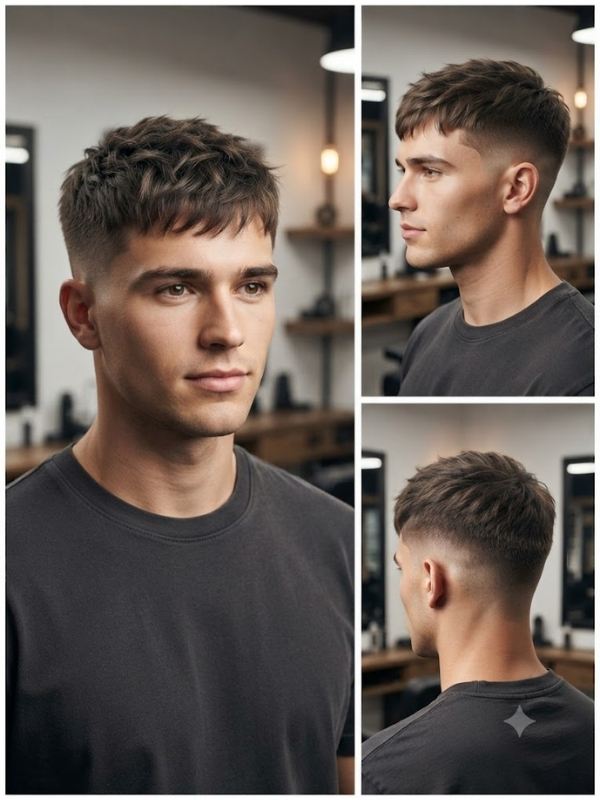
You’re not fighting with product every morning. A quick run of paste through damp hair and you’re out the door.
The French crop low fade haircut grows out in a way that still looks intentional, not shaggy, for weeks.
2. Professional Yet Stylish
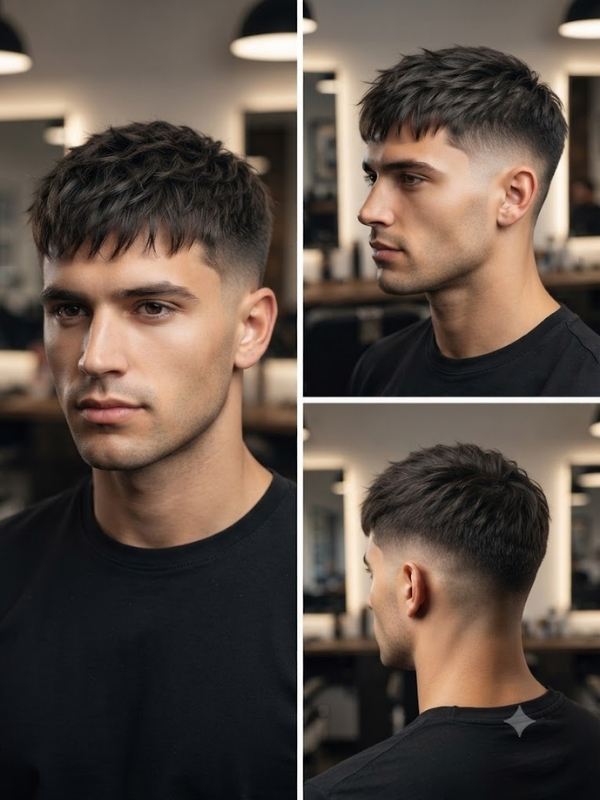
It reads sharp in a boardroom and still looks good at a bar afterward. That dual life is rare in men’s cuts.
Barbers often recommend the short French crop fade to clients who need one haircut to cover every setting.
3. Works with All Hair Types
Curly, straight, thick, thin, this cut bends to fit what you’ve already got. That’s a big reason it’s stuck around.
A French crop fade doesn’t demand a specific texture to look right, which saves a lot of trial and error.
4. Barbershop Favourite in the U.S.
Barbers like cutting it because the technique is repeatable and clean. Clients like it because the results are consistent visit to visit.
Search interest around the French crop hairstyle for men has climbed steadily, and shop owners say it’s one of the most requested cuts walking in.
Style Variations of French Crop Low Fade
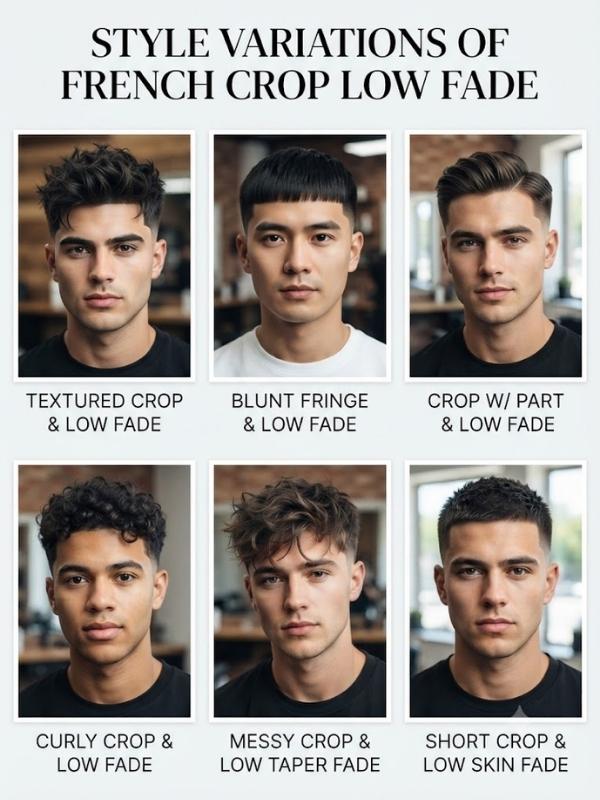
Here’s where things get fun. The base cut stays the same, but small tweaks to length, texture, and finish change the whole vibe. Below are 25 ways to wear the French crop fade.
1. Textured French Crop Low Fade
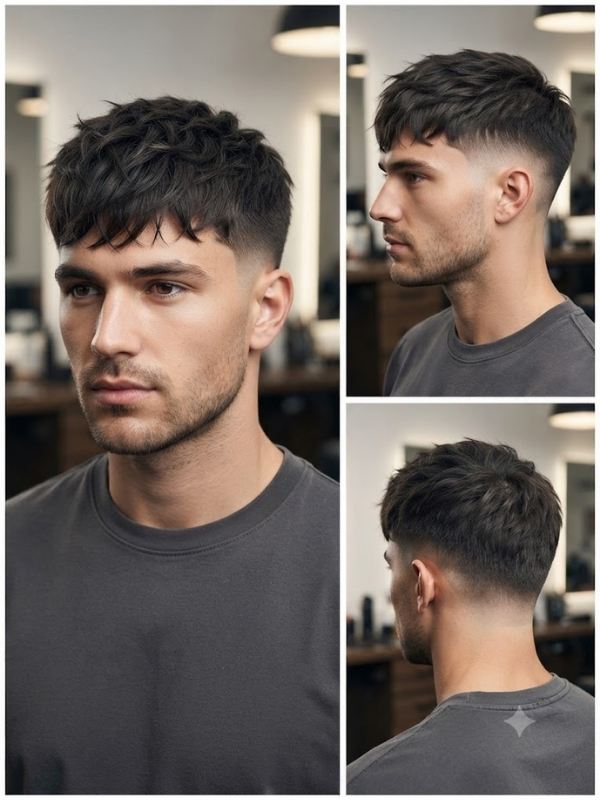
Choppy layers on top give this version movement instead of a flat, pressed look. A matte paste brings out the texture without weighing hair down.
The textured French crop low fade is the most requested variation for guys with medium density hair.
2. Short French Crop Low Fade
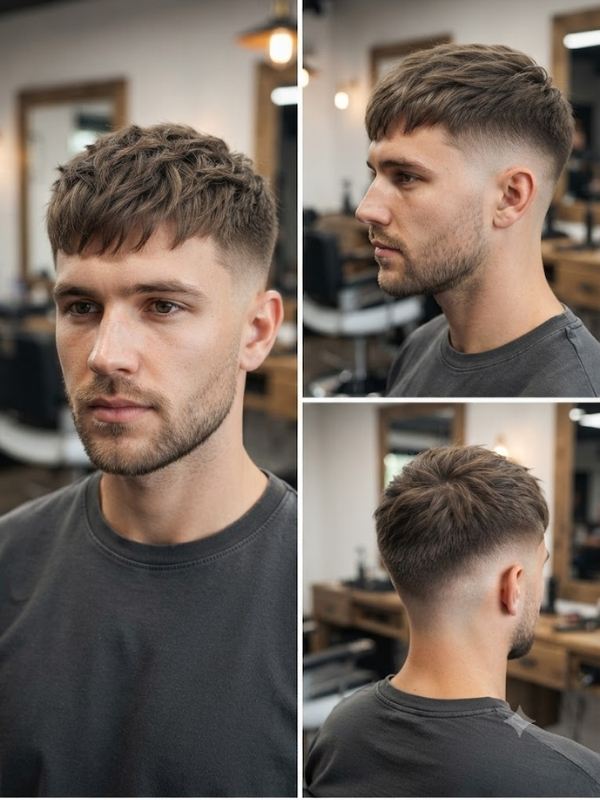
Everything’s trimmed tighter here, fringe included. It’s the pick for guys who want minimal styling time and a crisp finish.
The short French crop low fade suits fine hair especially well since there’s less length to fight gravity.
3. Clean French Crop Low Fade
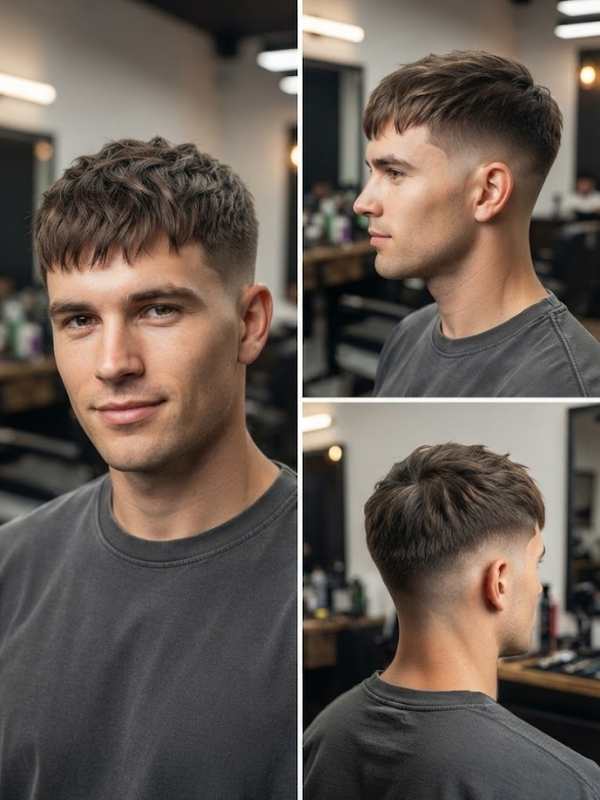
Straight lines, sharp edges, no stray pieces. This version leans formal and pairs naturally with a defined hairline.
A clean French crop low fade is the safest bet before interviews or big meetings.
4. Stylish French Crop Fade
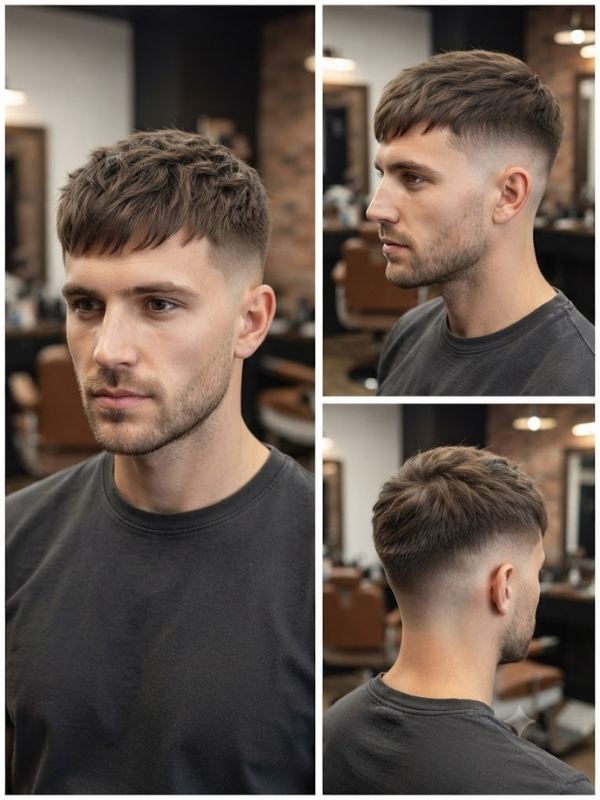
A bit more length up top gives room to play with direction and volume. Think slightly swept fringe with a glossy or matte finish, depending on mood.
5. Messy French Crop Low Fade Look
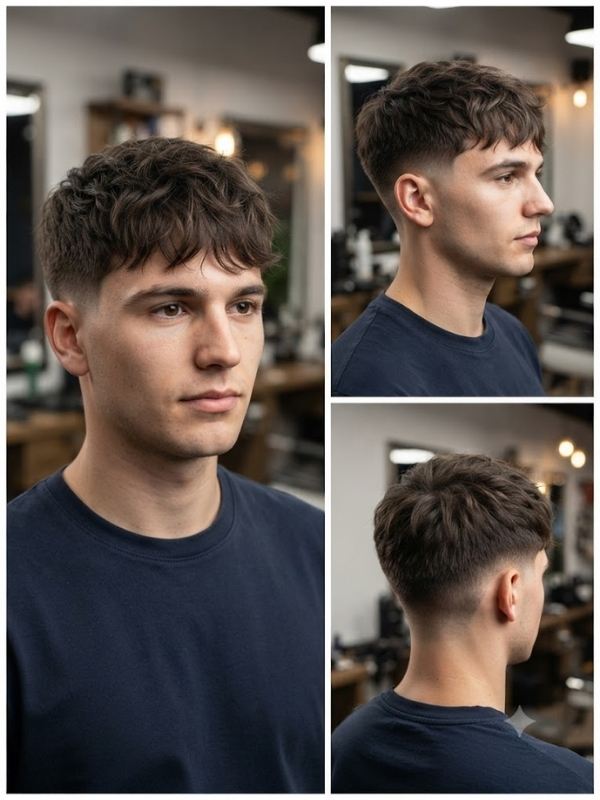
Product goes in with fingers, not a comb, for that just rolled out of bed effect. It’s deceptively hard to nail, but barbers can cut layers that fall right without much effort.
The messy French crop low fade works best on wavy or curly textures that already have natural lift.
6. Wavy French Crop Low Fade
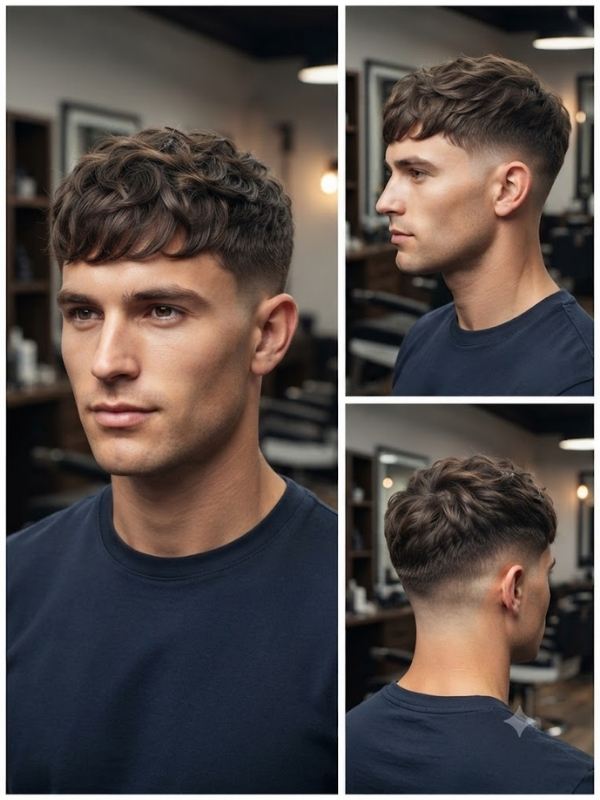
Natural waves get left alone here instead of flattened out. A light sea salt spray enhances the texture already built into the hair.
The wavy French crop low fade looks effortless because, honestly, it mostly is.
7. Curly French Crop Low Fade
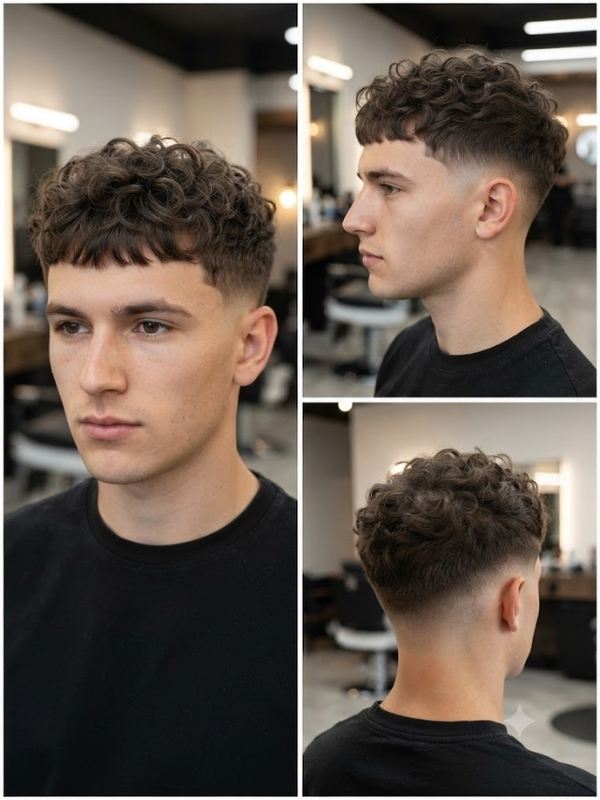
Curls stay defined on top while the fade keeps things tidy underneath. A curl cream or light gel holds the shape through the day.
Guys with springy curls often find the curly French crop low fade gives structure without flattening their natural pattern.
8. Blunt Fringe French Crop Low Fade
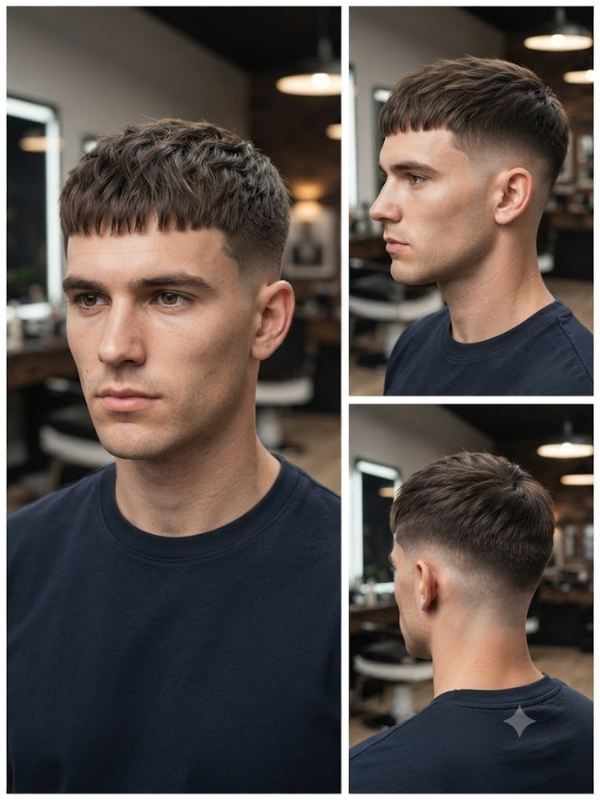
A straight, heavy fringe line sits right above the brows for a bold statement. It’s less common, which makes it stand out fast.
The blunt fringe French crop pairs well with strong facial features and a confident personality.
9. Tapered French Crop Low Fade
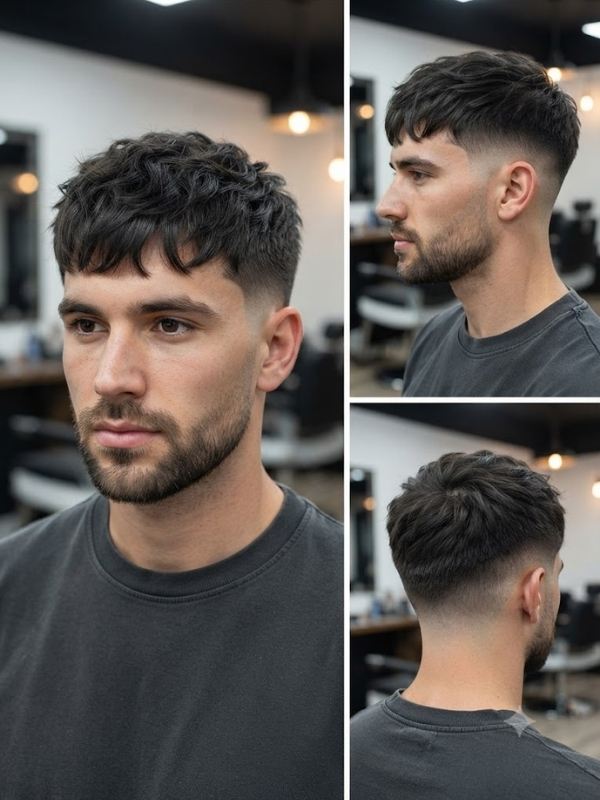
Instead of a hard skin fade, the sides taper gradually into the top. It’s softer, quieter, and still plenty sharp.
A tapered French crop suits guys who want fade energy without going full skin.
10. Skin Fade French Crop Low Fade
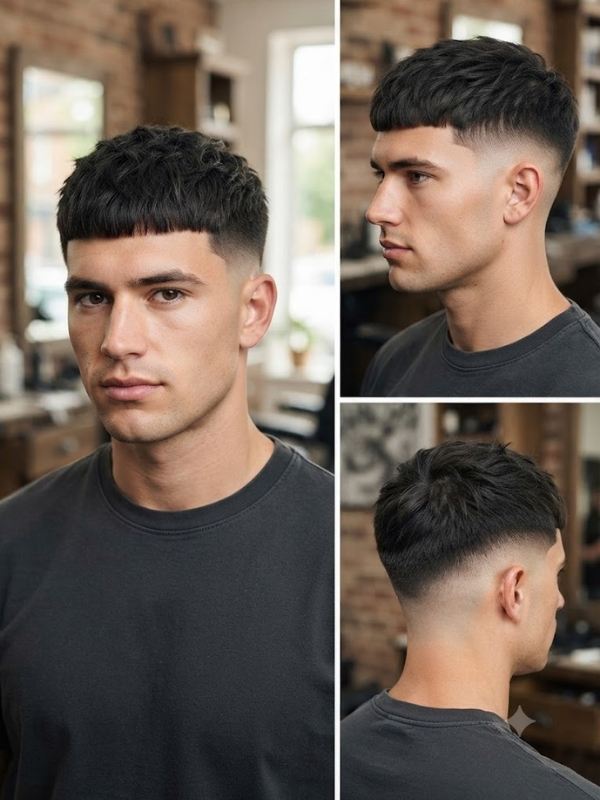
Sides go down to bare skin near the ear for maximum contrast against the top. It’s the boldest low fade option on this list.
The skin fade French crop demands more upkeep since regrowth shows fast at the fade line.
11. Low Drop Fade French Crop
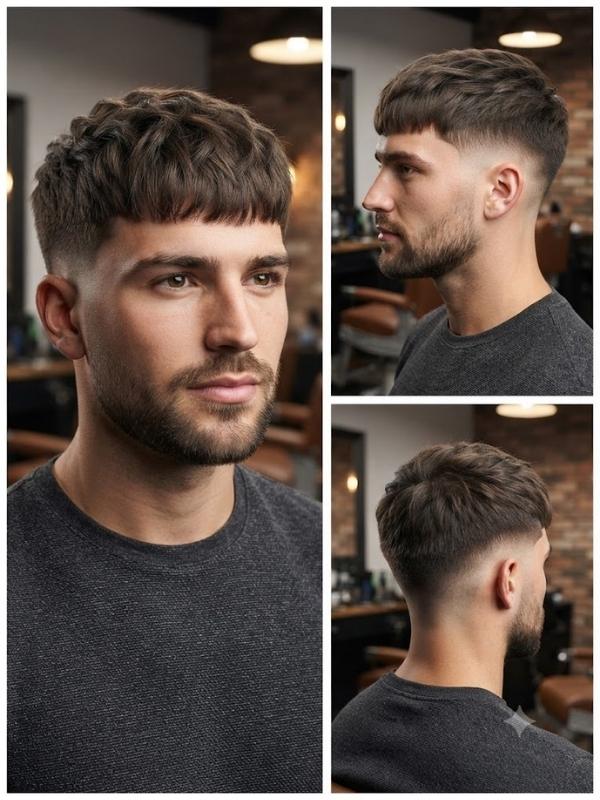
The fade curves down behind the ear instead of running straight across. This drop line adds a subtle, custom feel most barbers charge extra attention for.
A drop fade French crop looks especially clean on rounder head shapes.
12. Voluminous French Crop Low Fade
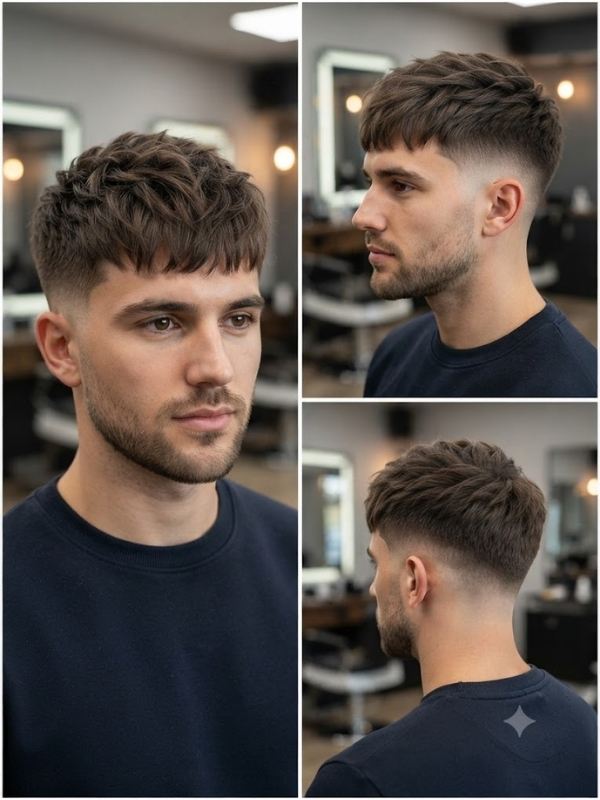
Length and product build height on top for a fuller silhouette. A blow dry with a round brush helps lift the roots before styling.
The voluminous French crop works well for thicker hair that already has natural body.
13. Soft Layered French Crop Low Fade
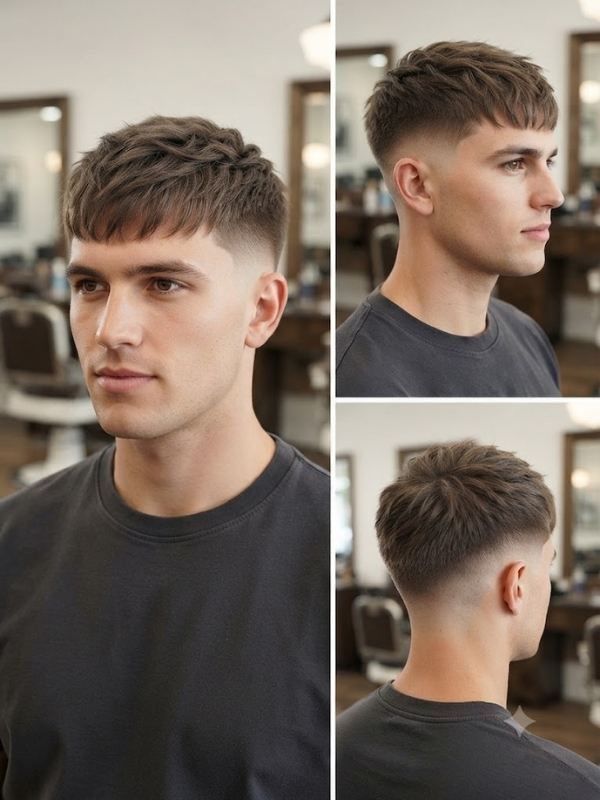
Layers are cut at varying lengths for a softer, blended top instead of one uniform block. It photographs well and moves naturally in wind.
The layered French crop avoids the stiff, helmet look some short cuts fall into.
14. Choppy French Crop Low Fade
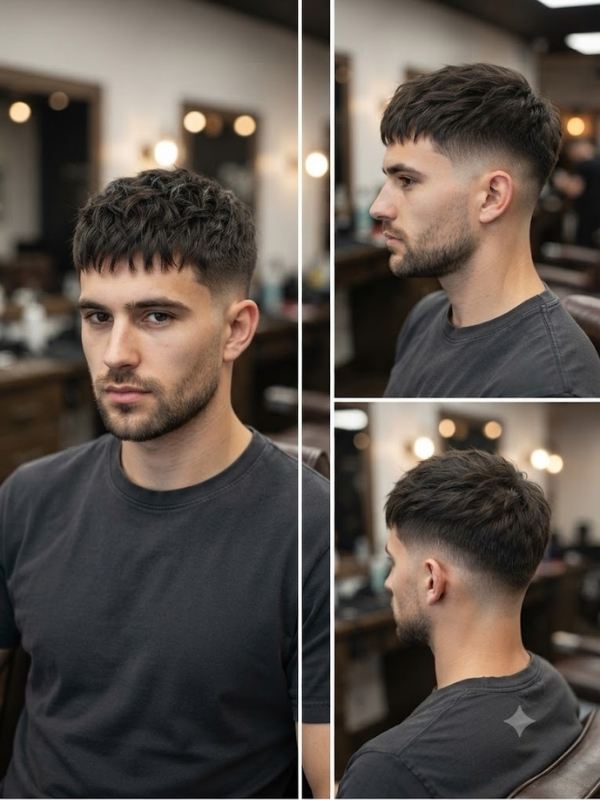
Texturizing shears chop the ends unevenly on purpose for a rougher finish. It’s a favorite among younger clients chasing an edgier look.
A choppy French crop pairs naturally with a light matte clay.
15. Classic French Crop Low Fade
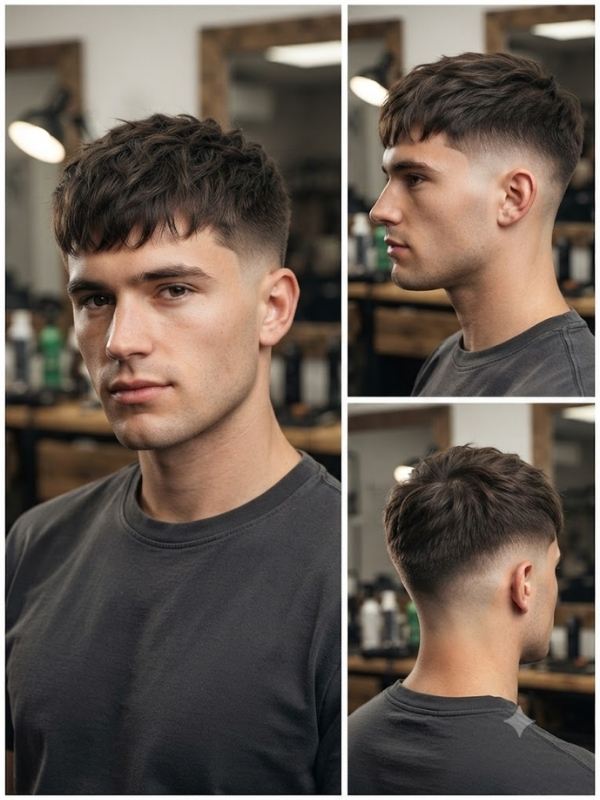
No frills, just the original blunt fringe and tidy fade that started the trend. It’s aged well because it never tried too hard.
The classic French crop fade remains the benchmark every barber measures newer versions against.
16. Disconnected French Crop Low Fade
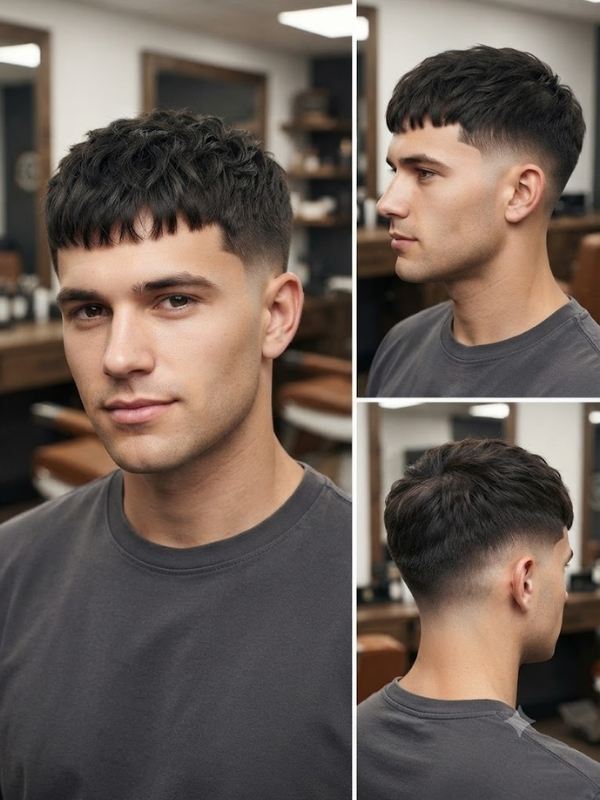
There’s a deliberate gap between the length on top and the fade below, skipping the gradual blend. It creates sharp contrast and a bit of edge.
The disconnected French crop suits guys who want their cut to feel a little unexpected.
17. Fringe Forward French Crop Low Fade
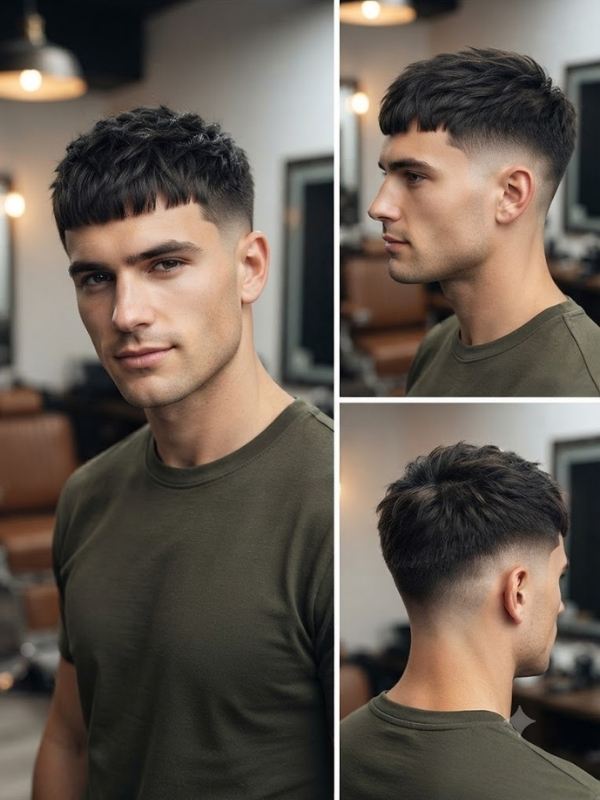
All the styling energy pushes forward, bringing the fringe down toward the forehead. It shortens the look of a longer face nicely.
French crop with fringe styling like this leans into the cut’s signature feature rather than hiding it.
18. Professional French Crop Low Fade
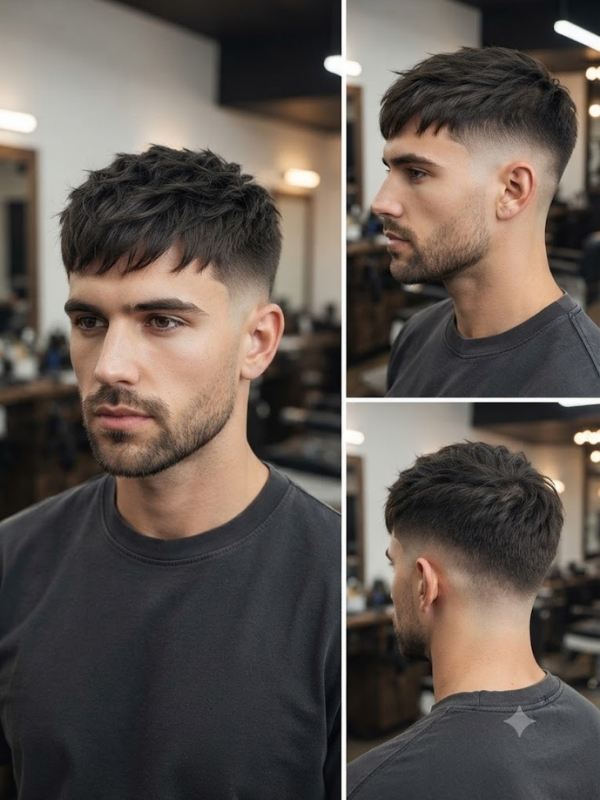
Tight, tidy, and office ready, with just enough texture on top to avoid looking severe. It’s a dependable middle ground.
The professional French crop is the version most barbers recommend for first timers.
19. Modern Fade Blend French Crop
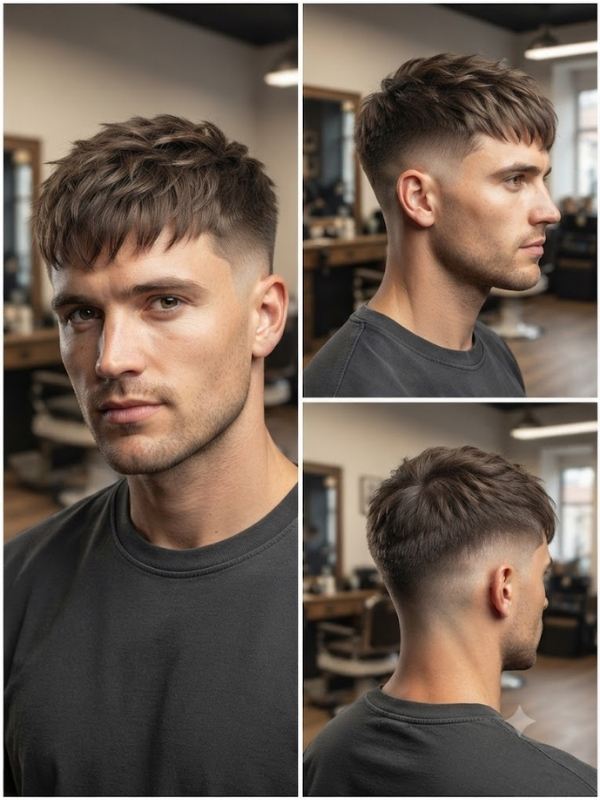
Seamless blending between the fade and the crown removes any visible lines. It takes more skill from the barber but the payoff is a polished, modern finish.
20. French Crop Low Fade with Blonde Hair
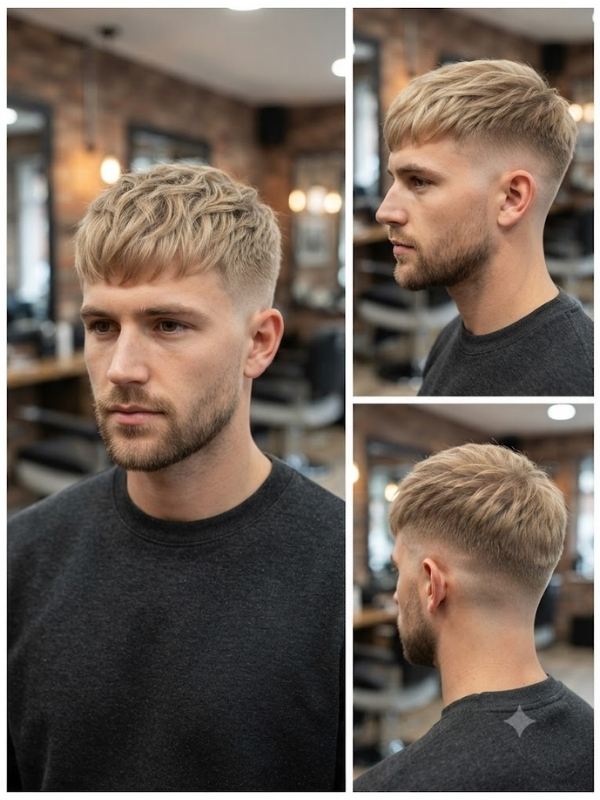
Lightened strands make the texture on top pop even more against the darker fade underneath. It’s a striking option for guys open to a color change.
The blonde French crop low fade photographs particularly well under natural light.
21. French Crop Low Fade with Fringe
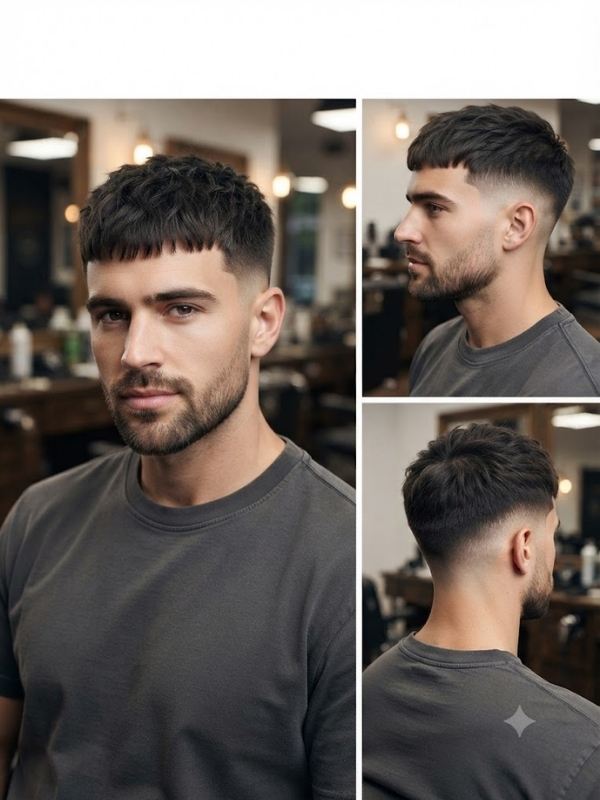
A defined fringe sits front and center, whether swept, blunt, or piecey. This is the detail most people picture when they hear the cut’s name.
22. French Crop Low Fade with Taper
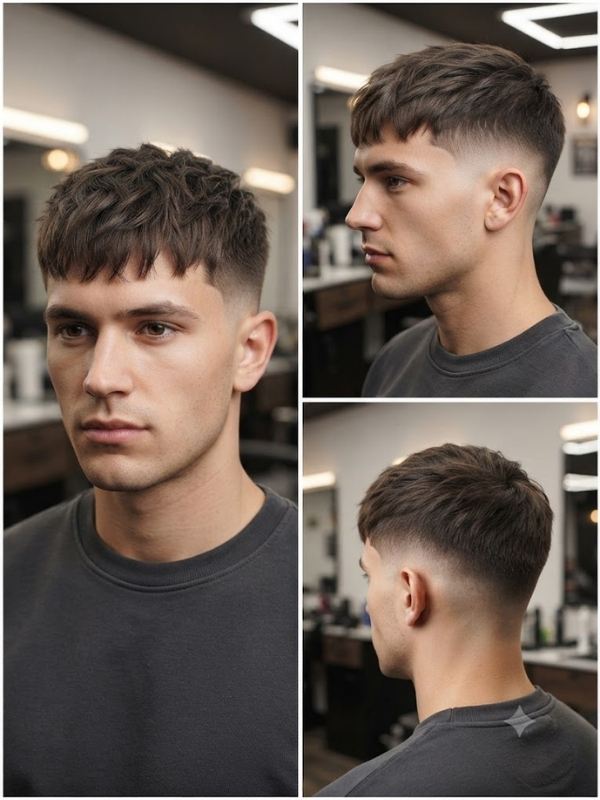
Combining a soft taper with the low fade gives a gentler transition down the sides. It suits guys easing into shorter cuts for the first time.
23. French Crop Low Fade Mullet
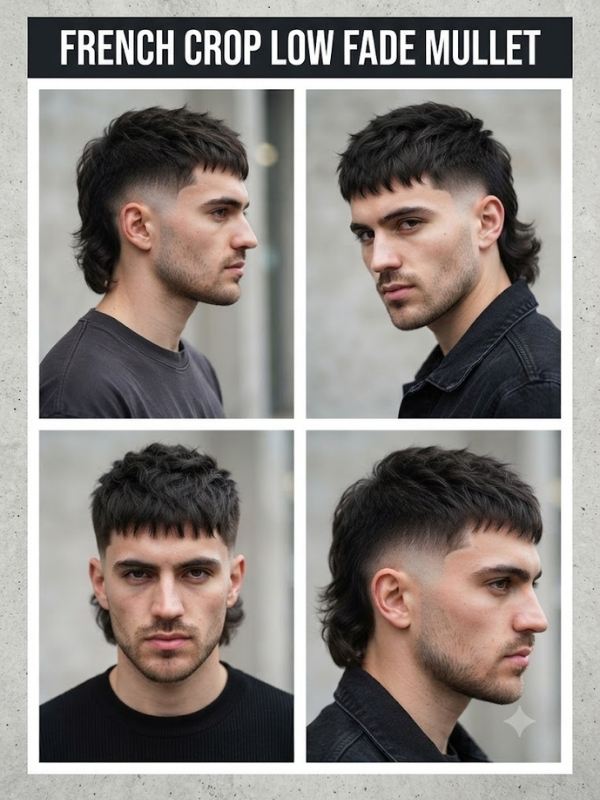
Short and cropped up front, longer at the back, this mashup brings retro energy into a modern frame. It’s not for everyone, but it turns heads.
The French crop low fade mullet has picked up steam among guys chasing a bolder, statement look.
24. French Crop Low Fade with Beard
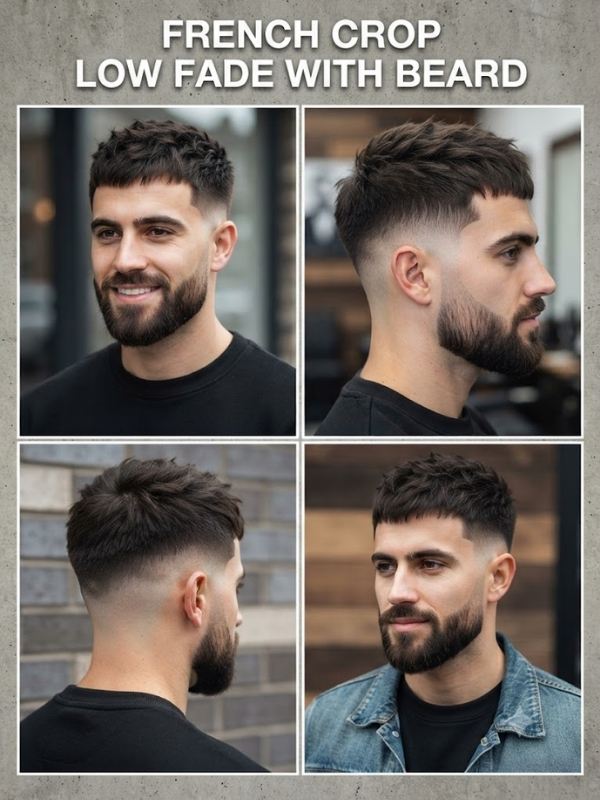
Pairing the cut with a well shaped beard balances proportions and frames the jaw. Barbers often line up the fade and beard fade together for a matched finish.
25. French Crop Low Fade with Hard Part
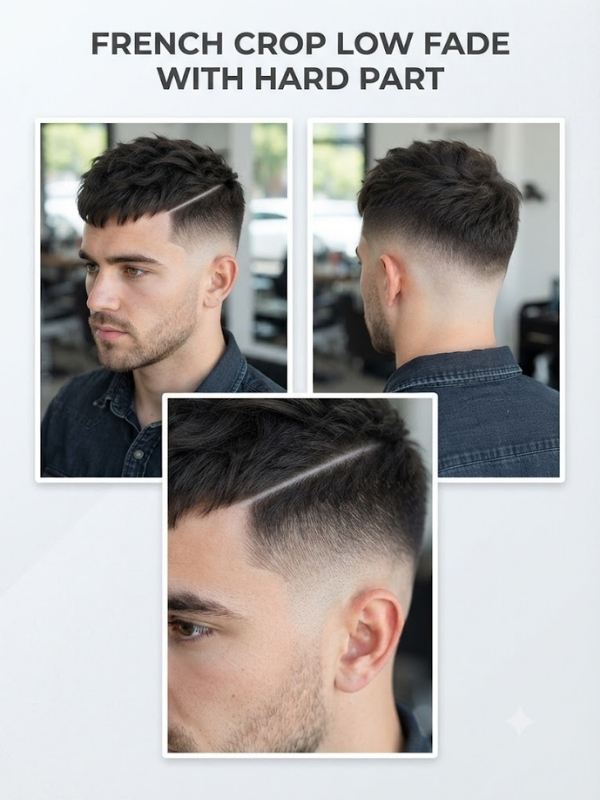
A shaved line separates the fringe from the fade for extra definition. It’s a small addition that makes the whole cut look more deliberate.
French Crop Fade Variations Beyond the Low Fade
The low fade isn’t the only route. Understanding low fade vs mid fade and low fade vs high fade helps you pick the right height for your face and style goals.
1. French Crop Mid Fade
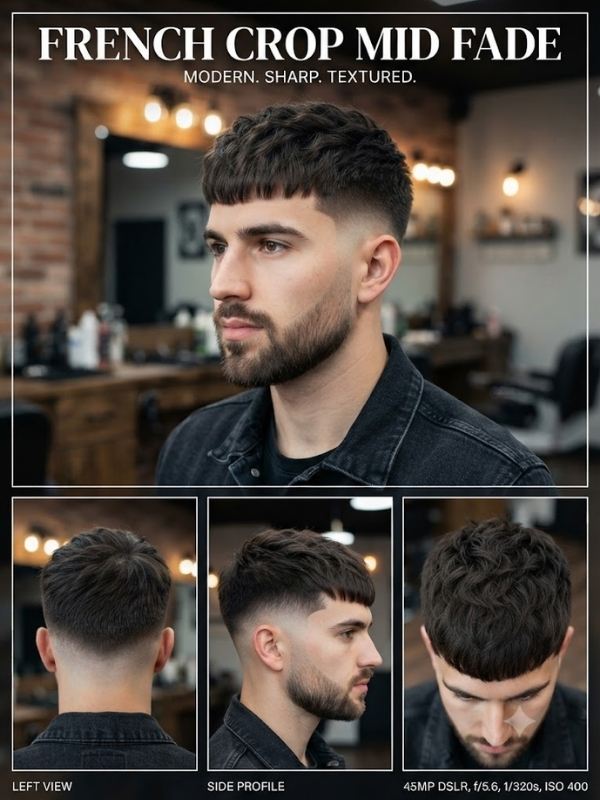
The French crop mid fade starts around the temple, sitting between low and high. It gives a bit more contrast than a low fade without going bold.
2. French Crop High Fade
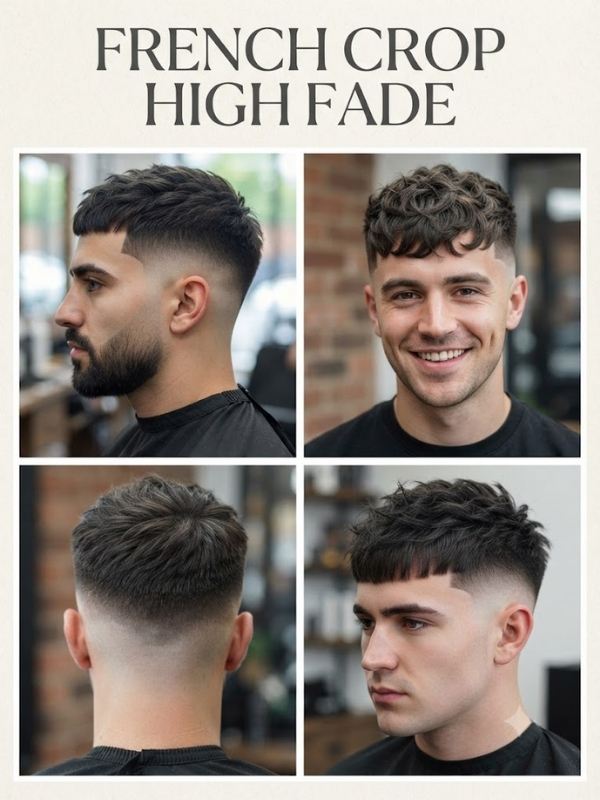
The French crop high fade climbs toward the crown for maximum contrast and a sharper, more dramatic silhouette. It suits guys who want their fade doing more visual work.
3. French Crop Taper Fade
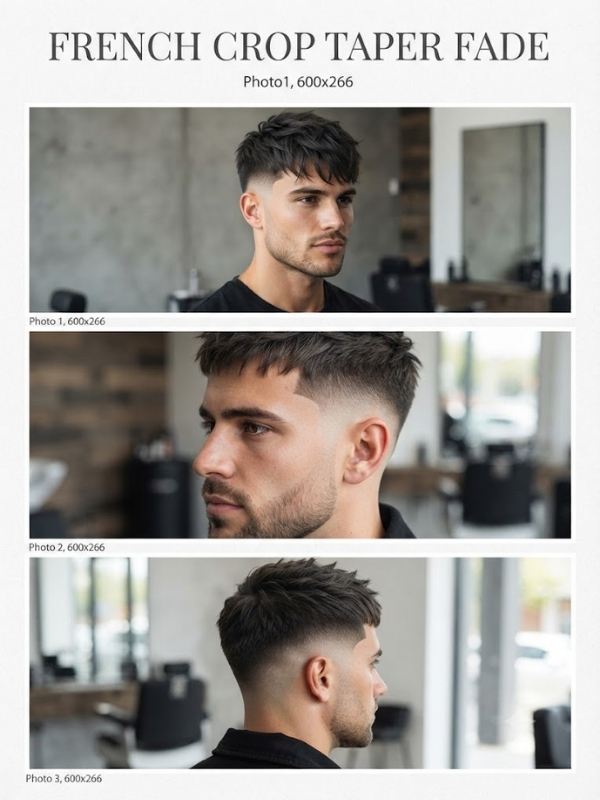
The French crop taper fade blends gradually with no hard fade line at all. It’s the softest option among French crop fade styles and ages well between cuts.
French Crop Low Fade for Different Face Shapes
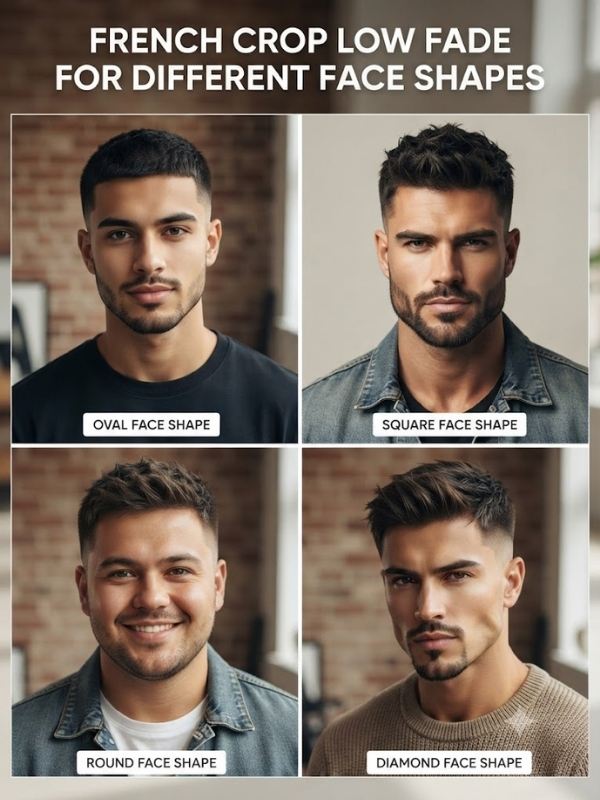
Not every face shape wears every haircut the same way. Here’s how the best French crop for face shape breaks down.
Oval Face
Almost anything works here, honestly. French crop for oval face shapes can go bold with a blunt fringe or keep it soft with a taper, since the proportions are already balanced.
Round Face
Height on top helps elongate things. French crop for round face cuts should skip the heavy fringe and lean toward volume and a defined fade for definition.
Square Face
Soft texture on top balances a strong jawline nicely. French crop for square face styles often go for a slightly longer fringe to soften sharp angles.
Diamond Face
A fringe that sits mid forehead balances a narrow chin and wider cheekbones. French crop for diamond face shapes benefit from texture that adds width near the temples.
Heart Face
Keeping the top from adding extra volume near the crown helps balance a wider forehead. French crop for heart shaped face cuts often favor a side swept fringe over a blunt one.
French Crop Low Fade for Different Hair Types

Texture changes how this cut sits, grows, and styles day to day.
Thick Hair
French crop low fade thick hair versions handle length well and hold shape longer between cuts, but need thinning shears to avoid bulk.
Thin Hair
French crop low fade thin hair styles do best kept shorter, since length on fine strands can look flat by midday.
Curly Hair
French crop for curly hair benefits from a curl specific cut, where curls are shaped dry so the barber can see exactly how each one falls.
Wavy Hair
French crop low fade wavy hair looks good with minimal product, letting the natural texture do most of the styling work.
Straight Hair
French crop low fade straight hair needs a bit of texturizing to avoid looking too sleek or plain. A textured crop for straight hair finish adds dimension that straight strands don’t create on their own.
How to Ask Your Barber for a French Crop Low Fade
Walking in with the right words saves you a bad haircut and an awkward growout. Ask for a “French crop haircut guide” style cut with a low fade, and be specific about fringe length and fade height.
Bring a photo if you’ve got one. French crop barber instructions work best when they’re visual, since “low” and “short” mean different things to different barbers.
Mention your French crop hair length preference upfront too, whether you want enough on top to style forward or a tighter, lower maintenance version.
How to Style a Crop Low Fade Haircut
Good styling turns a decent cut into a great one. Here’s the routine that works for most guys.
Step 1: Apply a Lightweight Styling Product
Start with a small amount of matte paste or light cream on damp or towel dried hair. Too much product weighs the top down fast.
Step 2: Add Natural Texture
Scrunch or tousle with your fingers instead of a comb for a lived in finish. This step is where most of the cut’s personality shows up.
Step 3: Control the Direction
Push the fringe forward, to the side, or straight up, depending on the look you’re after. A little blow drying on low heat helps lock the direction in.
Step 4: Optional Hold for Lasting Style
A light hairspray or stronger hold gel keeps things in place through a long day. Skip it if you like a softer, more relaxed finish.
Final Look Tip
Less is more with this cut. Overloading product flattens the texture that makes the French crop styling products routine worth doing in the first place.
Maintenance Tips for French Crop Low Fade Haircut
French crop maintenance isn’t complicated, but skipping it shows fast, especially near the fade line.
Plan on a trim every three to four weeks to keep the fade sharp. How often to get a low fade really depends on how fast your hair grows, but waiting past a month usually means the line starts to blur.
At home, a light trim of the fringe between visits keeps things from creeping over your eyes. Low fade haircut maintenance also means keeping the sides clipped so the contrast against the top stays visible.
French Crop Low Fade Trends in the U.S. (2026)
Heading into 2026, barbers are seeing more requests for natural texture over slicked back finishes. Curl and wave friendly cuts are having a real moment.
Subtle color, like a soft blonde or bronde piece through the fringe, is also picking up interest. It’s a low commitment way to update a classic cut without a full dye job.
Drop fades and disconnected styles continue climbing too, giving the traditional French crop hairstyle for men a slightly edgier update without losing what made it popular in the first place.
Pros and Cons of French Crop Low Fade
Like any haircut, this one has trade offs worth knowing before you commit.
Pros of French Crop Low Fade
- Low daily styling effort
- Works across nearly every hair type
- Suits both casual and professional settings
- Easy to customize with fringe, fade height, or color
Cons of French Crop Low Fade
- Needs regular trims to keep the fade sharp
- Skin fade versions show regrowth quickly
- Blunt fringe styles require more precision to cut well
- Not ideal for guys who dislike frequent barbershop visits
Cost of a French Crop Low Fade Haircut in the U.S.
Pricing swings a lot depending on where you live and who’s holding the clippers. A standard French crop low fade haircut at a local barbershop usually runs somewhere between 25 and 45 dollars in most cities.
Premium shops or stylists known for detailed fade work can charge upward of 60 dollars, especially in bigger metro areas. That price often includes a beard line up too, since barbers frequently pair the two.
If you’re new to a shop, ask what’s included before you sit down. A French crop fade with a hard part or color add on will usually cost more than the base cut.
Common Mistakes to Avoid With This Cut
A few small missteps turn a great French crop low fade into a mediocre one fast, so it’s worth knowing what to watch for.
Skipping trims is the biggest one. Waiting too long between visits lets the fade grow out and blur, which kills the sharp contrast that makes this cut work.
Overusing product is another common slip. Piling on paste or gel flattens the texture on top instead of enhancing it, so a little really does go a long way here.
Last, not communicating clearly with your barber leads to mismatched expectations. Bringing a reference photo and naming your preferred fade height solves most of this before the clippers even start.
Conclusion
The French crop low fade haircut earns its popularity honestly. It’s flexible enough to fit nearly any face shape, hair type, or lifestyle, and it looks just as sharp on a Tuesday morning as it does on a Saturday night.
With 25 variations to choose from, there’s room to make it yours, whether that means a blunt fringe, a soft taper, or a bold skin fade underneath. Bring your barber the details, be clear about length and fade height, and you’ll walk out with a cut built to last well into 2026.
