
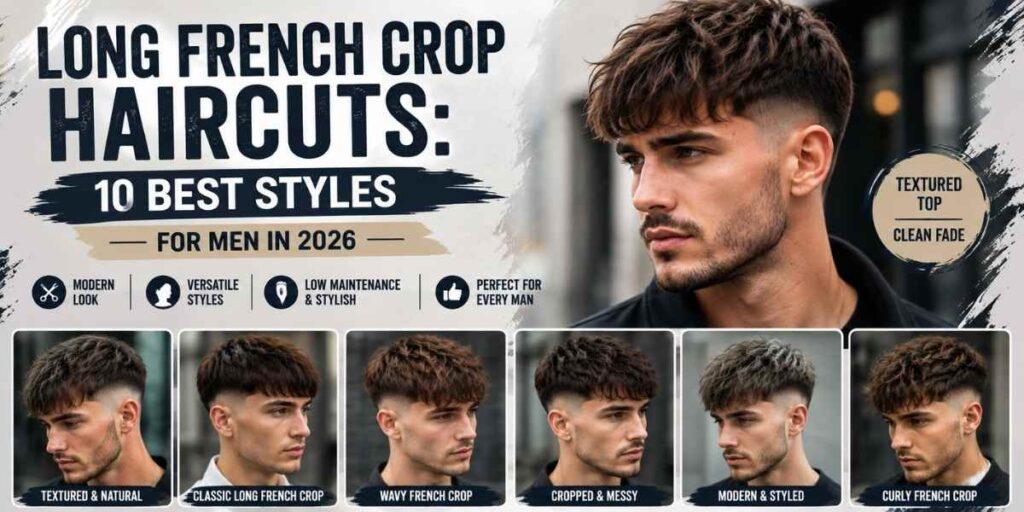
Thinking about growing your crop out a little longer this year? You’re not alone.
The long French crop haircut has quietly become one of the most requested cuts at barbershops right now. It’s not flashy. It’s not high-maintenance. It just works, on almost every face, every hair type, and every guy who wants to look put-together without spending twenty minutes on his hair each morning.
This guide walks you through everything: what a long French crop hairstyle actually is, how it differs from the shorter classic version, which fades pair best with it, and how to keep it looking sharp week after week. Grab a coffee. Let’s get into it.
Long French Crop: Best Haircut Ideas for Men

If you’ve searched for a cut that’s smart enough for the office and cool enough for the weekend, you’ve probably landed on this one already.
The long French crop for men takes the tidy, French-inspired fringe of the original crop and lets the top grow out a bit more. You get extra texture, more styling options, and a slightly softer look than the tight, cropped version most men picture.
It works because it’s flexible. Slick it back for a meeting, tousle it for a night out, or leave it natural and let the fringe fall where it wants. Few cuts offer that kind of range.
Longer French Crop: What Makes This Style Different?

So what actually separates a longer French crop from the standard one? Length, mostly, but not only that.
A classic French crop usually keeps the top around one to two inches, cropped close and blunt at the front. The longer version pushes that to two and a half or three inches, giving you enough hair to add movement, waves, or a proper fringe you can style by hand.
That extra length also changes how the cut behaves day to day. You get more room for texture products, more room for personality, and honestly, more room for error if you’re new to styling it yourself.
French Crop Fringe Long Buzz Cut Fade: Is This Style Right for You?
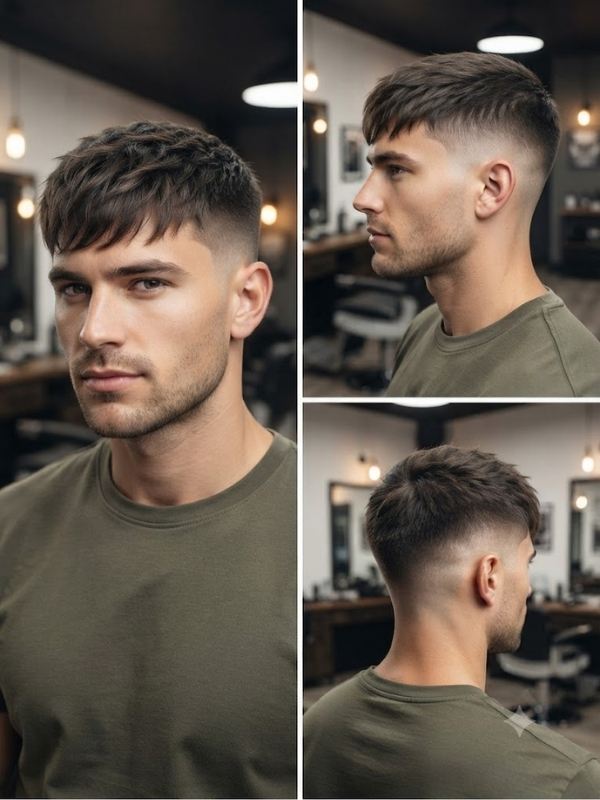
Some guys pair the longer top with a buzzed, faded back and sides for real contrast. It’s a bold combo.
This version keeps the fringe long and full up front while the fade underneath stays tight and clean. Think of it as the crop doing double duty, soft on top, sharp everywhere else.
It suits men who want something that photographs well and still feels low-key in real life. If your hair holds a fringe naturally, this one’s worth asking your barber about.
What Is a French Crop?
Before going further, it helps to nail down what is a French crop exactly, since the term gets thrown around loosely online.
At its core, the French crop is a short-to-medium cut with a blunt, straight-across fringe at the front, short sides, and minimal length on top. It originated as a low-maintenance answer to the messier quiffs and pompadours of past decades.
What makes it “French” isn’t geography, it’s the neat, almost tailored finish. No slicked-back drama, no exaggerated volume. Just clean lines and a fringe that sits just above the brow.
Long French Crop Haircut for Men

Now let’s talk about the long French crop haircut men actually ask for at the chair these days.
This version keeps that same blunt fringe but grows the top out enough to add texture and a bit of natural flow. Barbers usually point-cut the ends so the fringe doesn’t sit too heavy or blocky.
The sides can stay short, tapered, or faded, your call. What matters is the contrast between the fuller top and the neater sides, which is really the whole appeal of this cut.
Long Textured French Crop
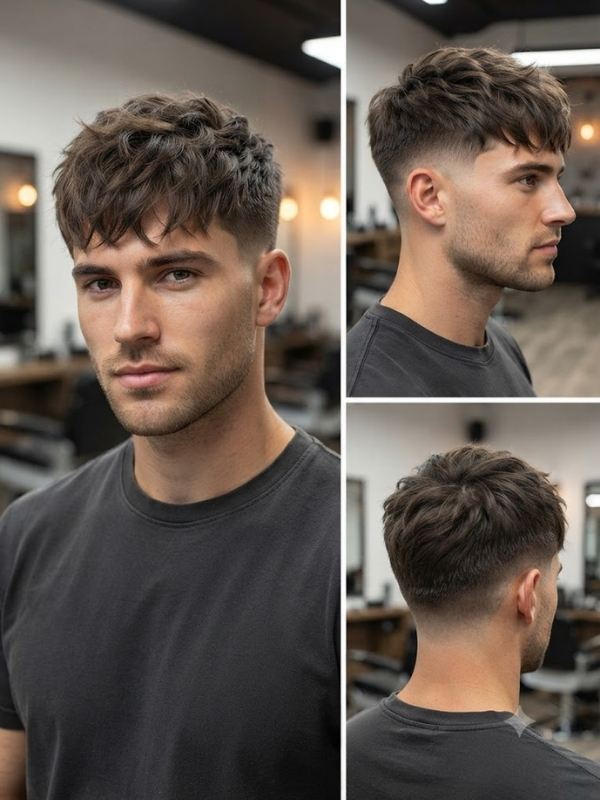
If your hair has any natural wave or you just like a bit of grit, the long textured French crop might be your best bet.
Texture here comes from how the hair’s cut, not just how it’s styled. Barbers use point-cutting or texturizing shears to break up the ends, giving you a piecey, lived-in look instead of a flat, uniform top.
Pair it with a light matte paste and you’ve got a style that looks effortless, even though there’s real technique behind it. Textured French crop long looks especially good on guys with medium-thick hair.
Long French Crop Fade Styles
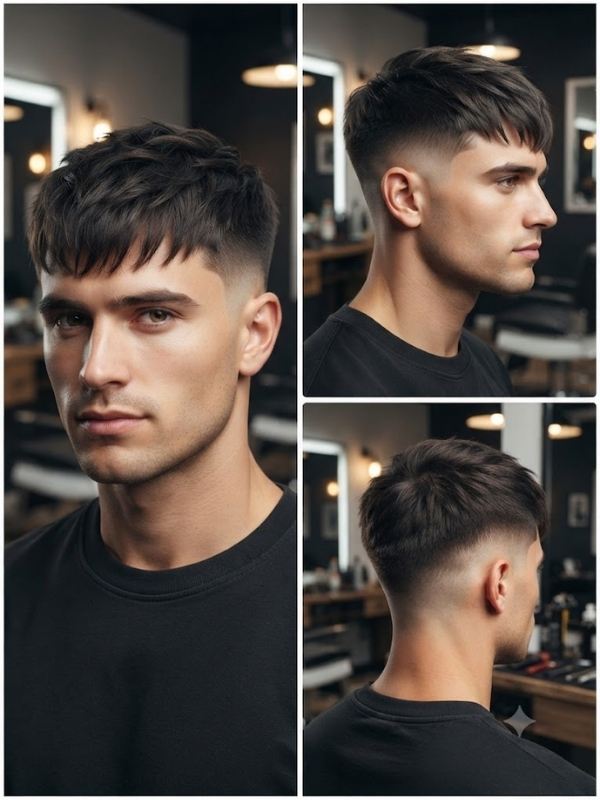
Fades are where this haircut really gets interesting. There’s no single “correct” fade, it depends on your face, your hair, and honestly your mood.
Below are the most requested fade pairings for the long French crop with fade, broken down so you can walk into your next appointment knowing exactly what to ask for.
Long French Crop Low Fade
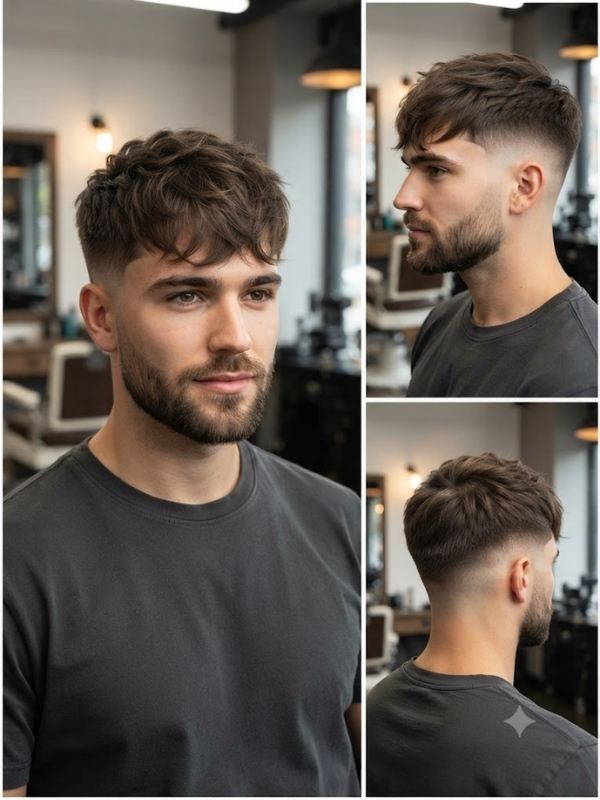
The long French crop low fade keeps things subtle. The fade starts just above the ears, blending gradually rather than jumping straight to skin.
It’s the safest option if you’re easing into fades for the first time. Professional, understated, and easy to grow out without looking awkward.
Long French Crop Mid Fade
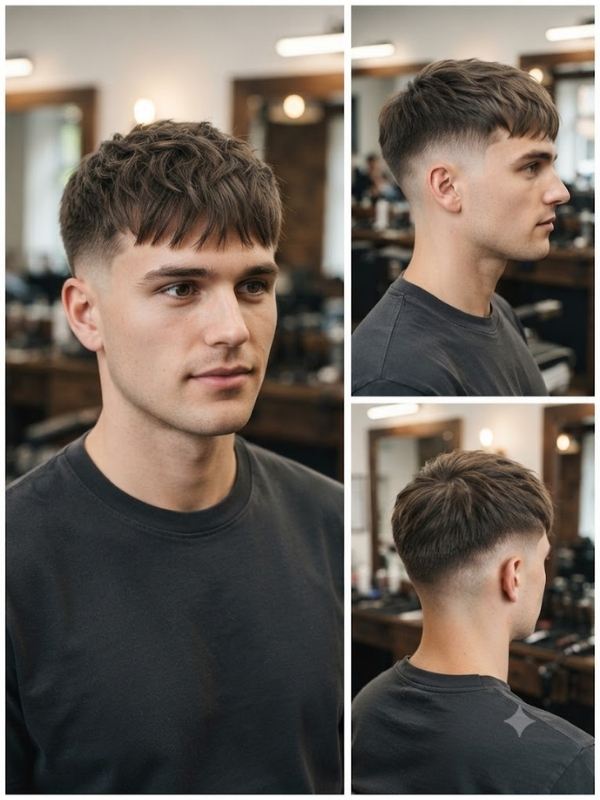
Want a bit more edge without going overboard? The long French crop mid fade starts higher, around temple level, and creates a clearer contrast against the longer top.
This is probably the most popular pairing right now. It balances sharpness with wearability, which is exactly why so many barbers default to it.
Long French Crop Fade with Longer Fringe
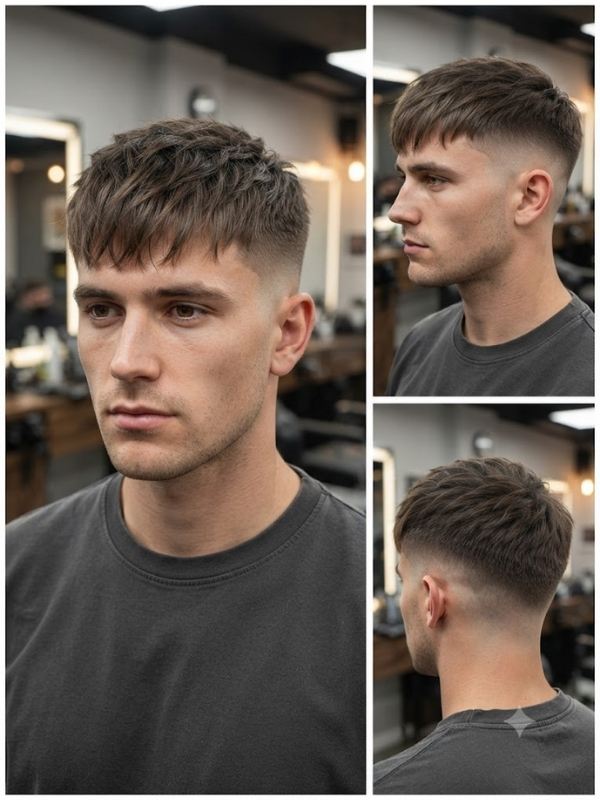
Here, the fringe gets extra length and movement while the fade does the heavy lifting on contrast.
It creates a nice visual trick, drawing the eye upward toward the fringe instead of the sides. Great option if you want your hairstyle to feel like the main event.
Long French Crop High Fade
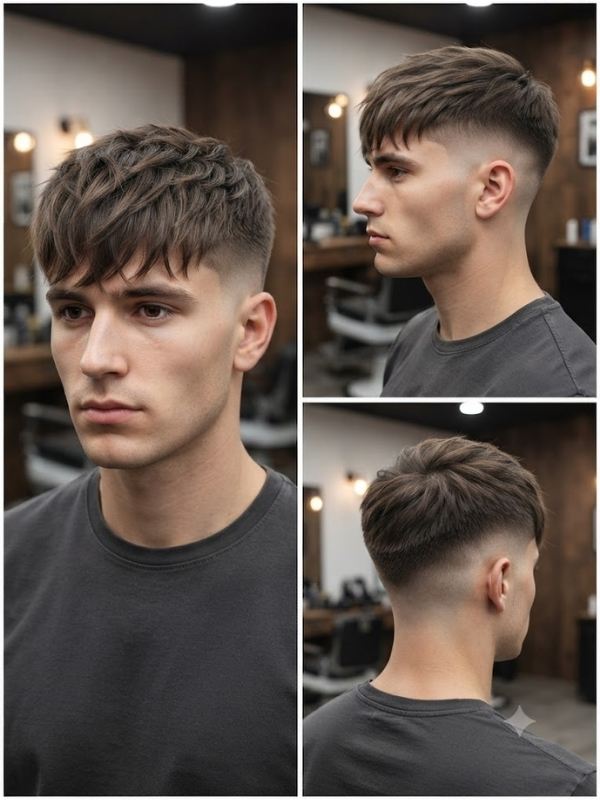
The long French crop high fade is bold. The fade climbs well above the temple, leaving a striking gap between short sides and a full, longer top.
It’s a younger, sharper look overall. Not for everyone, but if you like standing out a little, this delivers.
Long French Crop Skin Fade
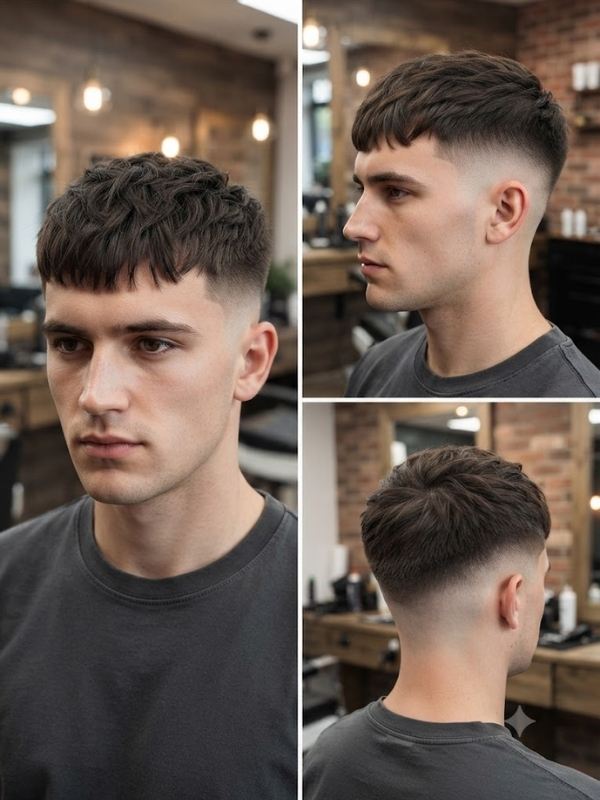
For maximum contrast, the long French crop skin fade takes the sides right down to skin. Nothing subtle about it.
This pairing photographs incredibly well and keeps things razor-sharp between cuts. It does need more frequent touch-ups though, skin fades grow out faster than you’d think.
Long French Crop Drop Fade
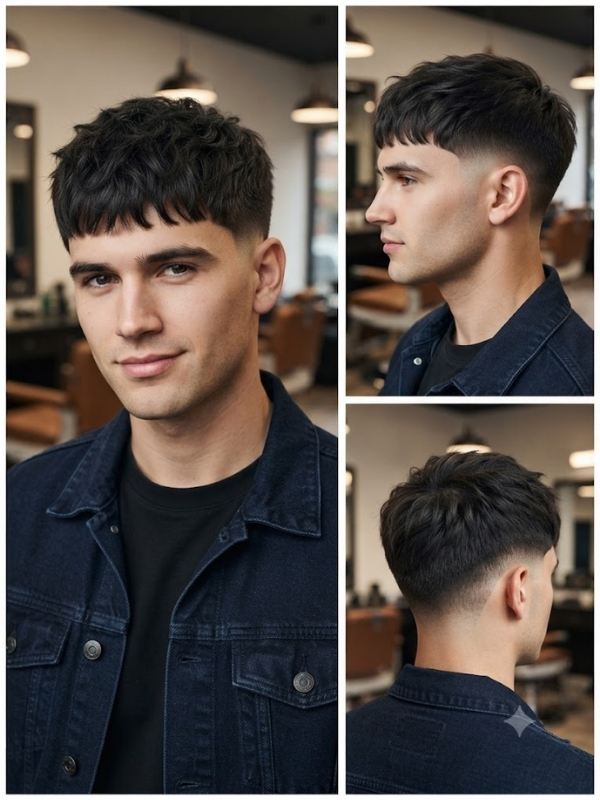
The long French crop drop fade curves downward behind the ear instead of running in a straight line. It follows the natural shape of your head.
Guys with rounder face shapes often prefer this one. The curve adds a subtle slimming effect that a straight fade doesn’t give you.
Long French Crop Burst Fade
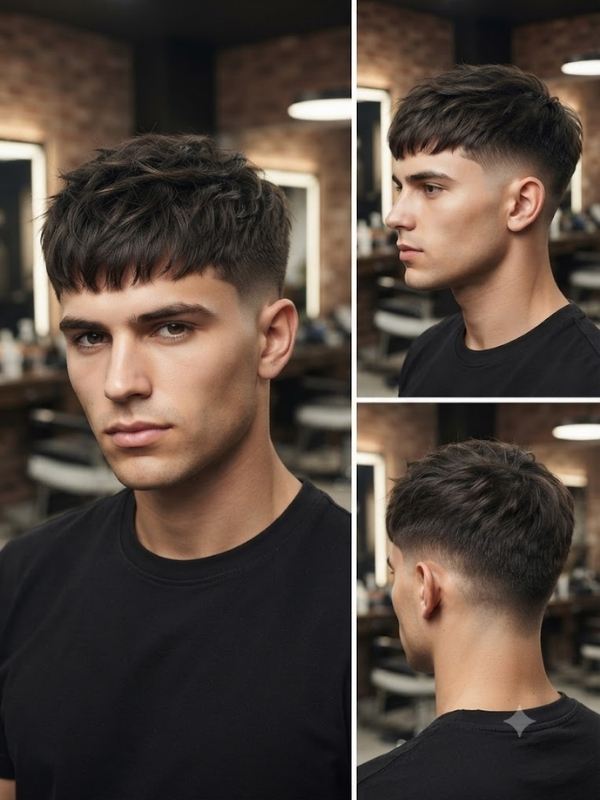
A burst fade fans out around the ear in a half-circle rather than wrapping all the way around the head. It’s a bit more artistic.
This works particularly well if you’re keeping length at the back too. It’s less common, so it also reads as more distinctive.
Long French Crop Taper Fade
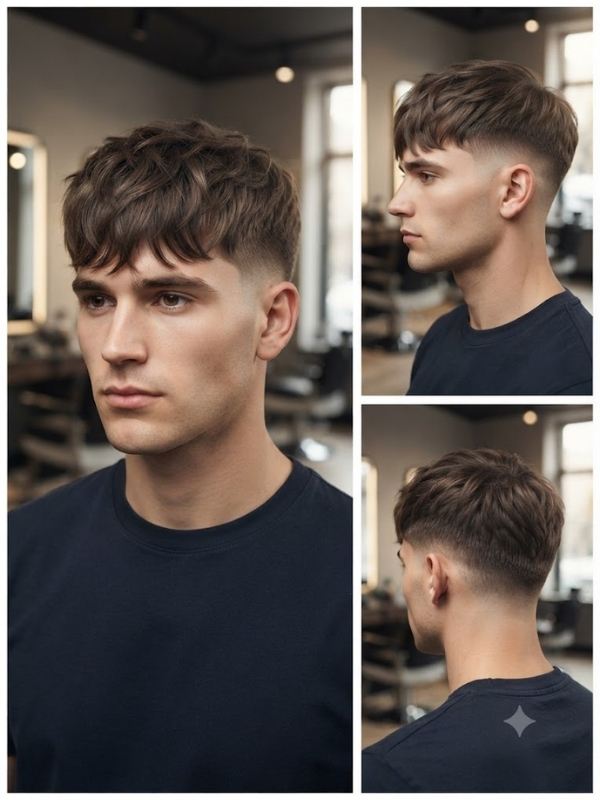
The long French crop taper fade blends gradually with no hard lines anywhere. It’s the gentlest possible transition from long to short.
If you work somewhere conservative, this is probably your safest fade option. Neat, professional, barely noticeable as a “fade” at all.
Long French Crop Textured Fade

Combine a textured top with any fade underneath and you get something that looks a little rougher, a little more masculine, honestly a lot more interesting.
It’s less about precision and more about movement. Ask your barber to leave some weight in the fringe so the texture has something to work with.
Long French Crop Fade with Beard
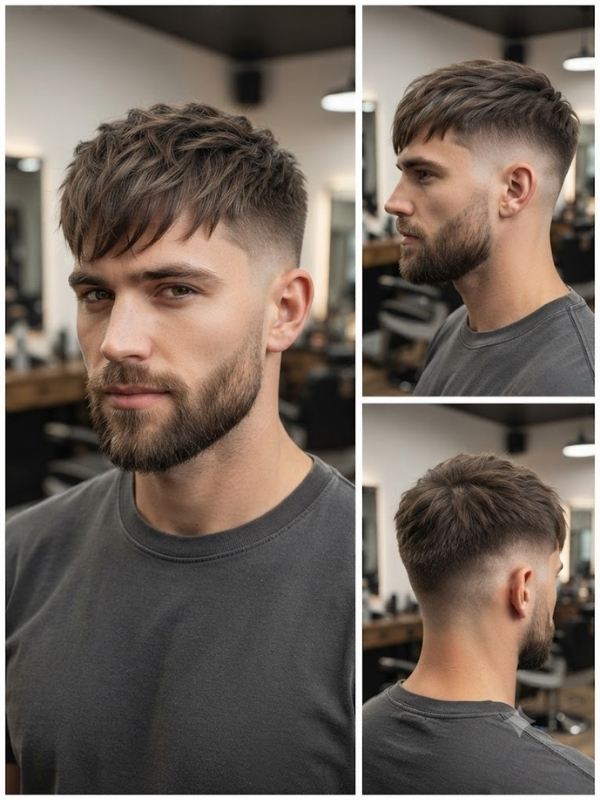
Pairing this cut with a well-groomed beard long French crop with beard creates a complete, structured look. The fade on the sides mirrors the beard’s clean edges.
It’s a combo that reads mature and deliberate. If you already grow facial hair, don’t skip this pairing, it genuinely elevates the whole style.
Long French Crop Fade with Messy Top
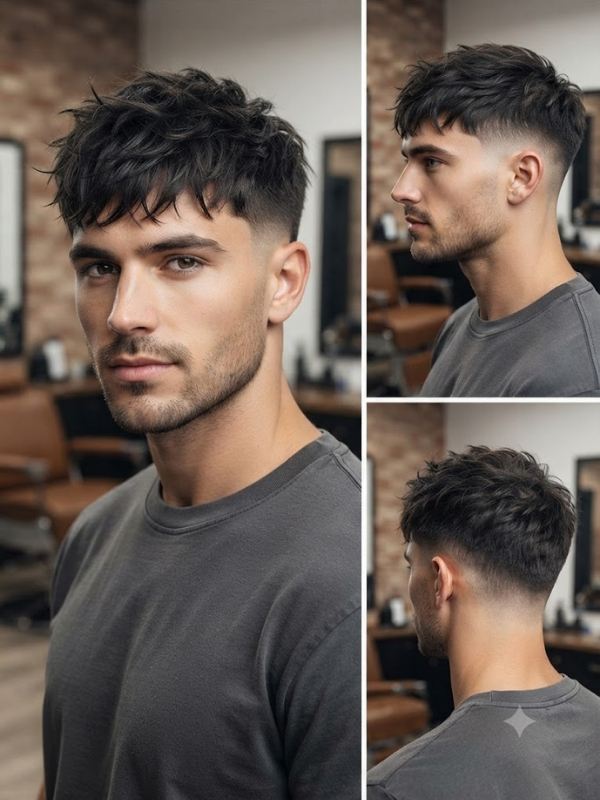
Sometimes you just want the messy long French crop look, tousled, undone, a little rebellious.
You still get the sharp fade underneath, but the top gets scrunched with a matte product instead of combed into place. Low effort, high payoff.
Long French Crop Low Fade and Taper Options
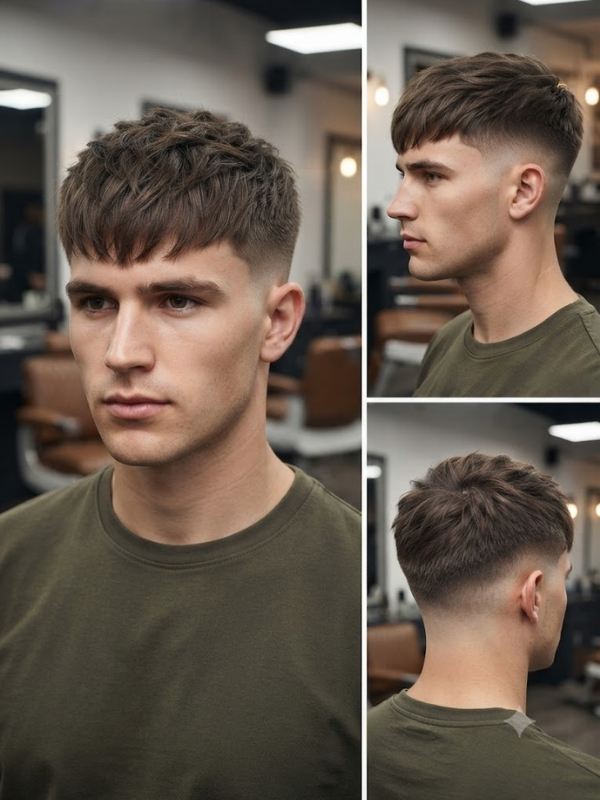
Worth pointing out separately: long French crop low taper and long French crop mid taper setups aren’t quite the same as fades, and barbers do distinguish between them.
A taper uses scissor-over-comb blending rather than clippers-to-skin, which leaves slightly more length throughout the sides. It’s softer, more natural, and grows out with far less awkwardness than a fade does.
If you’re not into the harsh, defined lines of a fade, ask specifically for a taper instead. Same overall shape, gentler execution.
Long French Crop for Different Hair Types
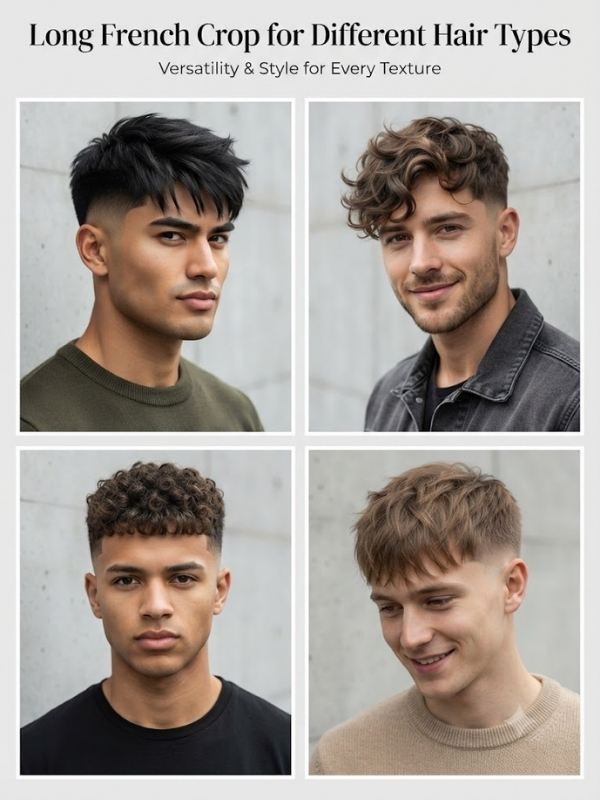
Not every head of hair behaves the same way, so let’s talk hair type, because it genuinely changes how this cut turns out.
Long French crop straight hair tends to hold a crisp, blunt fringe beautifully, since straight strands lie flat and cooperate with styling products easily. This is arguably the easiest hair type to work with for this cut.
Long curly French crop styles need a different approach entirely. Curls add natural volume and texture on their own, so a lighter touch with product avoids that overdone look. French crop with long hair that’s naturally curly often looks best left mostly untouched, just scrunched with a curl cream.
For long French crop thick hair, expect more weight in the fringe and possibly more frequent trims to stop it from getting bulky. Thinning shears help here, they remove bulk without shortening length.
Long French Crop for Different Face Shapes
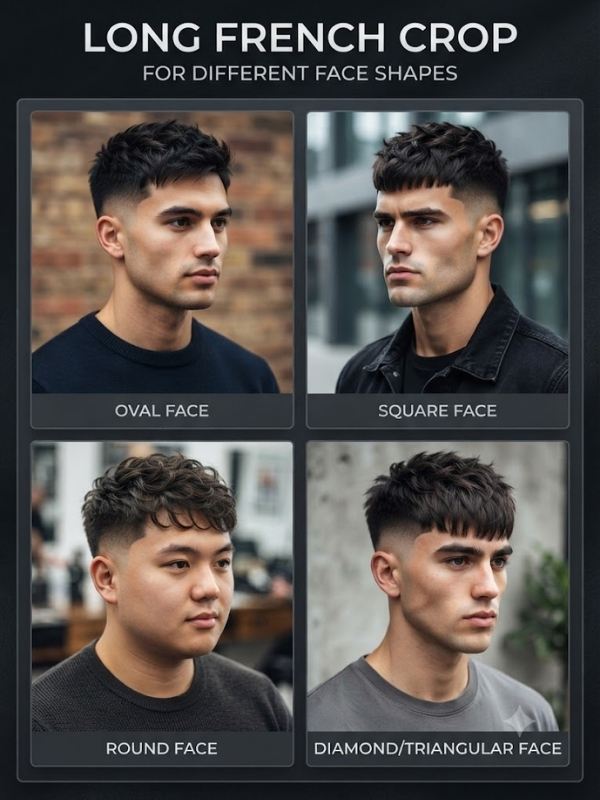
Your face shape genuinely matters when choosing how to wear this cut, more than most people realize.
Long French crop round face types benefit from added height on top and a slightly angular fringe, both of which create the illusion of length. Avoid keeping the sides too full, that just widens things further.
French crop for square face shapes actually suit this cut extremely well, the softer fringe balances out strong jaw lines nicely. French crop for oval face shapes have the most flexibility of all, honestly almost any fade or texture works here.
French crop for long face types should keep the fringe fuller and avoid excessive height on top, which only stretches the face further. A side-swept fringe helps break up length visually.
Long French Crop Fringe and Bangs
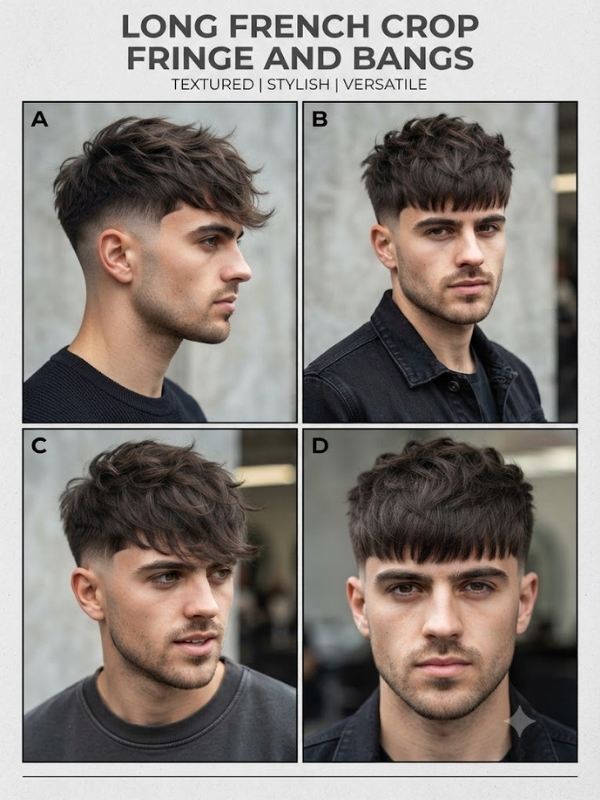
The fringe is genuinely the signature feature of this whole style, so it’s worth its own section.
Long fringe French crop and French crop long bangs both describe the same core idea, hair left longer at the front, cut with intention rather than just grown out randomly. The blunt, straight-cut fringe is what separates this from a simple long-on-top cut.
Styling-wise, you can push it forward for a classic crop look, side-part it for something dressier, or leave it loose for a casual, undone finish. Long French crop no fade versions rely almost entirely on this fringe for visual interest, since the sides stay softer.
Crew Cut vs French Crop
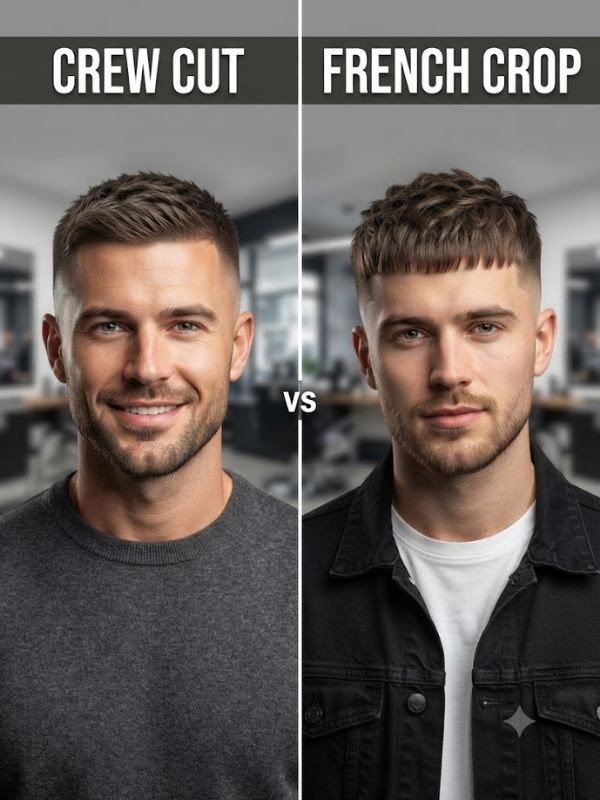
People mix these two up constantly, so let’s clear it up properly.
A crew cut keeps length fairly uniform across the top, gradually shorter toward the sides, with no distinct fringe. The French crop vs crew cut comparison really comes down to that fringe, the crop has one, the crew cut doesn’t.
Crew cuts also tend to sit shorter overall and require less styling effort day to day. If you want something with more personality and styling range, the French crop wins. If you want true wash-and-go simplicity, the crew cut still has its place.
How to Cut and Style a Long French Crop
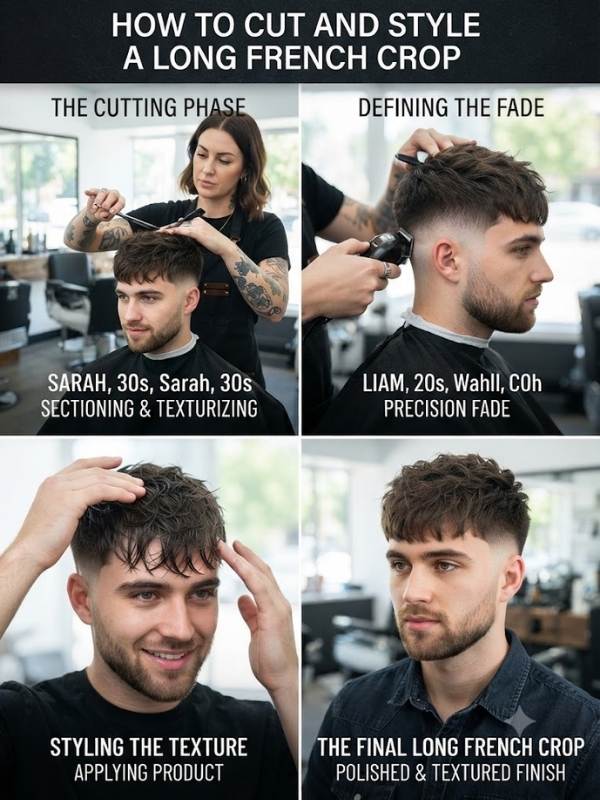
Wondering how to cut a French crop or handle it yourself between barber visits? Here’s the practical breakdown.
Cutting basics:
- Sides get clipped or tapered first, using whatever fade level you’ve chosen
- The top gets cut to your desired length, usually two to three inches for the longer version
- The fringe gets point-cut across the front, straight but slightly textured, not a hard blunt line
- Weight gets removed underneath with thinning shears if the hair’s naturally thick
Styling basics:
- Start with damp, towel-dried hair, never soaking wet
- Apply a small amount of matte paste or light pomade, rub between palms first
- Push the fringe forward and slightly to one side using your fingers, not a comb
- Let it air dry partially before finishing with a blow dryer on low heat for hold
Wondering how to style a French crop without a diffuser or fancy tools? Honestly, fingers and a bit of product get you 90 percent of the way there.
Best Long French Crop Variations
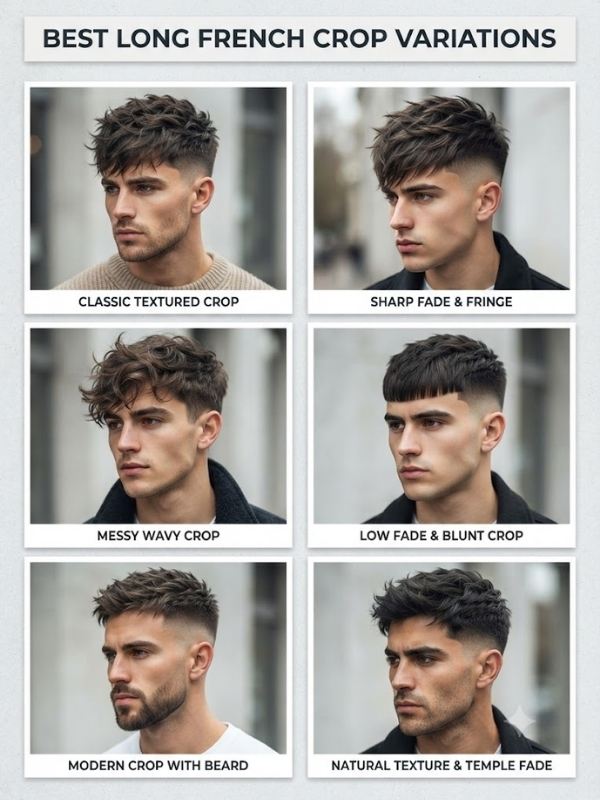
Beyond the fades and textures already covered, a few extra variations deserve a mention.
The long French crop undercut combines disconnected short sides with a noticeably longer, fuller top, creating sharp contrast without a traditional gradient fade. It’s a strong pick if you want something that looks distinctly different from every fade variation above.
There’s also the medium-length crossover version, sometimes called the medium French crop, which sits between the classic short crop and the fully long version discussed throughout this guide. It’s a solid middle ground if you’re not ready to commit to serious length just yet.
Long French Crop for Colour and Personal Style
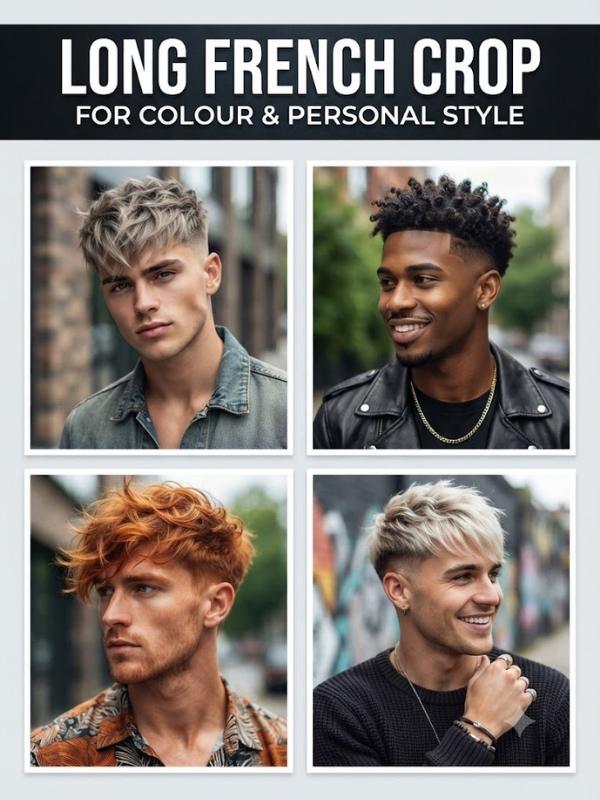
Colour adds a whole new dimension to this cut, and more men are experimenting with it lately.
Long French crop blonde looks particularly striking against darker skin tones, creating natural contrast that a single flat colour can’t achieve. Subtle balayage or a full bleach job both work, depending on how bold you’re feeling.
For long French crop Asian hair types, which tend to be straighter and thicker on average, colour tends to show up more vibrantly and evenly. Ask your colourist about semi-permanent options first if you’re testing the waters before committing fully.
Whatever direction you go, colour should complement the cut’s natural shape, not fight against it. A classic French crop paired with subtle highlights often looks more refined than one with dramatic, high-contrast colour.
Is the Long French Crop Easy to Maintain?
Fair question, and one worth answering honestly rather than just saying “yes, super easy” like every other article does.
French crop maintenance really depends on which version you’ve chosen. A low maintenance long French crop with a soft taper and minimal texture needs trims roughly every four to six weeks, and daily styling takes under five minutes.
Skin fades and high-contrast versions need more frequent barber visits, every two to three weeks, since the growth shows up faster against the shaved sides. French crop hair length at the top also affects upkeep, longer fringes need more product and more daily attention than shorter ones.
Bottom line: this cut can be as low-effort or as involved as you want it to be. That flexibility is honestly one of its biggest selling points.
Trends to Watch for the Long French Crop in 2026
A few shifts are worth flagging for anyone planning their next cut this year.
Natural texture is having a real moment, barbers report more requests for the modern French crop with minimal product and visible movement, rather than the slicked, heavily styled versions popular a few years back. Softer, more lived-in fades are replacing the harsh skin fades that dominated recent seasons too.
Colour experimentation is also trending upward, subtle, natural-looking tones rather than anything too dramatic. If you’re due for a cut soon, mentioning these trends to your barber might get you a fresher, more current result than just asking for “the usual.”
Common Mistakes to Avoid With a Long French Crop
A few small missteps trip people up more than they should, so it’s worth flagging them here.
Using too much product is probably the biggest one, a heavy hand with pomade turns a clean fringe into a greasy mess fast. Start small, you can always add more, but you can’t easily take it back out mid-styling.
Waiting too long between trims is another common issue. Even the low maintenance long French crop needs regular upkeep, skip too many appointments and the shape starts looking more like an overgrown mess than an intentional style.
Conclusion
The long French crop hairstyle earns its popularity honestly. It adapts to nearly any face shape, hair type, and personal style, without demanding much in return.
Whether you go for a subtle taper, a bold skin fade, or something textured and messy, the core appeal stays the same, clean structure up top with just enough edge underneath. Pick the version that matches your daily routine and your personality, then let your barber know exactly what you’ve read here.
Got a version you’re leaning toward? Drop a comment or bring a photo of this guide straight to your next appointment. Sometimes the easiest way to describe what you want is just to point.
