

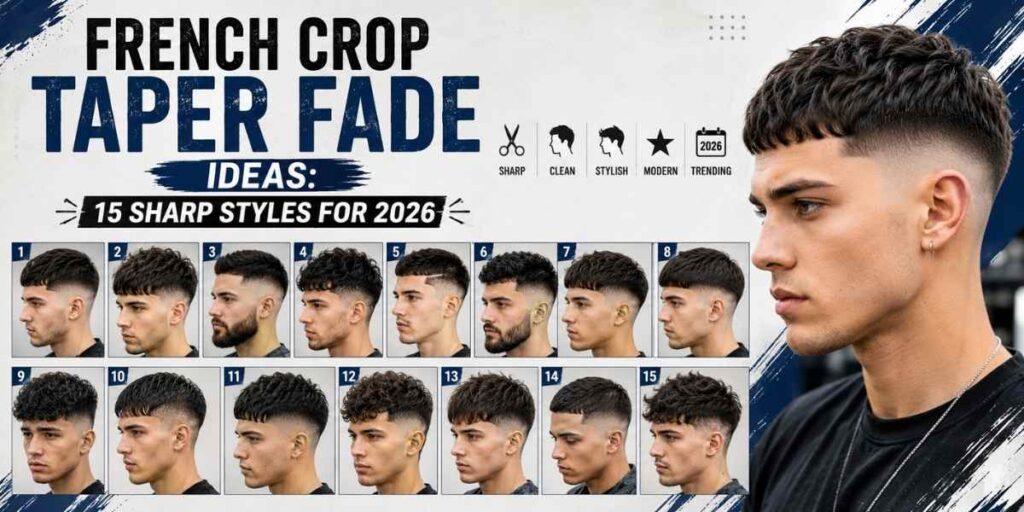
Walk into any barbershop right now and you’ll hear the same two words on repeat. French crop taper fade. It’s not hype. It’s the cut that just works, no matter your hair type or face shape.
This guide breaks down every version worth trying in 2026. You’ll get styling advice, maintenance tips, and honest answers to the questions you’re probably typing into Google right now.
What is Taper Fade French Crop?

A French crop haircut pairs a short, textured top with a taper fade haircut on the sides and back. The top sits forward, often cut into a blunt or choppy fringe that grazes the forehead.
The sides taper down gradually, blending into the skin or staying short and neat near the ears. It’s clean on the bottom, textured on top. That contrast is the whole point.
Think of it as the low-maintenance cousin of the pompadour. Less styling, same sharp payoff.
Why is French Crop Taper Fade So Popular?

Guys want a cut that looks put together without thirty minutes of blow-drying every morning. The French crop fade delivers exactly that.
It also flatters almost every face shape and hair texture, which barbers will confirm if you ask. That flexibility is rare in a single haircut.
Add in that it photographs well and grows out without looking messy, and you’ve got a style built for real life, not just the barber’s chair.
French Crop vs Taper Fade: Understanding the Differences
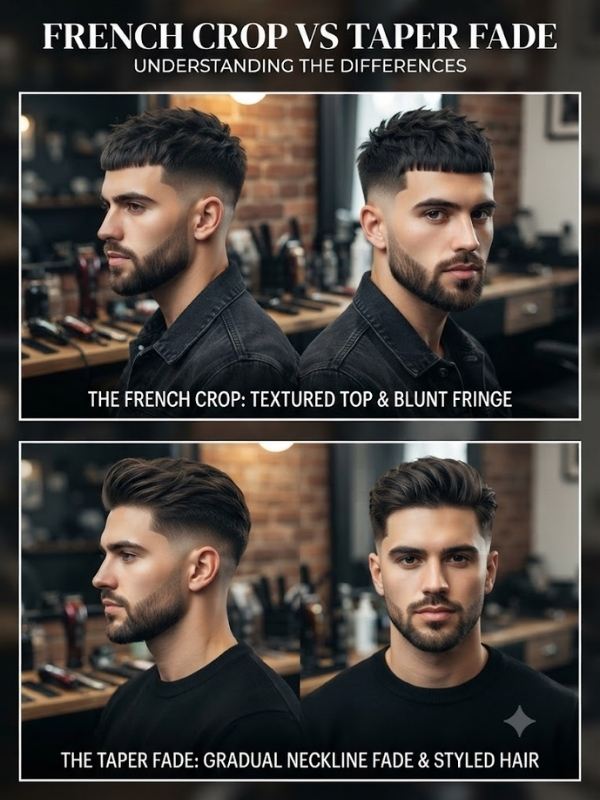
Here’s where people get confused. The French crop refers to the top, the texture, and the forward fringe. The taper fade describes what happens on the sides.
You can’t really have one without the other in this style, but the terms aren’t interchangeable. A barber needs to hear both to give you the right cut.
Where the fade sits changes the whole vibe of the haircut, so let’s break down the three main placements.
Crop Taper Fade Low French

A low taper fade starts its blend just above the ears. It’s subtle, close to a traditional trim but with cleaner lines.
If you work in an office or just prefer a quieter look, this is your best bet. It reads as professional without losing the edge of the crop on top.
French Crop Mid Fade Taper
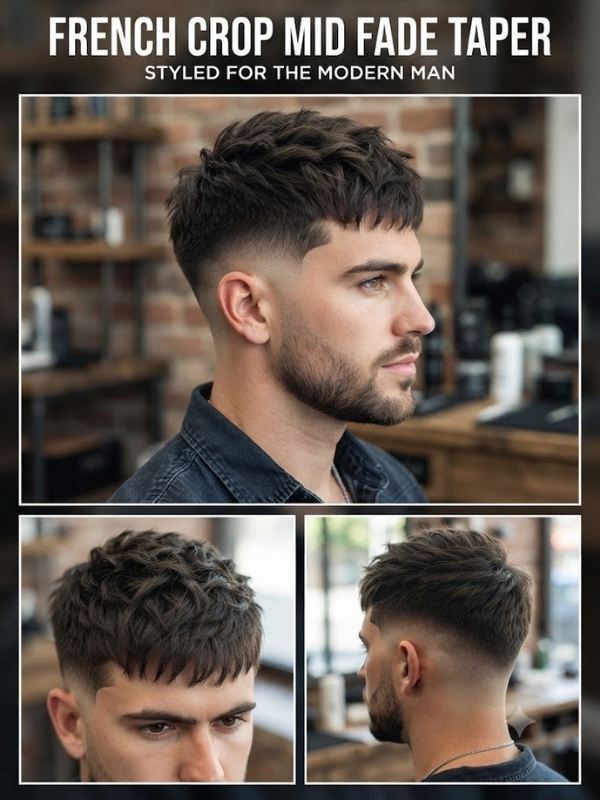
The mid taper fade starts around the temple area, roughly halfway up the side of the head. It’s the middle ground, noticeable but not flashy.
Most barbers default to this placement because it suits nearly every head shape. It’s the safe, reliable choice if you’re not sure what you want yet.
French Crop with High Taper Fade
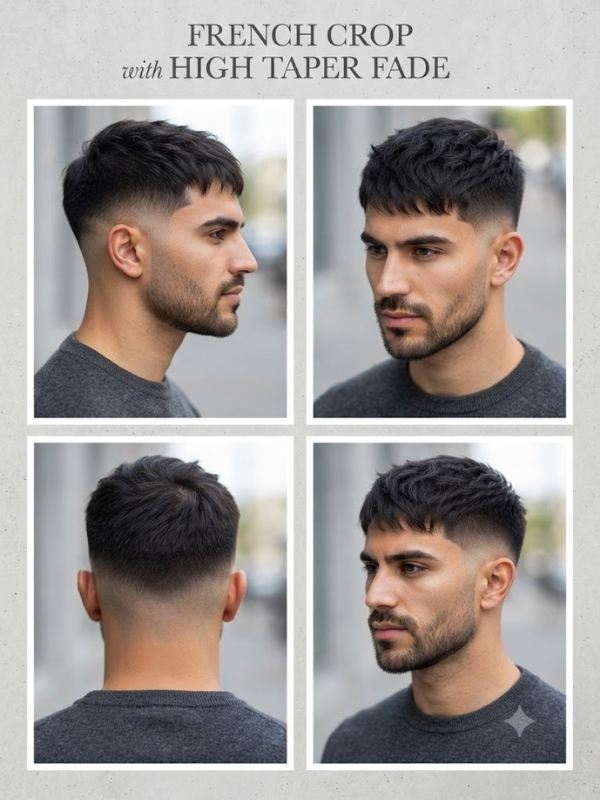
A high taper fade starts higher, closer to the crown, and often blends into a skin fade near the bottom. This version has more visual punch.
It works well if you’ve got a strong jawline and want the haircut to do some talking. Just know it needs more frequent trims to stay sharp.
Top Crop Taper Fade Hairstyles
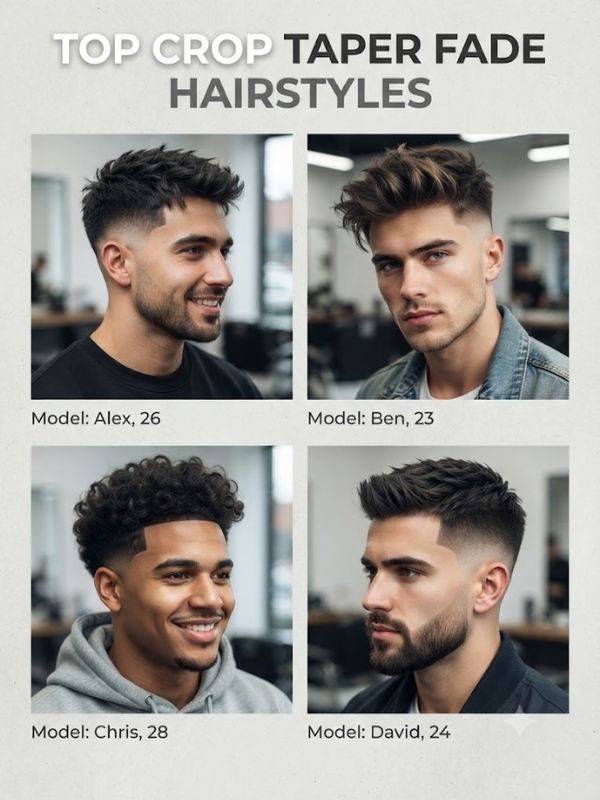
Fifteen ways to wear this cut, from the classic version to bolder takes you might not have considered yet.
1. Classic French Crop Taper Fade Hair Cut
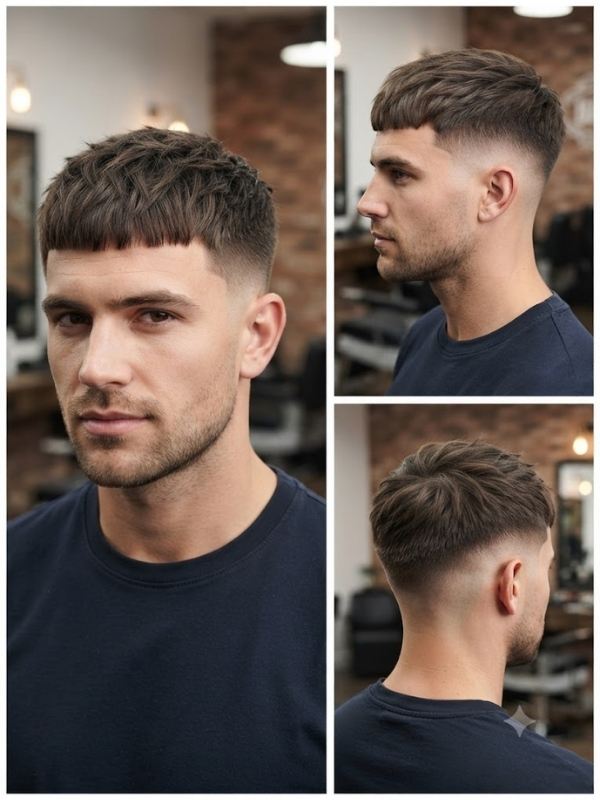
The original. Short textured French crop on top, clean fade on the sides, simple forward fringe.
No frills here, just a cut that always looks intentional. It’s the version most people picture when they hear the name.
2. Low Taper Fade French Crop

Pairs a subtle low fade with slightly longer top length. Great for anyone easing into shorter cuts for the first time.
It keeps things conservative while still giving you that crisp, tapered finish along the sides.
3. Low Taper Fade Dirty French Crop
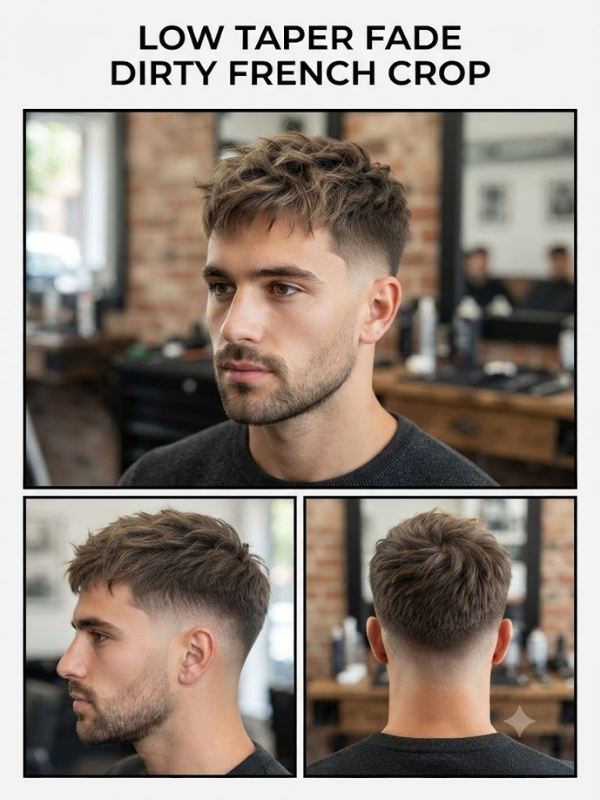
The “dirty” version means messier, more textured styling on top rather than a slicked, uniform look.
Run some texture powder through it and let strands fall where they want. It’s effortless without looking careless.
4. French Crop with Textured Low Taper Fade
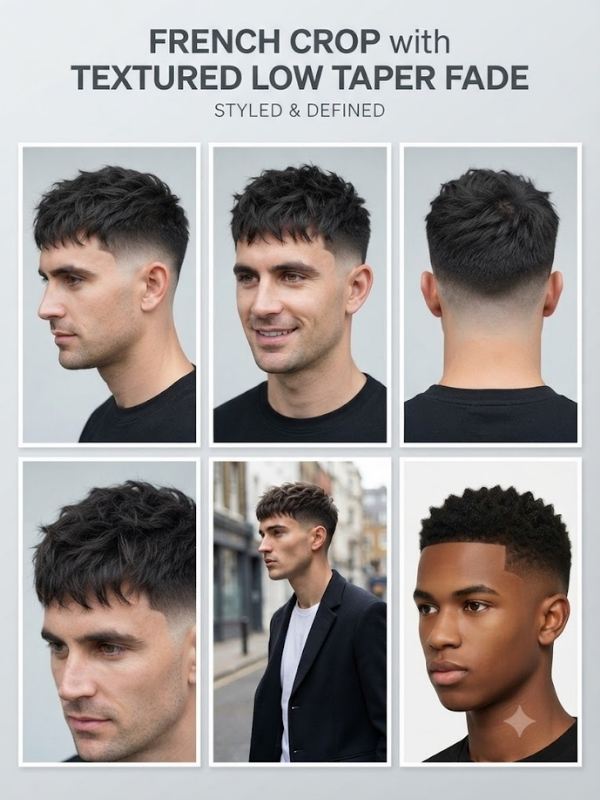
Heavier texturizing on top pairs with a soft fade below. The result feels more casual, almost undone.
This one leans into movement. It suits guys who want depth in their hair rather than a flat, uniform top.
5. Taper Fade Short French Crop
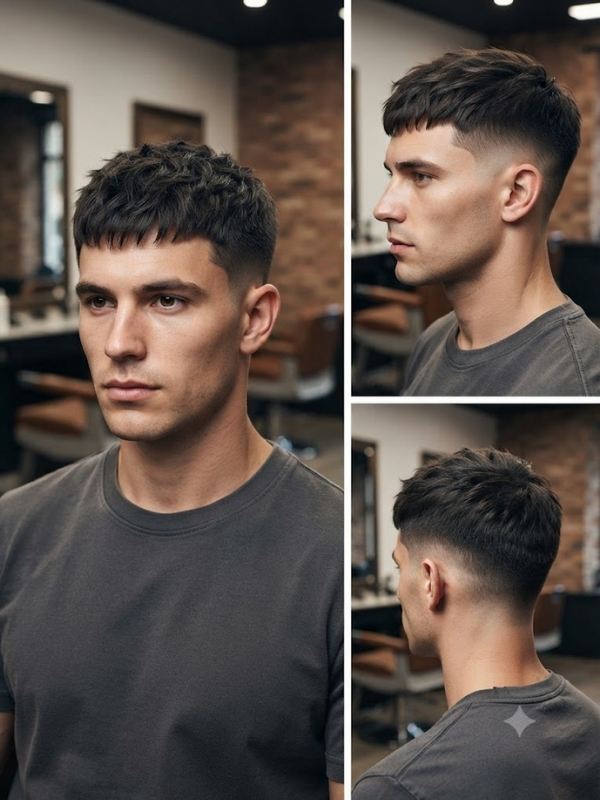
A tighter, short French crop with minimal length on top. Barely anything to style, which is exactly the appeal.
If mornings are rushed, this variation cuts your routine down to almost nothing.
6. French Crop Taper Fade Straight Hair

Straight strands hold the crop shape cleanly, since there’s no natural curl fighting the fringe.
The French crop fringe sits flat and sharp, which makes straight hair one of the easiest textures to work with here.
7. French Crop Taper Fade on Curly Hair
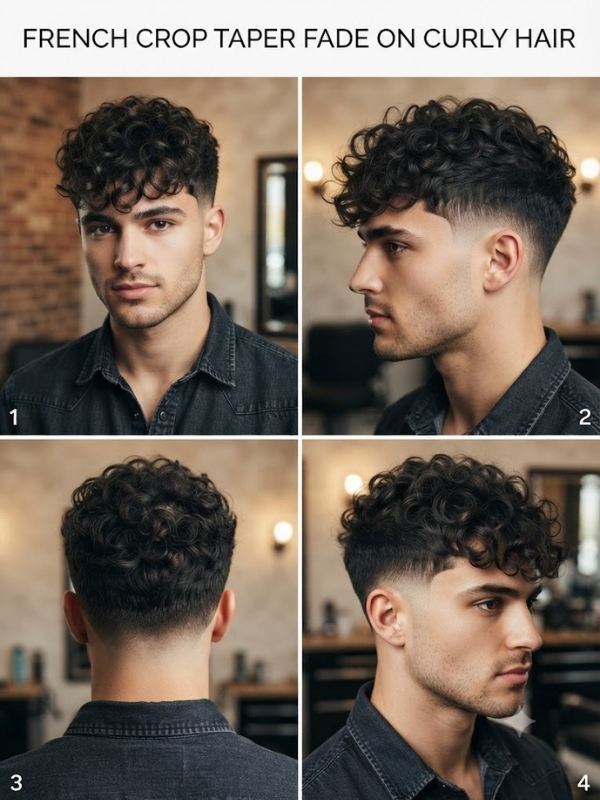
A curly French crop brings natural volume and bounce to the top section, while the fade keeps the sides controlled.
It’s a great way to show off curl pattern without the length getting unruly or hard to manage.
8. French Crop Taper Fade with Beard
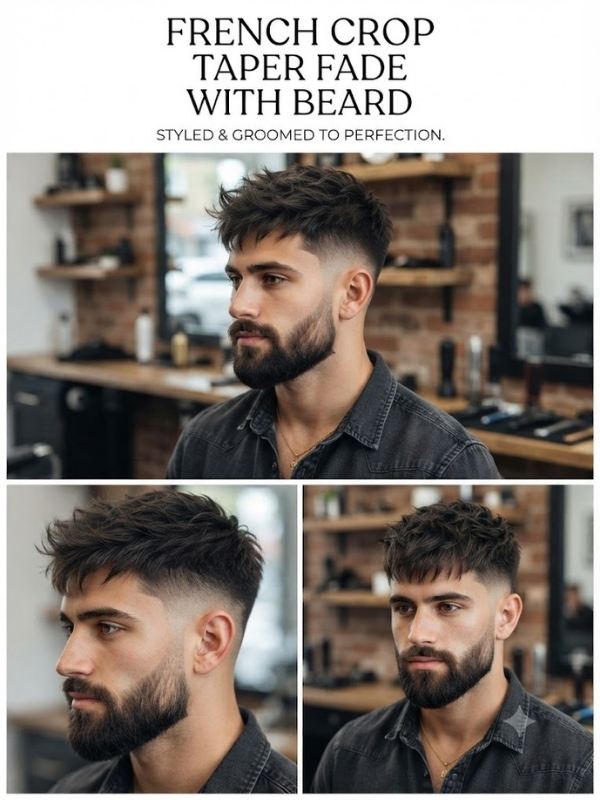
Pairing this cut with a well-groomed beard balances the sharpness on top with warmth along the jaw.
Ask your barber to line up the beard and the fade together so both blend into one cohesive look.
9. Textured Crop Low Fade Inspired French Cut
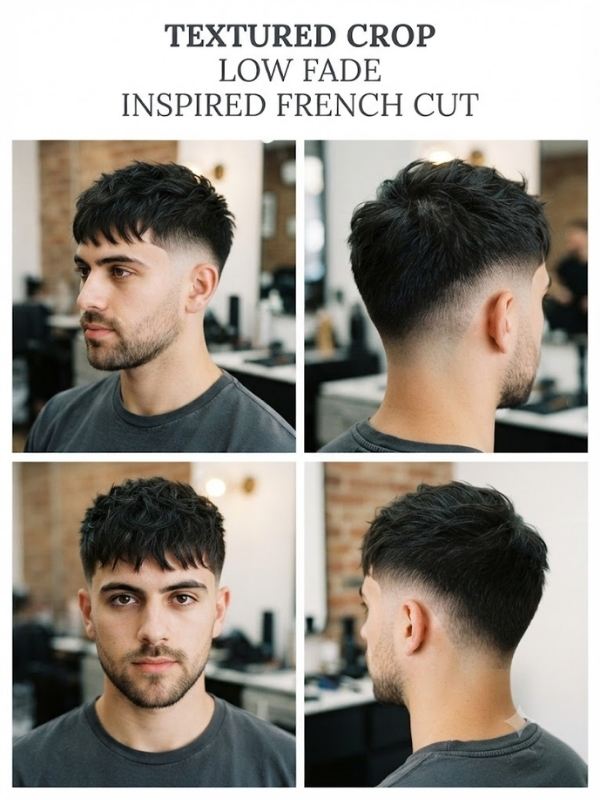
A hybrid style that borrows texture from the textured crop haircut family while keeping the French crop’s forward fringe.
It’s a good option if you want something familiar but not identical to every other crop cut you’ve seen.
10. Inspired French Crop Taper Skin Fade
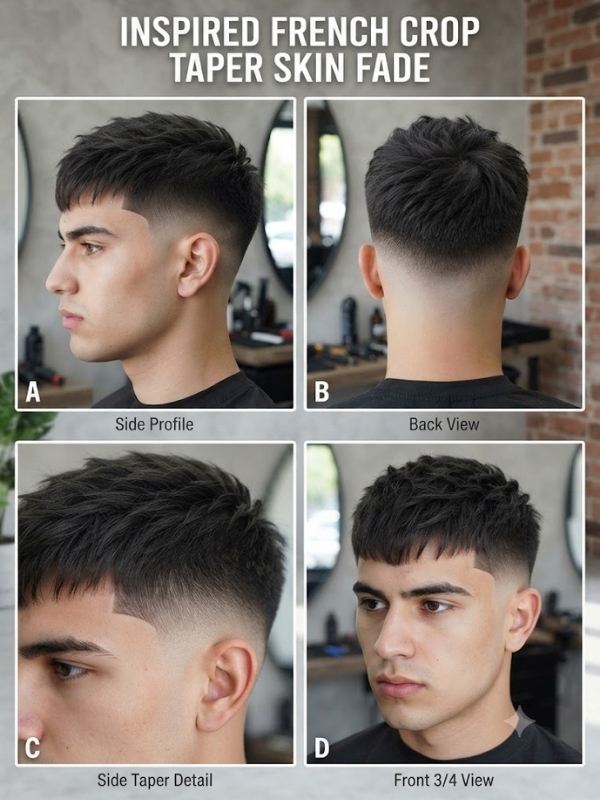
Combines the forward fringe with a full skin fade for maximum contrast between the top and sides.
This is a bold, high-maintenance choice, but it makes a real statement when it’s freshly cut.
11. French Crop Taper Fade Mullet
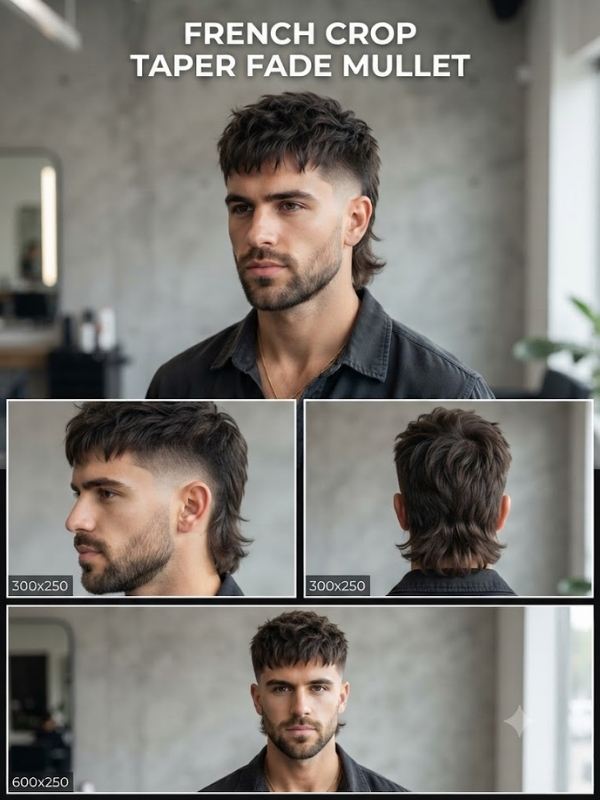
Yes, it exists, and yes, it works. Short sides and fringe up front, a bit of length left at the back.
It’s a playful twist for guys who want the crop’s structure without fully committing to the traditional shape.
12. French Crop Mid Taper Fade
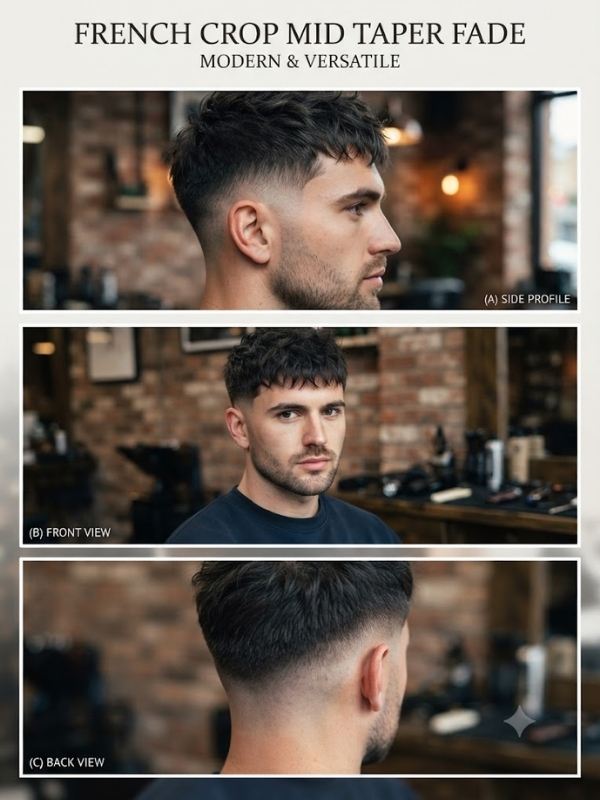
Balanced, versatile, and easy to maintain. The mid taper fade blend keeps this variation looking fresh for weeks.
It’s arguably the most popular pick among first-timers trying the French crop for the first time.
13. French Crop High Taper Fade
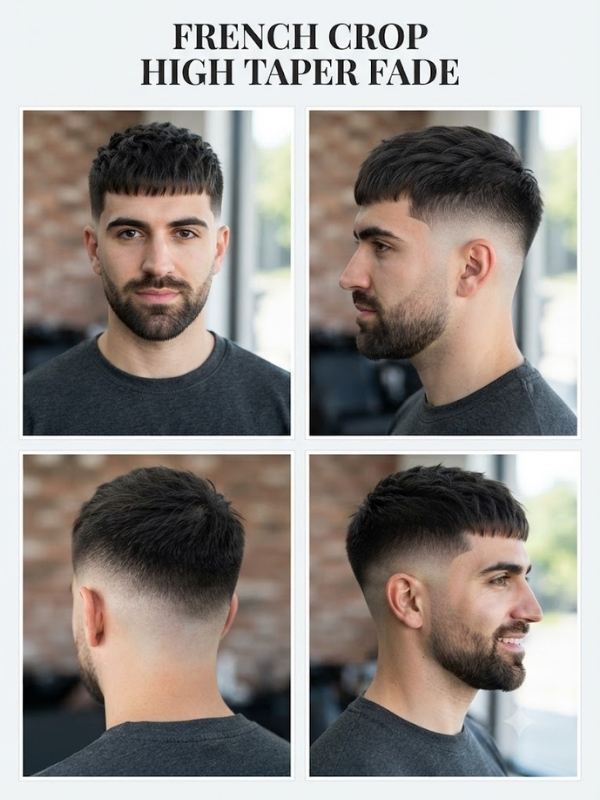
More drama, more contrast. The high taper fade version pushes the blend higher for a sharper, more dramatic silhouette.
Great for special occasions or anyone who wants their haircut to be the first thing people notice.
14. French Crop Taper Fade with Hard Part
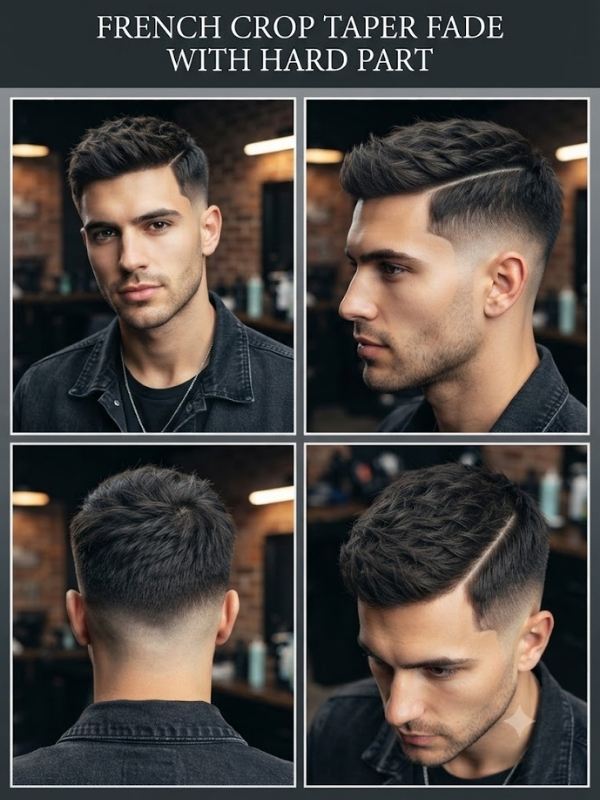
A shaved line separates the fringe from the fade, adding a crisp, graphic detail to the whole cut.
It’s a small addition that makes a noticeable difference, especially in photos or under bright lighting.
15. French Crop Taper Fade with Line Up
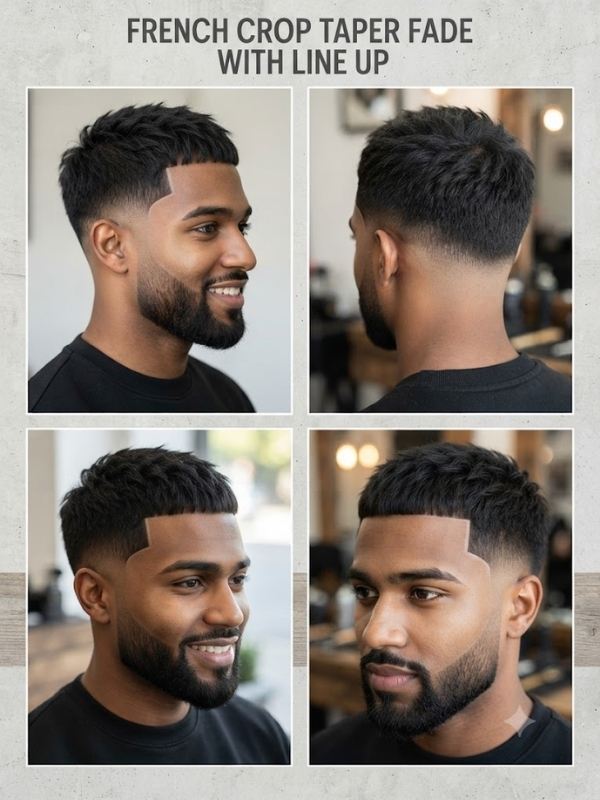
A sharp line up around the hairline and neckline finishes the cut with precision.
This detail is what separates a good fade from a genuinely great one, so don’t skip asking for it.
What French Crop Taper Fade Works Best for Your Hair Type?
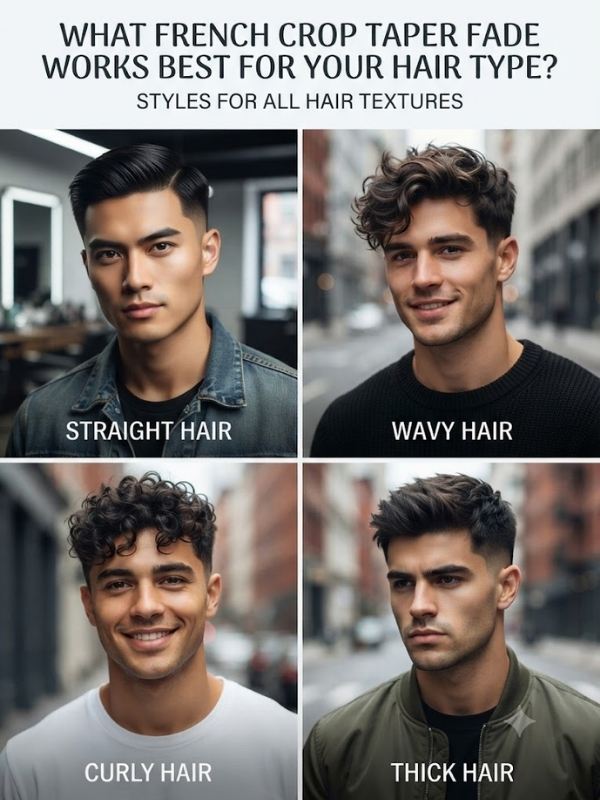
Not every version of this cut suits every hair texture the same way. Here’s what actually works.
Straight Hair
Straight hair holds a crisp fringe line and shows off the fade’s blend clearly. It’s low effort, since there’s minimal frizz to manage.
A little matte paste is usually all you need to keep the top in place through the day.
Thick or Heavy Hair
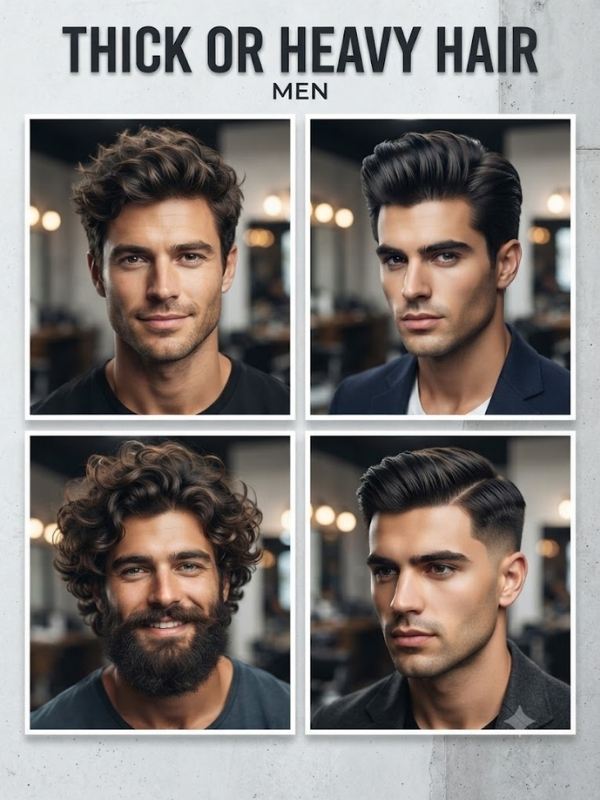
Textured top for thick hair helps remove bulk without sacrificing length. Ask your barber to point cut or thin the crown so it doesn’t sit heavy.
Thick strands also hide fade lines faster, so plan for more frequent trims than someone with finer hair.
Frizzy Hair
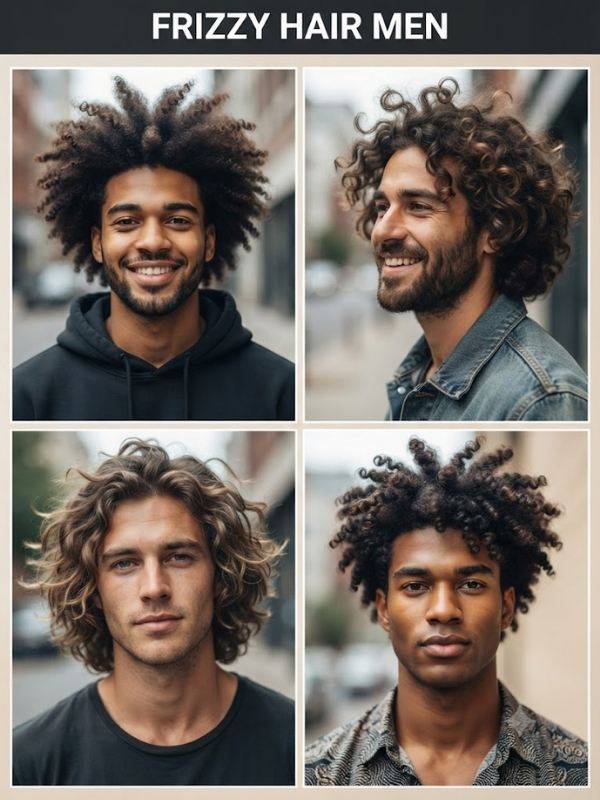
Frizz can actually work in your favor here, adding natural texture to the fringe. A curl cream or light sea salt spray helps define it without weighing it down.
Avoid heavy oils, which tend to make frizzy hair look greasy instead of textured.
Curly Hair
Curls add volume that straight hair simply can’t replicate. Lean into it rather than fighting it with flat irons or excessive product.
A lightweight cream keeps curls defined while letting the French crop fringe fall naturally over the forehead.
What Face Shapes Look Best With a French Crop Taper Fade?
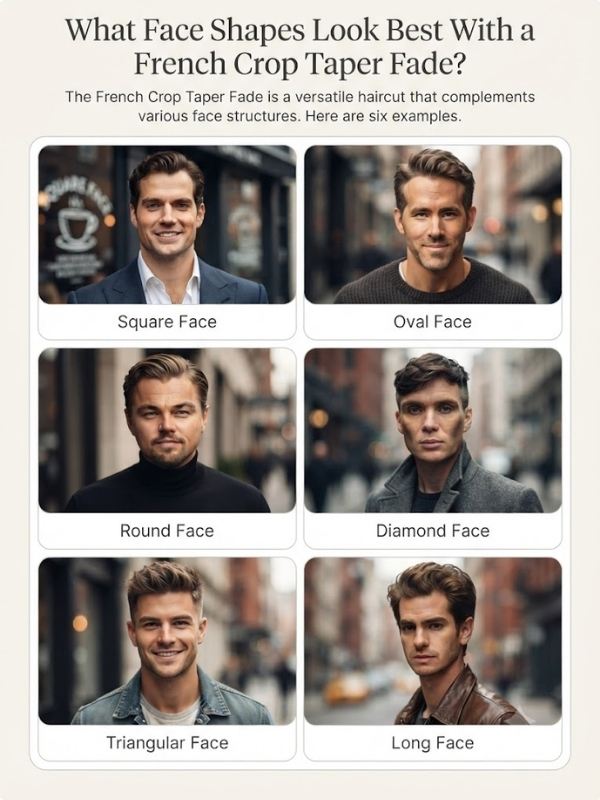
This cut is genuinely one of the more adaptable options out there, but small tweaks help it flatter your specific shape.
Round Face
Fringe for round face shapes should sit slightly angled rather than perfectly straight across. It adds definition and breaks up roundness.
Keep the sides tighter too, since that creates a more vertical line that elongates the face.
Oval-Shaped Face
Oval faces can wear almost any version of this cut without issue. You’ve got the most freedom here, so experiment with fringe length and fade height.
Honestly, if you’ve got an oval face, just pick whichever style from the list above catches your eye.
Rectangle Face
Avoid pushing the fade too high, since that can stretch the face further. A mid taper fade with a fuller fringe softens sharp angles.
Some added width on top through texture also helps balance a longer face shape.
Long Face
Similar rules apply here. Keep top length moderate and avoid slicking hair straight back, which draws the eye downward.
A fuller, textured fringe adds width visually, which helps counterbalance the length of the face.
Heart-Shaped Face
Heart-shaped faces benefit from a fringe that softens a narrower chin. Side-swept texture works better than a blunt, straight-across cut.
Pair it with a low taper fade for a look that stays balanced from top to bottom.
How to Ask a Barber for a French Crop Taper Fade
Bring a French crop reference photo. Seriously, this single step prevents most bad haircuts. Barbers work off images far better than verbal descriptions.
Specify the fade height (low, mid, or high) and how much length you want left on top. These two details alone cover most of the French crop barber instructions you’ll need to give.
Mention your hair type too. A good barber will adjust technique based on whether you’ve got thick, thin, curly, or straight strands.
How Long Should I Be on Top?
Most versions of this cut keep the top between one and two inches. That’s enough hair length on top to style and texture without becoming unmanageable.
Shorter lengths, closer to half an inch, suit the tighter crop variations. Longer lengths give you more room for a choppy fringe or messier finish.
Talk to your barber about your natural hair growth pattern too, since that affects how the top will sit day to day.
How to Wear a French Crop Taper Fade
Start with towel-dried hair, not soaking wet. Product grips better and you’ll get a truer sense of how the style will hold.
Work a small amount of matte clay or matte paste through your fingers first, then apply it evenly through the top section.
Push the fringe forward and slightly tousle it for texture. A matte finish looks more natural than anything glossy or slicked down, and it suits this cut best.
How Often Does It Need Maintenance?
Every version of this cut needs regular barber trim visits, typically every two to four weeks. Fades grow out faster than most haircuts because the blend loses its sharp lines quickly.
A low fade can stretch a bit longer between visits, maybe four to five weeks, since there’s less contrast to maintain.
A skin fade or high fade needs tighter upkeep, closer to every two weeks, if you want it looking fresh consistently.
Is the French Crop Taper Fade a Good Haircut for Kids?
Absolutely, and it’s become a popular pick for younger guys too. It’s practical, doesn’t need much styling, and grows out without looking scraggly.
A low taper fade version usually works best for kids, since it’s easier for parents to maintain between salon visits.
It also gives kids a clean, sharp look for school photos or events without requiring a complicated morning routine.
French Crop Taper Fade vs Textured Crop Haircut
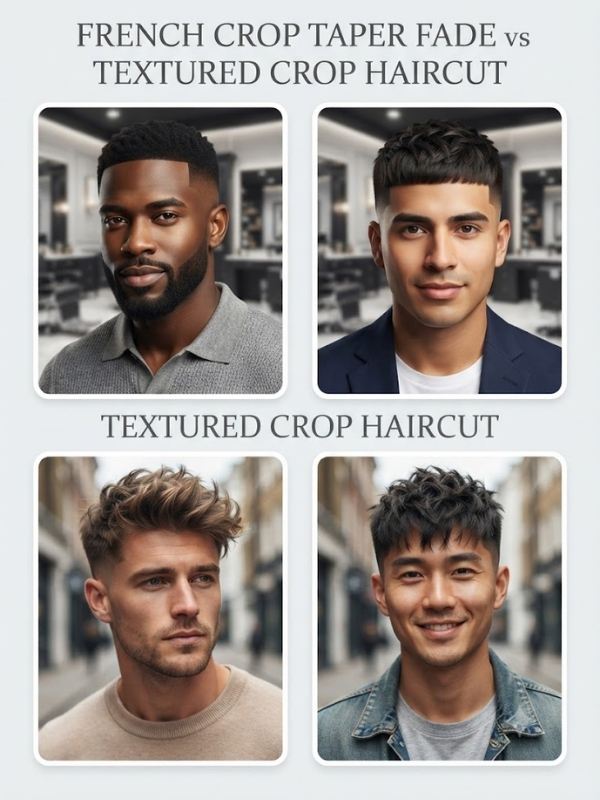
These two get mixed up constantly, so here’s the real difference. A textured crop haircut typically has an all-over choppy texture without the forward-pushed fringe.
The French crop specifically pushes hair forward into a defined fringe line. The textured crop is looser and less structured across the whole top.
If you want a defined shape, go French crop. If you prefer something more relaxed and undone, the textured crop might suit you better.
Common Mistakes to Avoid
A few missteps show up again and again with this haircut. Here’s what to watch for.
Overloading the Fringe
Too much product turns a clean fringe into a greasy mess. Start small. You can always add more, but you can’t easily undo overdoing it.
Too Much Fade
Going too high or too aggressive with the fade can overwhelm your face, especially if you’ve got a leaner jawline. Talk placement through with your barber first.
Product Overuse
More isn’t better here. A dime-sized amount of matte paste or clay usually covers the entire top section without issue.
Not Bringing a Reference Photo
Words alone rarely translate the way you picture them. A photo closes that gap and saves you from a disappointing cut.
Not Considering Your Hair Type
What works for straight hair won’t automatically work for curly or thick hair. Always factor in your natural texture before picking a style off this list.
French Crop Taper Fade Cost and Where to Get One
Prices vary widely depending on your barber’s experience and location, generally ranging from twenty-five to sixty dollars for a standard cut. Skin fades and detailed line ups often cost more.
Look for a barber who specifically lists French crop or fade work in their portfolio. Instagram and TikTok are honestly great places to scout local talent these days.
Don’t be afraid to ask to see recent work in person before booking, especially if you’re trying a new shop for the first time.
Best Products for Styling a French Crop Taper Fade
Product choice matters more than people expect with this cut. The wrong texture can flatten your fringe or make it look greasy by lunchtime.
Matte clay gives the strongest hold with zero shine, which suits the classic and skin fade variations best. It’s thicker than paste, so a little goes further than you’d think.
Matte paste works better for lighter, more natural movement. It’s the go to choice for the messier or dirty French crop styles on this list.
For curly or frizzy textures, a curl cream or light sea salt spray does more good than a heavy clay ever could. These add definition without clumping strands together.
Finish with a touch of texture powder at the root if you want extra lift. It’s a small trick most barbers use but rarely mention unless you ask.
Frequently Asked Questions
Does a French crop taper fade suit thinning hair?
Yes, shorter lengths on top actually help disguise thinning areas better than longer styles, which tend to expose gaps more clearly.
Can I get this cut with a receding hairline?
Definitely. Ask your barber to adjust the fringe placement slightly back from the hairline so it looks intentional rather than covering something up.
How do I keep the fade looking sharp between trims?
Regular washing and a light trim of stray neckline hairs at home can stretch the sharp look a few extra days past your usual schedule.
What’s the difference between a taper and a fade?
A taper gradually shortens hair without reaching the skin, while a fade blends all the way down to bare skin at some point along the sides.
Will a French crop taper fade work with a cowlick?
Most of the time, yes. A skilled barber can cut around a cowlick by adjusting the fringe direction, so it’s worth mentioning this during your consultation rather than after the cut.
How much length should I ask to keep for versatility?
Requesting around one and a half inches on top gives you room to style it slicked, textured, or messy depending on the day, without needing a fresh cut every time you want a change.
Conclusion
The French crop taper fade earns its popularity honestly. It’s sharp, adaptable, and works across nearly every hair type and face shape without demanding hours of upkeep.
Whether you go low, mid, or high on the fade, the key is clear communication with your barber and realistic expectations about maintenance.
Bring a photo, know your hair type, and pick the variation that actually fits your lifestyle. That’s really all it takes to walk out with a cut you’ll want to keep repeating.
