
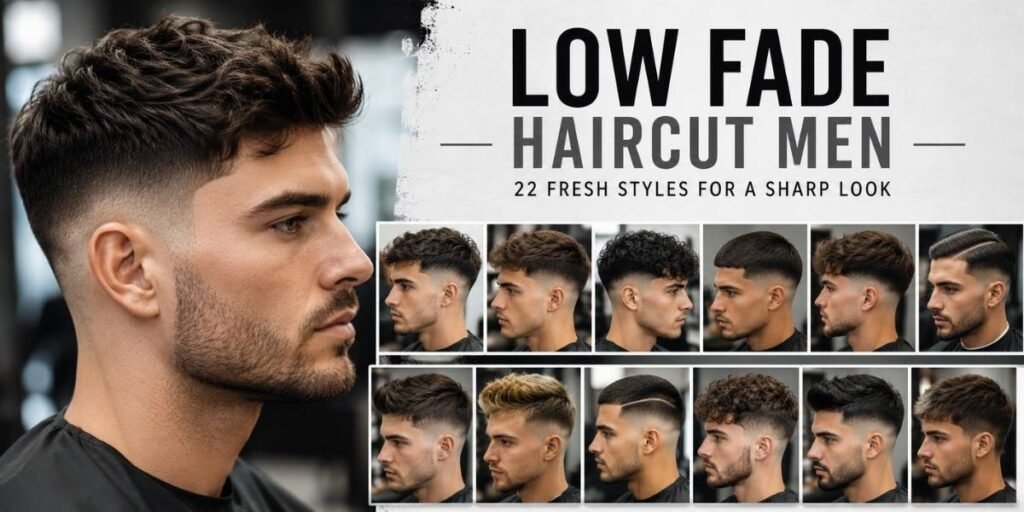
So you want a low fade haircut? Smart move. It’s one of those cuts that works on almost every face shape, hair type, and lifestyle. Whether you’re heading into the office or grabbing coffee with friends, a clean low fade just looks put together without trying too hard.
Here’s the short answer if you’re in a rush. A low fade haircut men love starts the fade just above the ear and neckline, keeping the taper close to the skin at the bottom and blending upward. It’s subtle, sharp, and way easier to maintain than a high or mid fade.
Now let’s get into the details, because there’s a lot more to this cut than one quick definition. We’re covering 22 styles, how to talk to your barber, and even a bit of history so you know exactly why this haircut has stuck around for decades.
Trending Low Fade Haircut For Men
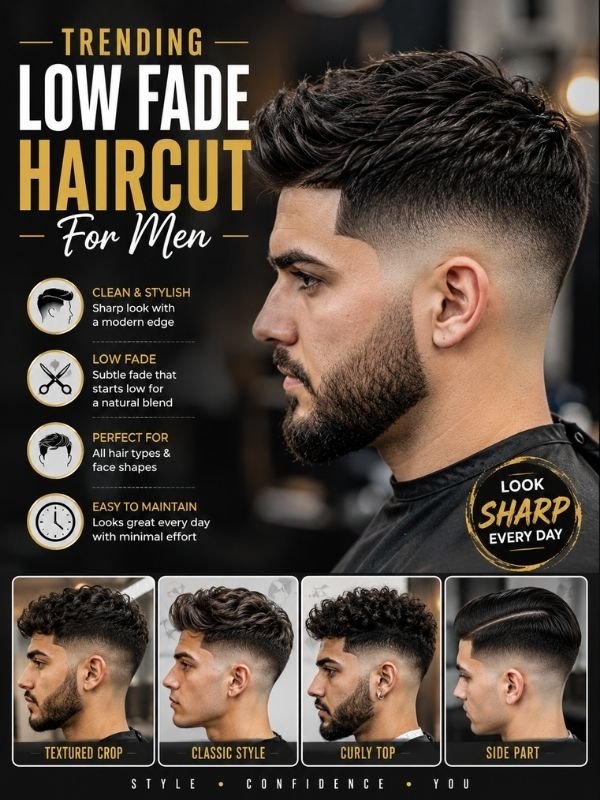
Barbershops everywhere are seeing a spike in requests for low fade hairstyles, and it’s not hard to see why. This cut sits low on the head, right around the ear line, so it doesn’t scream for attention. It just quietly makes you look sharper.
What’s driving the trend right now is versatility. A modern low fade pairs with beards, curls, straight hair, thick hair, you name it. Guys who want something professional but not boring keep landing here. It’s the haircut equivalent of a good pair of jeans. Fits everywhere, works with everything.
Below are 22 variations, broken down by hair type, texture, and style pairing. Pick whichever one matches your vibe.
Classic Low Fade
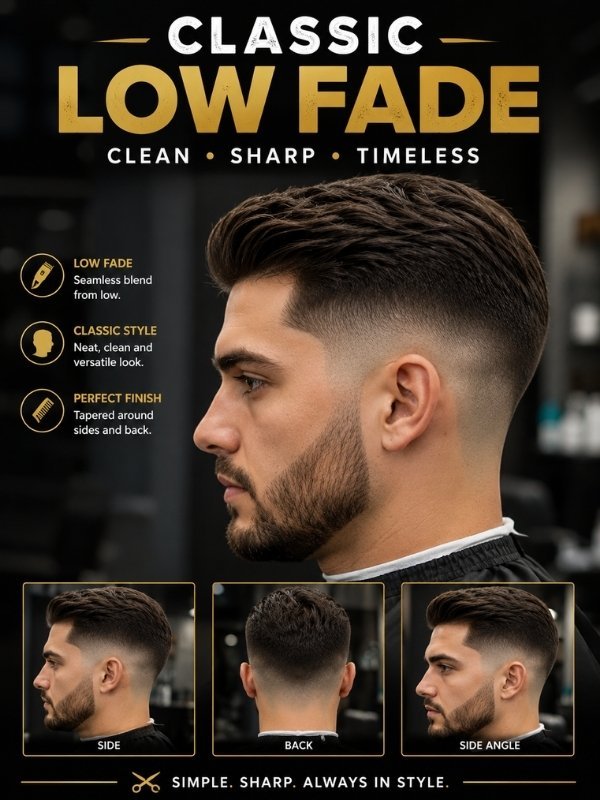
The classic low fade is the baseline everyone measures other fades against. The hair fades close to the skin at the bottom, right above the ear, and blends into slightly longer hair on top. Nothing flashy, just clean lines and a smooth transition.
Guys who want a clean low fade without extra styling time usually pick this one. You wake up, run a comb through it, and you’re done. It’s the low maintenance option that still photographs well.
If you’re new to fades in general, start here. It’s the safest entry point and gives your barber a feel for how your hair behaves before you try anything bolder.
Low Fade with Curly Hair
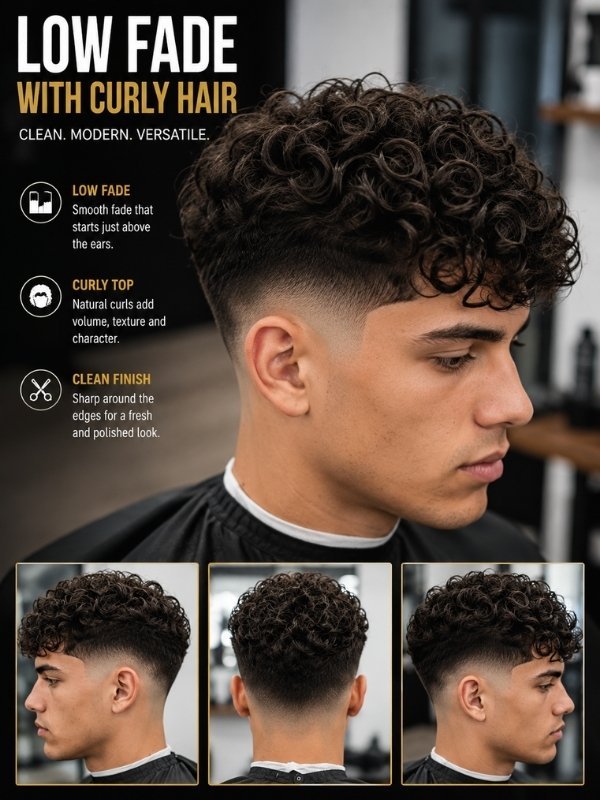
Curls and fades were made for each other. A low fade curly hair combo keeps the curls intact on top while the fade handles all the tidying up around the sides. The contrast between the tight fade and the bouncy curls on top is genuinely striking.
The trick with curly hair is talking to your barber about curl shrinkage. Curls look shorter when dry than when stretched out, so what feels like a big chop might actually leave more length than you expect. Ask for a slight buffer if you’re nervous about going too short.
Maintenance matters more here too. Curly hair drinks up moisture, so a leave-in conditioner keeps the top looking defined instead of frizzy. Pair that with regular fade touch ups every two to three weeks and you’re golden.
Low Fade with Straight Hair
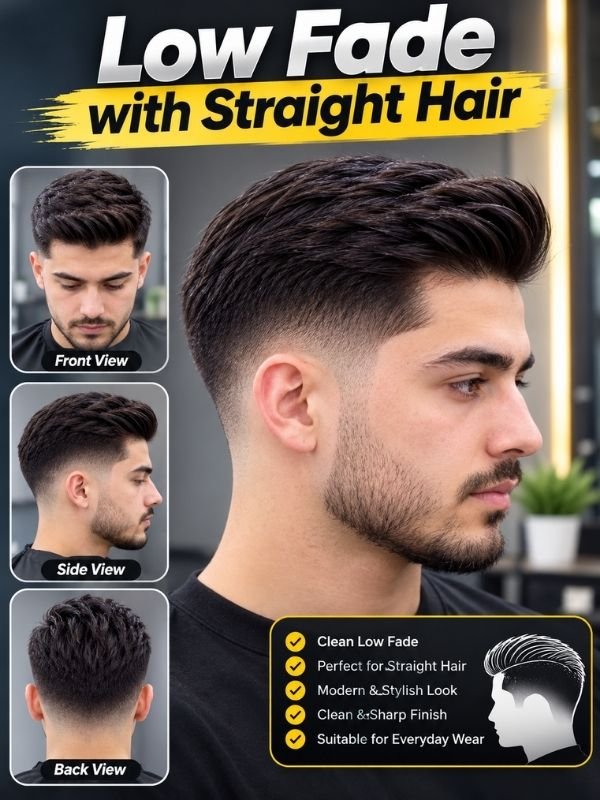
Straight hair shows off a fade’s precision better than almost any other texture. With low fade straight hair, every line is visible, every transition is obvious. There’s nowhere to hide a sloppy blend, so this style really depends on barber skill.
The upside? Straight hair styles fast. A little pomade or matte clay, a few strokes with a comb, and you’re out the door. No fighting with cowlicks or frizz most days.
One thing worth knowing: straight hair grows out faster looking than curly or wavy hair because there’s less texture to disguise new growth. Plan on more frequent barber visits, maybe every three weeks, to keep that fade looking fresh.
Low Fade with Wavy Hair
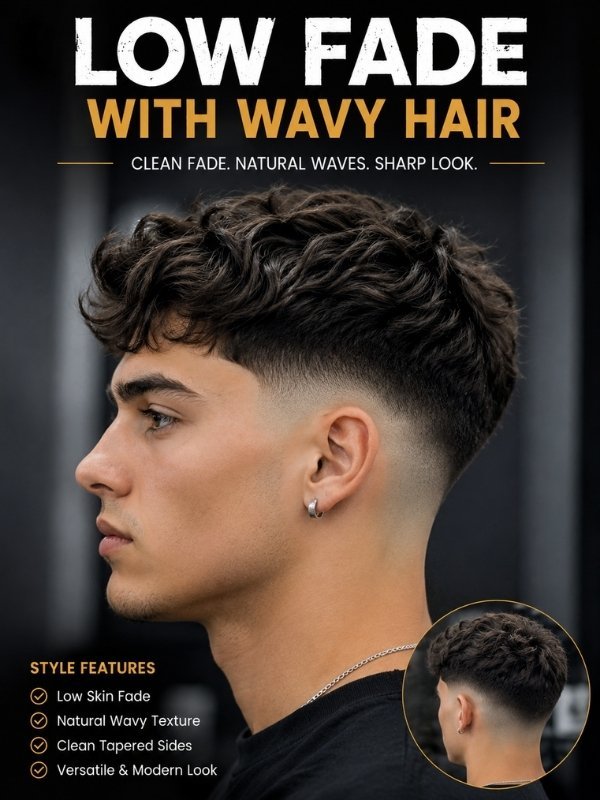
Wavy hair sits in a nice middle ground. A low fade wavy hair cut gives you natural texture and movement on top without the extra upkeep curls demand. It photographs well because the waves catch light differently than flat, straight strands.
This texture also hides a couple weeks of growth better than straight hair does. The natural wave pattern blends new growth into the style instead of making it obvious, so you might stretch your appointments out a little longer.
Styling wise, a sea salt spray or light texturizing cream brings out the wave pattern without weighing it down. Scrunch it in with damp hair and let it air dry for the most natural look.
Low Taper Fade
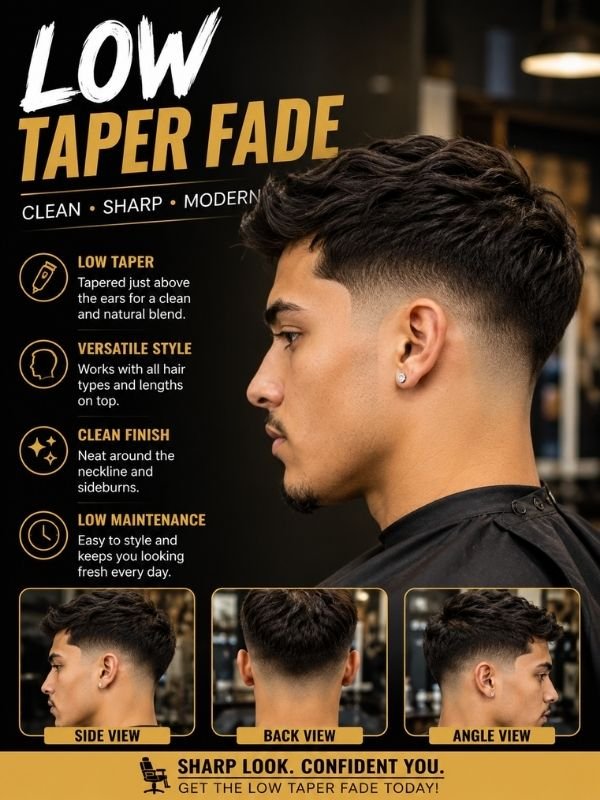
Here’s where people often get confused. A low taper fade and a low skin fade aren’t the same thing, even though folks use the terms loosely. A taper keeps a bit of hair at the bottom instead of going down to bare skin, giving a softer, more gradual fade.
This is the go-to for guys who want something office appropriate. It reads as neat and professional rather than edgy. There’s still contrast between the top and sides, just not as dramatic as a full skin fade.
If you’re unsure which one suits your workplace or personal style, the taper is the safer middle ground. It gives you the fade look without going full high contrast.
Low Skin Fade
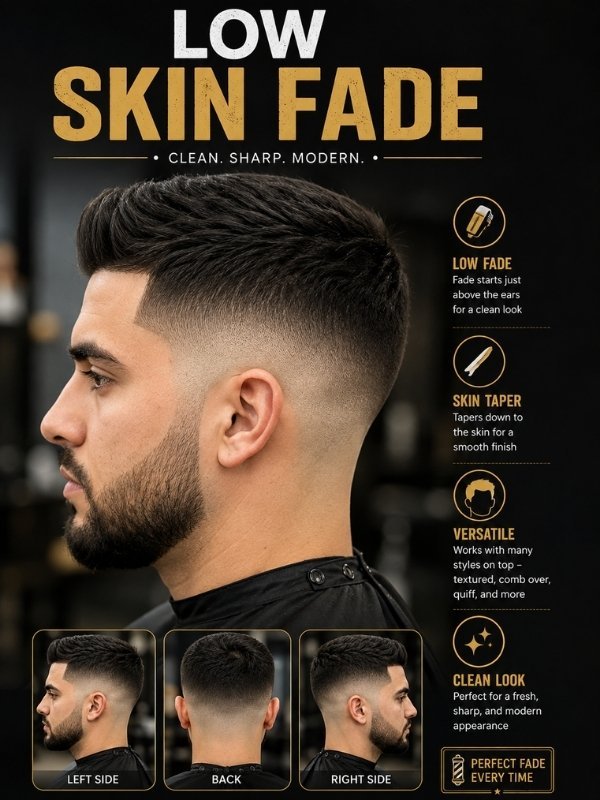
For maximum contrast, the low skin fade goes all the way down to the skin at the very bottom before blending upward. This is the boldest version of a low fade, and it demands sharp barber work since there’s zero room for uneven blending.
What makes this different from a high or mid skin fade is where that bare skin section starts. It stays low, near the ear and neckline, so even with the skin showing, the overall look stays understated compared to fades that climb higher up the head.
Upkeep is non-negotiable here. Skin fades grow out visibly within two to three weeks, so if you go this route, book your next appointment before you even leave the chair.
Low Drop Fade
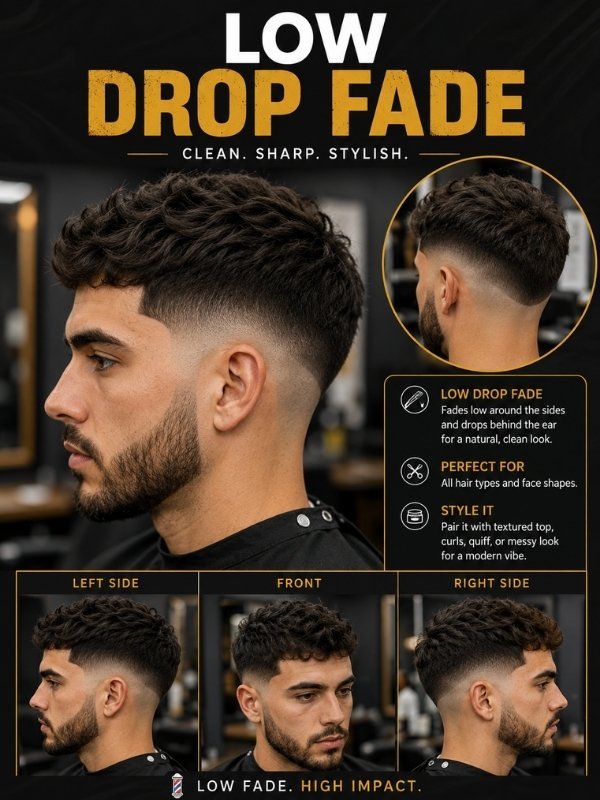
The low drop fade curves downward behind the ear instead of running in a straight line. That subtle drop follows the natural curve of your head, and it tends to suit guys with rounder face shapes since it adds a bit of visual length.
It’s a small design detail, but it changes the whole feel of the cut. Instead of a rigid straight fade line, you get something that flows more naturally with your skull shape.
Ask specifically for the “drop” when you book, since some barbers default to a straight fade unless told otherwise.
Buzz Cut with Low Fade
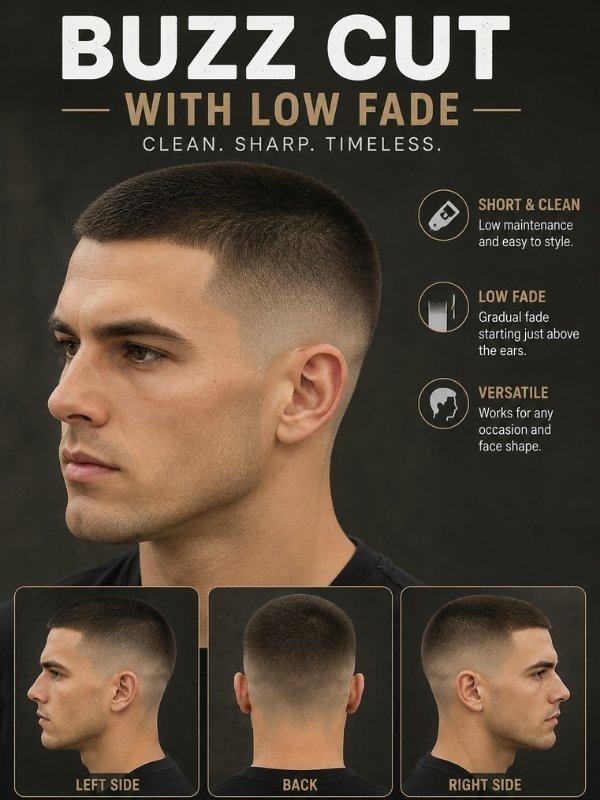
Simplicity at its finest. A low fade buzz cut keeps the top short and uniform, then fades it down low near the ears. There’s barely any styling required, which makes this the go-to for guys who want a wash and go routine.
It’s also incredibly practical for hot climates or active lifestyles. Short hair on top means less sweat, less mess, and honestly, less thinking in the morning.
Face shape matters a bit more with buzz cuts since there’s no length on top to soften features. Guys with strong jawlines and defined cheekbones tend to pull this one off effortlessly.
Pompadour with Low Fade
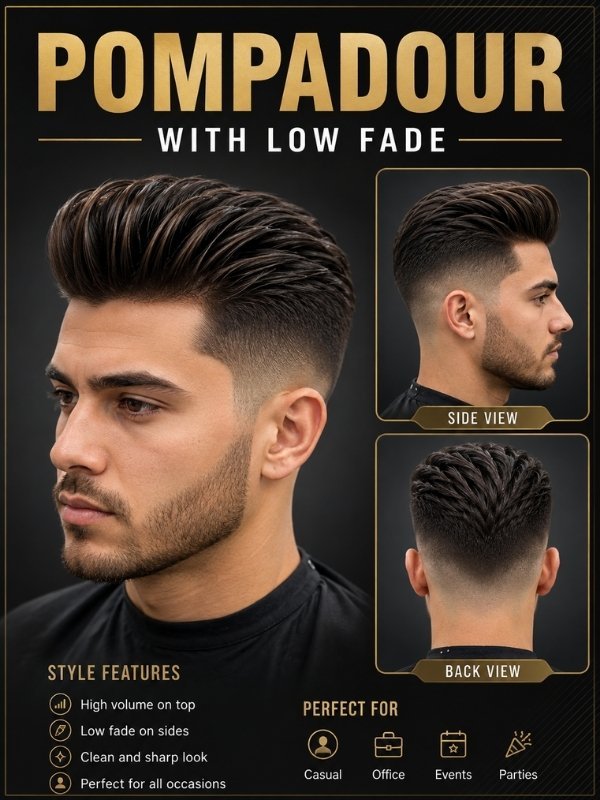
Want something with a bit more flair? A low fade pompadour combines volume up top with a tight fade underneath. The height and sweep of the pompadour contrasts beautifully against the clean, close fade.
This combo works great for guys who want to dress up their look for events but still want something wearable day to day. A little volumizing spray at the roots and a strong hold pomade get you there.
Just know that pompadours need more product and more time than most fades on this list. If mornings are already rushed, this might not be your best pick.
Fringe with Low Fade
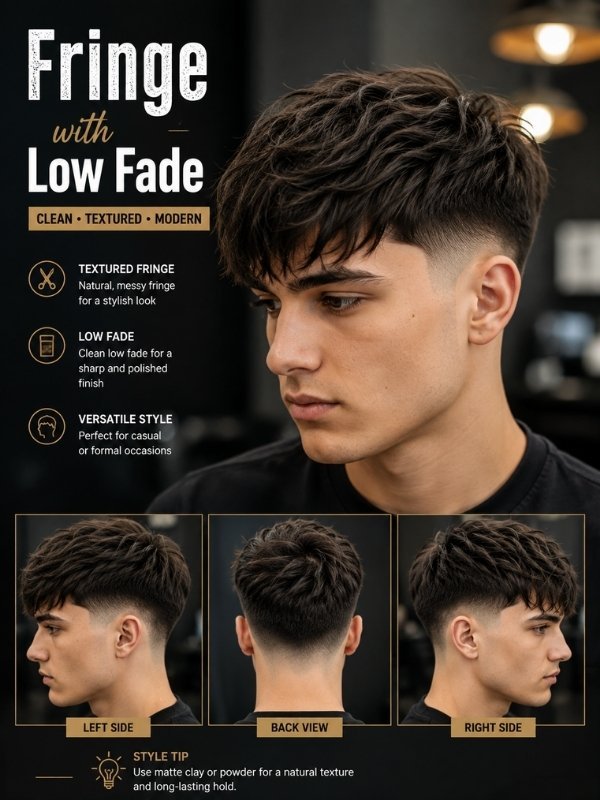
The low fade fringe brings the hair forward instead of back, letting bangs sit across the forehead while the sides stay tight and tapered. It’s a European inspired look that’s picked up serious steam recently.
This style suits guys with straight to wavy hair best, since fringe needs enough weight to lay flat rather than stick straight up. A texturizing paste helps define individual pieces without making the fringe look greasy.
It’s a softer, almost effortless look. Great if you want something a little different from the typical slicked back or spiky styles.
Faux Hawk with Low Fade
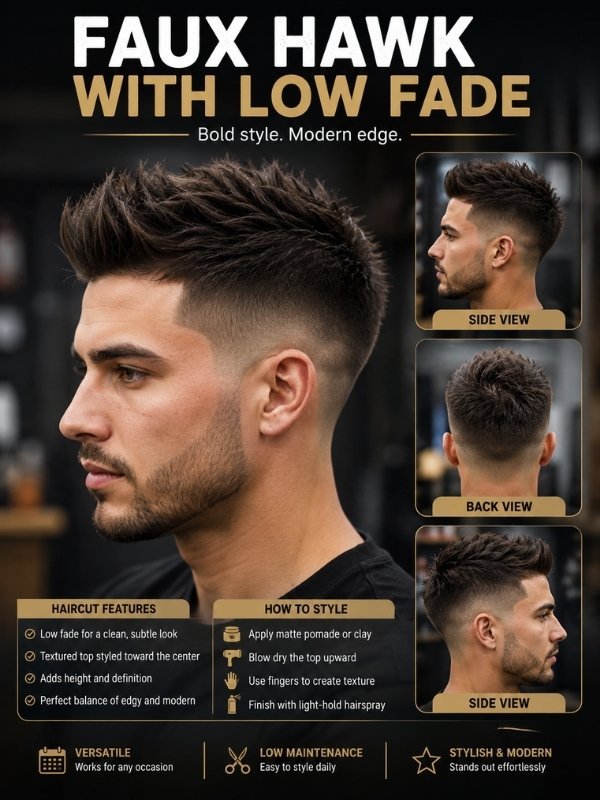
The low fade faux hawk takes the mohawk concept and tones it way down. Instead of shaving the sides completely, you get a tight fade, and the top gets styled upward in a strip down the center.
This works particularly well for guys who want an edgier look without committing to something too extreme. It’s mohawk energy with a lot more versatility, since you can style it up for a night out or brush it down for work.
Styling requires a strong hold product and a comb to shape that center strip. Practice makes perfect here, so don’t get discouraged if your first attempt looks a little uneven.
Undercut with Low Fade
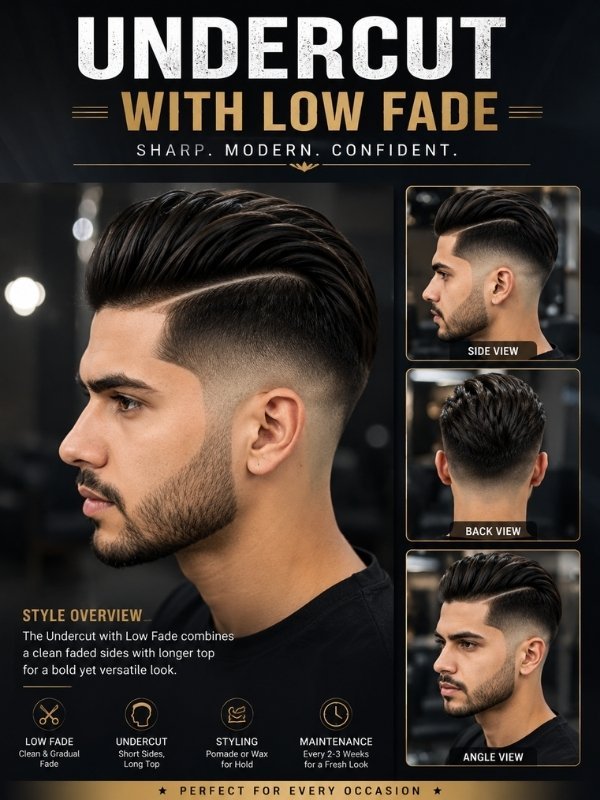
An low fade undercut is technically a cousin of the fade family, but it’s worth its own mention. The sides get cut dramatically shorter than the top, sometimes with a sharper line than a traditional gradual fade.
The disconnect between the short sides and longer top creates serious visual impact. It’s bold, modern, and pairs well with slicked back styles, textured quiffs, or even a messy, tousled look.
If you’re going for maximum contrast between top and sides without a gradual blend, this is your style.
Comb Over with Low Fade
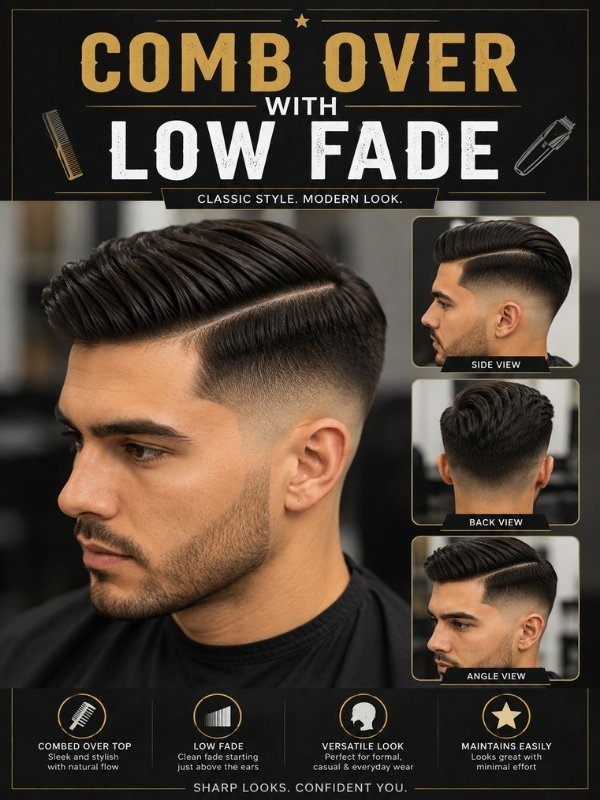
Timeless and professional, the low fade comb over takes longer hair on top and combs it to one side, while the sides stay tight with a low fade. This is a favorite in corporate settings because it looks polished without being stiff.
The side part adds structure, and the fade keeps things from looking too formal or dated. It’s proof that classic styles can feel completely current with the right fade paired underneath.
A light hold pomade with some shine works best here. You want it neat, not shellacked.
Spiky Hair with Low Fade
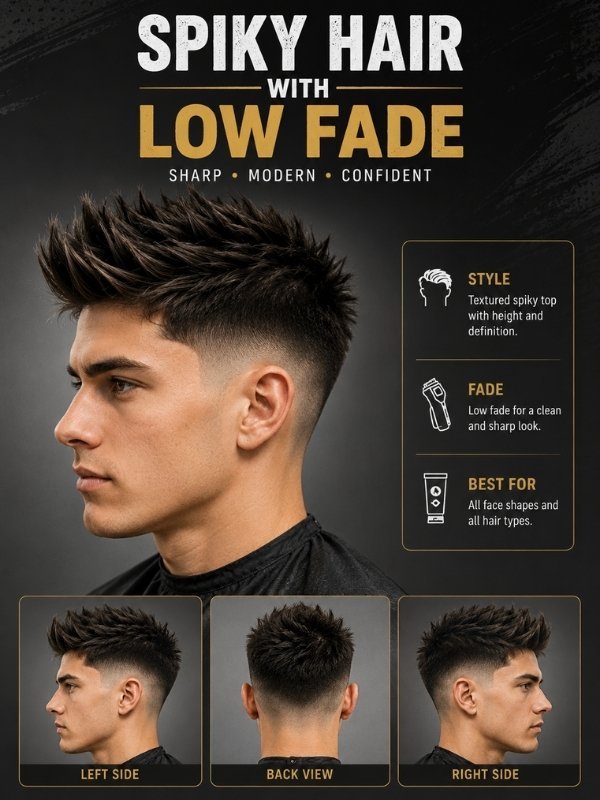
For guys who want texture and edge, low fade spiky hair delivers. The top gets cut short enough to spike up with product, while the fade keeps the sides neat and controlled.
This style has a youthful, energetic feel to it. It works especially well for guys with thick or coarse hair since that texture holds spikes without much effort.
Matte clay or a strong hold gel, worked in with fingers rather than a comb, gives the most natural looking spikes.
Afro Low Fade
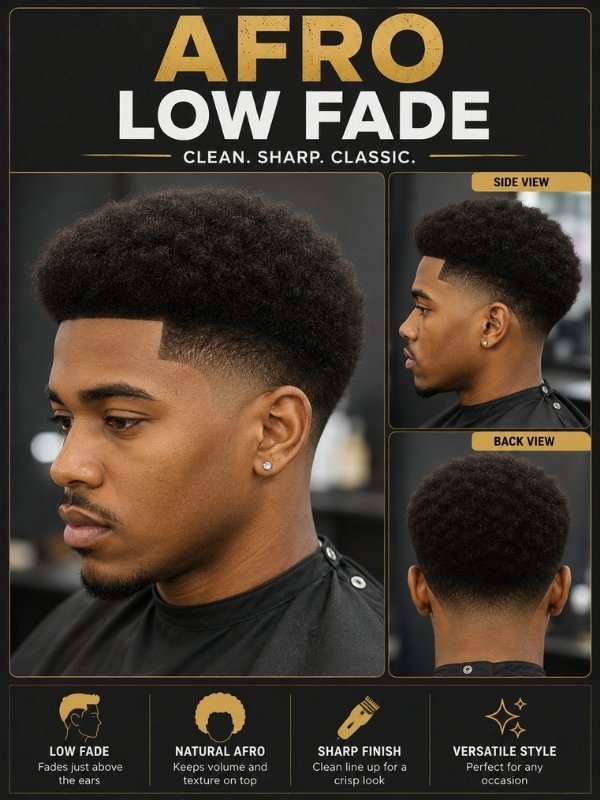
The afro low fade keeps natural curl pattern and volume on top while fading the sides down low. It’s a striking combination since the density and texture of an afro contrasts so sharply with the tight, controlled fade beneath it.
This is one of the best options for guys with low fade coily hair or low fade natural hair textures who don’t want to compromise their natural volume just to get a fade. The fade actually enhances the shape of the afro rather than competing with it.
Regular moisturizing is essential here since coily hair tends to dry out faster than other textures. A good leave-in cream keeps the afro looking full and healthy.
Low Fade with Beard
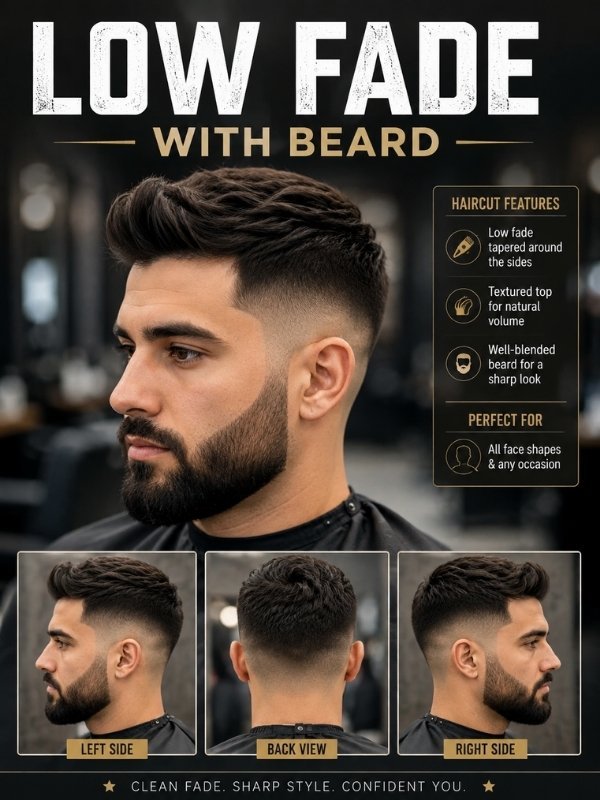
Pairing a low fade haircut with beard styling creates one cohesive, sharp look from your hairline down to your jaw. The fade and beard fade should connect smoothly, almost like they’re one continuous style rather than two separate grooming choices.
This combo is incredibly popular right now because it frames the face so well. A well groomed beard adds structure to your jawline, and the low fade keeps the rest of your head looking sharp and intentional.
Talk to your barber about connecting both fades in the same session. It takes more time, but the payoff in overall polish is worth it.
Low Fade with Design (Hard Part/Lines)
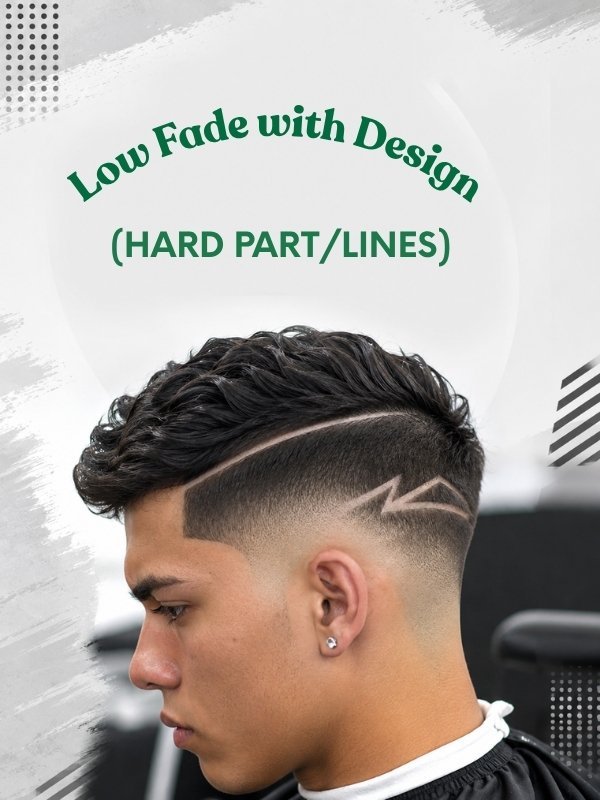
Want something with a personal touch? A low fade hard part or low fade line up adds a shaved line into the fade, usually separating the top section from the sides. Some guys go further with custom designs, initials, or patterns.
The low fade line up specifically refers to sharpening up the hairline and edges, giving the whole cut a crisp, freshly done look. It’s often requested alongside other styles on this list rather than as a standalone cut.
This is where barber skill really shines. A steady hand and sharp clippers make all the difference between a crisp design and a messy one.
Low Fade with Textured Top
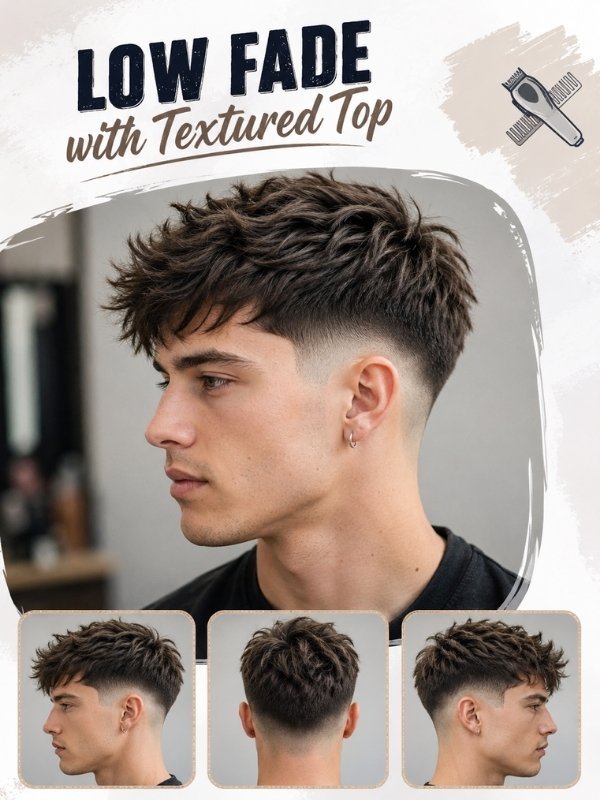
For guys who want movement without spikes or slicked styles, low fade textured hair on top gives that piecey, tousled effect. Layers get cut at varying lengths, then styled with a matte product for definition.
This style photographs incredibly well because it looks effortless, even though there’s real skill involved in the cutting. It works across most hair types, though thick hair tends to hold texture the longest throughout the day.
Scrunch a small amount of texturizing paste through damp hair, then let it air dry or diffuse for the most natural finish.
Low Fade with Side Part
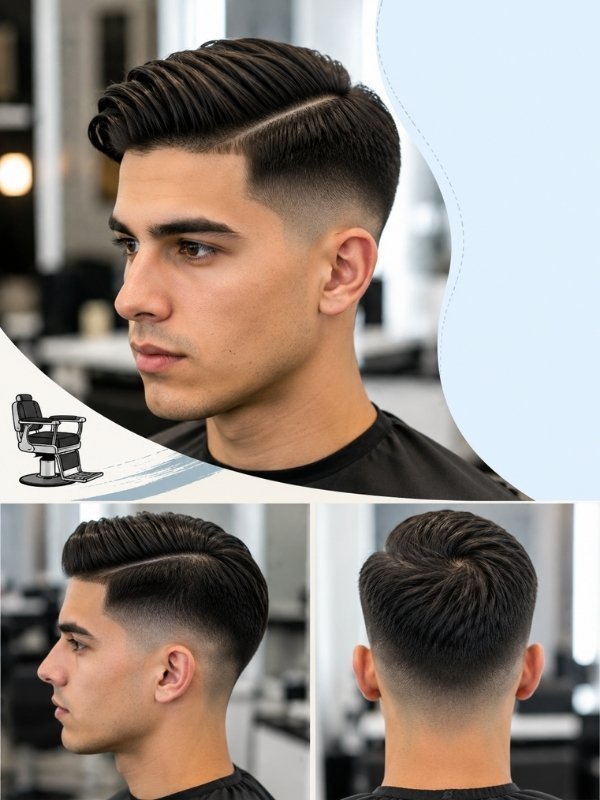
A low fade side part brings back a bit of old school charm. A defined part line separates the top section, combed neatly to one side, while the fade keeps things modern underneath.
It’s a favorite for weddings, interviews, and any event where you want to look sharp without looking flashy. The contrast between the crisp part and the tight fade keeps it from feeling stuffy.
Comb the part in while hair is damp, then set it with a light hold spray so it stays put through the day.
Low Fade with Caesar Cut
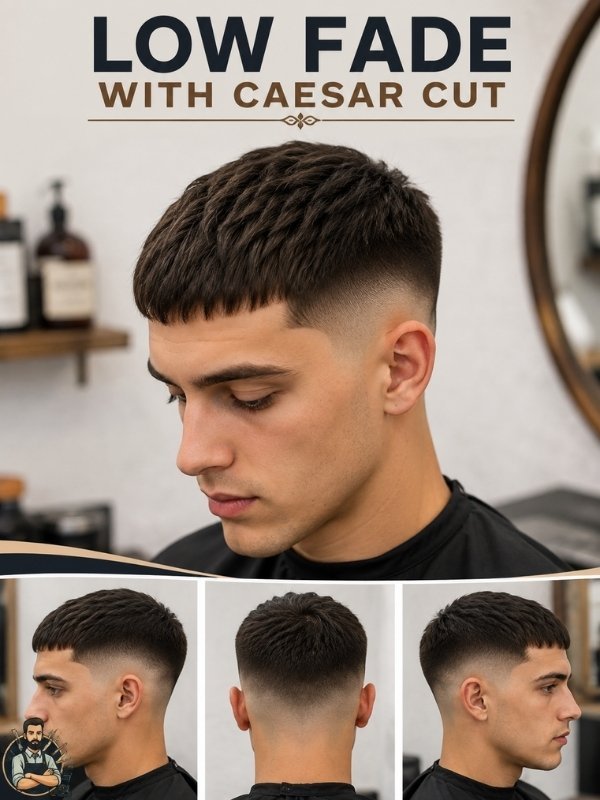
The Caesar cut paired with a low fade brings short, horizontally textured bangs together with tight sides. It’s named after the classic Roman emperor look, and honestly, it still holds up centuries later.
This style suits guys who want something short and low maintenance on top but still want a bit of texture rather than a completely buzzed look. It’s a great option if you’re transitioning away from longer hair and want an easier routine.
Minimal styling needed. A little pomade worked through with fingers is usually all it takes.
Low Fade with Messy Hair
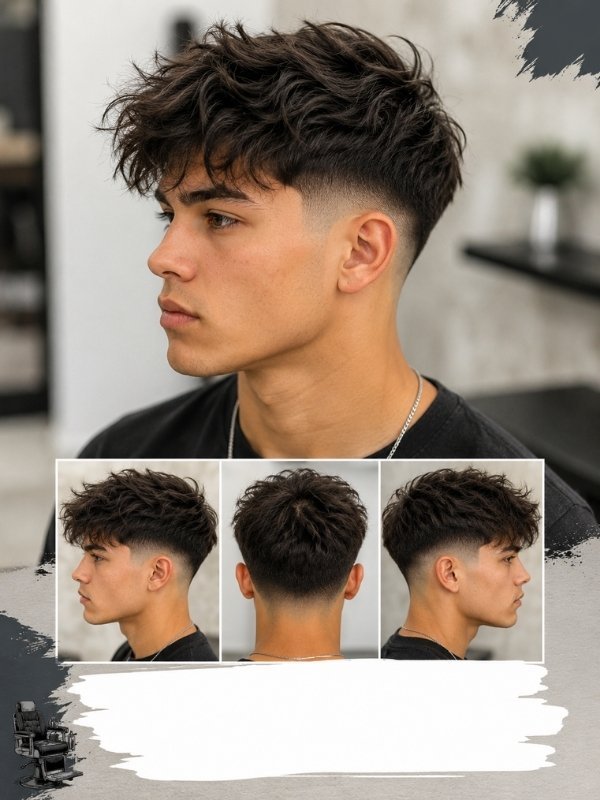
Not everything needs to be perfectly combed. A low fade paired with intentionally messy, tousled hair on top gives off a relaxed, I-woke-up-like-this vibe, even though there’s usually a good amount of product involved to get it just right.
This works particularly well for casual settings, creative industries, or just everyday wear when you don’t feel like fussing with a comb. The fade keeps things grounded so the messy top doesn’t look unkempt.
Work a matte paste through dry hair with your fingers, then muss it up. Less is more here.
Low Fade with Bro Flow
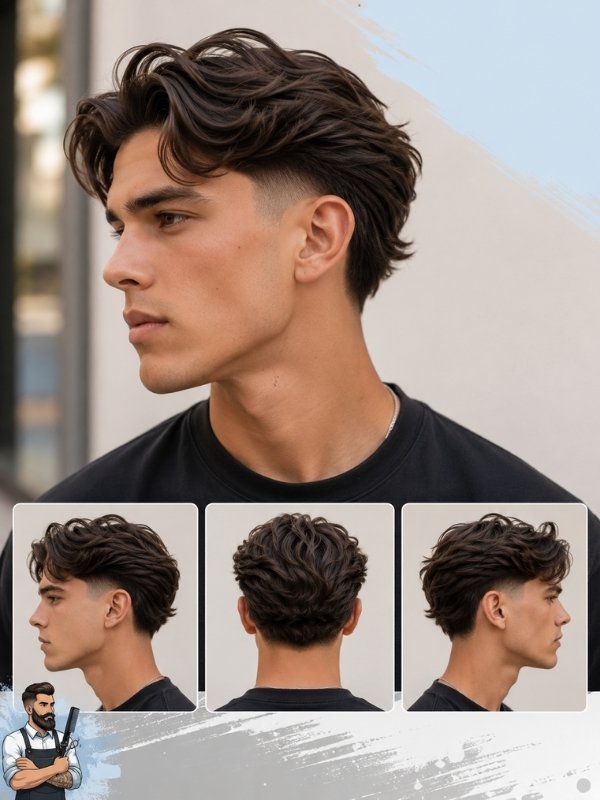
The bro flow is longer hair on top that’s swept back or pushed naturally away from the face, paired with a low fade underneath for contrast. It’s grown in popularity thanks to surfers, skaters, and athletes who wear it well.
This style needs some patience since it requires growing the top out longer than most fades on this list. But the payoff is a relaxed, effortlessly cool look that works whether you’re at the beach or out for the night.
A light sea salt spray or texturizing cream helps hold the flow without making it stiff or crunchy.
Here’s What Separates a Good Fade from a Great One?
Not all fades are created equal, and honestly, the difference often comes down to details most guys never think to ask about. Low fade blending is probably the single biggest factor. A great fade has zero visible lines between length changes. It should look like a gradient, not a staircase.
Low fade around ears is another spot where barbers separate themselves. This area is tricky because of the curve of your head and the shape of your ear itself. Sloppy work here shows immediately, especially from the side profile.
Then there’s the low fade neckline. A crisp, clean neckline finishes off the whole look. If it’s jagged or uneven, even a perfect fade on the sides looks unfinished. Good barbers take their time here, and it genuinely makes or breaks the final result.
Lastly, think about low fade length. How short you go at the bottom, and how much length you keep on top, changes the entire personality of the cut. A great barber asks about your lifestyle, your face shape, and your styling habits before touching the clippers.
How to Ask Your Barber for the Right Low Fade Haircut?
Walking into a barbershop without the right words can lead to a haircut you didn’t actually want. Here’s how to communicate clearly.
- Specify the fade height first. Say “low fade,” not just “fade,” since fades can start anywhere from the ears to the temples.
- Mention your preferred guard size for the sides. Common options run from a 1 to a 3 depending on how short you want it.
- Bring a reference photo if you have one. Words can be interpreted differently, but a picture removes the guesswork.
- Ask directly, “Does a low fade suit me?” Barbers know face shapes well and can steer you toward or away from certain variations.
- Clarify whether you want a taper or a skin fade, since these terms get mixed up constantly.
- Mention if you want your beard faded to match. This needs to be planned before the clippers come out, not after.
Being specific saves you a bad haircut and saves your barber the guesswork. It’s a two-way conversation, so don’t be shy about speaking up mid-cut if something doesn’t look right.
Low Fade vs Other Fade Types: Which One Actually Suits You?
People often ask about low fade vs mid fade or low fade vs high fade, and honestly, it comes down to how much contrast you want and where you want it. A low fade starts near the ear, staying subtle and easy to wear in professional settings. A mid fade starts higher, around the temple, offering a bit more visual pop. A high fade climbs even further, creating the boldest contrast of the three.
Then there’s the low fade vs skin fade question, which trips a lot of people up. Remember, skin fade refers to how close the bottom gets to bare skin, not where the fade starts. You can actually combine the two, a low fade that also goes down to skin, or keep it as a low taper without the bare skin finish.
And finally, low fade vs drop fade comes down to that curved line behind the ear versus a straight one. Neither is objectively better. It’s about which shape flatters your particular head shape and hairline.
If you’re still unsure, ask your barber directly which option fits your face shape. A good barber will have opinions, and they’re usually right.
The Evolution of Low Fade Haircut
Fades didn’t just appear overnight. Military barbers popularized close cropped, gradually blended cuts decades ago because they were practical, easy to maintain, and looked sharp under uniform standards. That practicality carried the style forward long after it left military barbershops.
By the 1980s and 90s, fades had crossed into mainstream culture, especially through hip hop and basketball culture, where high and mid fades dominated for their bold, statement making contrast. The low fade stuck around quietly in the background, favored by guys who wanted the fade look without quite as much flash.
Over the last decade, low fade hairstyles have surged back into the spotlight. Social media played a huge role here, with barbers showcasing intricate blending work and design details that weren’t as visible or celebrated in earlier decades. Add in the rise of beard pairing, curly hair appreciation, and natural texture embracing trends, and you’ve got a haircut that feels more relevant now than maybe ever before.
What’s next for the low fade? Expect more customization. Barbers are increasingly treating each fade as a bespoke service rather than a one size fits all template, tailoring the blend, length, and design details to individual hair type and face shape.
Low Fade Haircut Maintenance: Keeping It Sharp Between Visits
A great fade doesn’t stay great forever without a little effort. Here’s what actually matters for low fade haircut maintenance.
- Book touch ups every two to three weeks. Skin fades grow out faster and need more frequent visits than tapers.
- Use a lightweight moisturizer on shorter sides to prevent dryness, especially in colder months.
- Trim any stray hairs around the neckline yourself between appointments using a small trimmer, but leave the actual fade blending to your barber.
- Wash your hair regularly, but don’t overdo it. Stripping natural oils too often can leave hair looking dull, especially on top.
- Protect your hairline and fade with a hat or scarf during extreme weather to avoid unnecessary damage or dryness.
How often to get a low fade really depends on your hair growth rate and how sharp you like the lines. Faster growing hair might need visits every two weeks, while slower growth can stretch to four.
Conclusion
A low fade haircut genuinely earns its popularity. It’s versatile enough to match nearly any hair type, from curly to straight to coily, and flexible enough to pair with beards, designs, or completely different top styles depending on your mood. Whether you’re drawn to the classic version or want to experiment with a faux hawk or bro flow on top, there’s a variation here that fits your life.
The real secret to nailing this haircut isn’t picking the flashiest style from the list. It’s finding a skilled barber who blends cleanly, listens to what you actually want, and keeps your neckline and ear area crisp. Bring your reference photos, speak up during the cut, and don’t be afraid to ask questions.
Ready to try one of these 22 styles? Book your next barber appointment, bring this list along, and walk out with a cut that actually works for you.
