
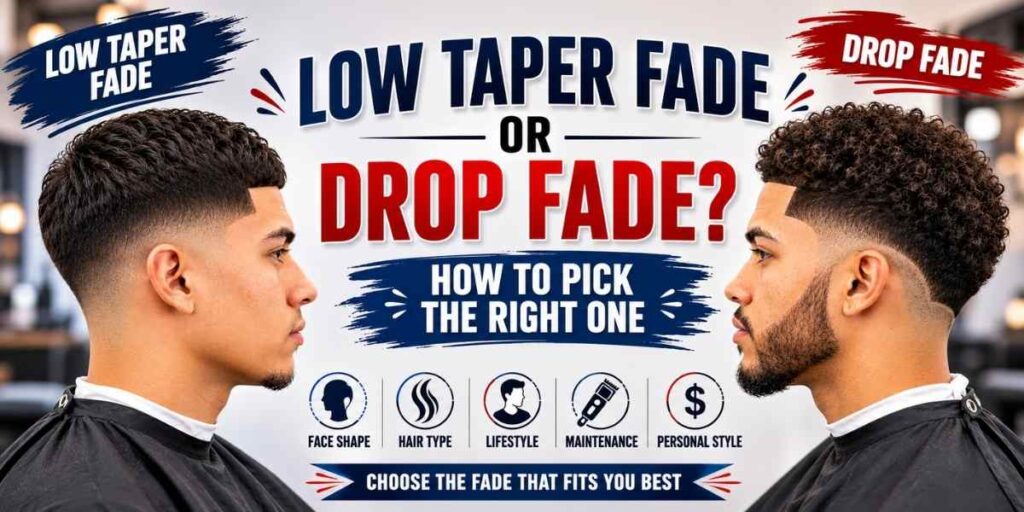
Short answer? When it comes to Low Taper Fade or Drop Fade, a low taper fade wins if you want something clean, safe, and office-friendly. A drop fade haircut wins if you want extra shape and a bit of an edge. That’s the whole thing in one breath.
But “it depends on your face, hair, and lifestyle” is the honest, longer answer. Stick around and you’ll know exactly which one to ask your barber for by the end of this.
What Is a Low Taper Fade?
A low taper fade keeps most of the length up top and fades the sides down close to the skin, but only near the bottom, right above the ears and neckline. Think of it as the quiet, well-mannered cousin in the fade family. It doesn’t shout for attention.
This is the go-to classic taper haircut for guys who want a groomed look without looking like they tried too hard. It’s subtle. It’s sharp. And it works with almost any outfit, from a hoodie to a blazer.
What Is a Drop Fade?
A drop fade style does something different. Instead of a straight fade line, it curves downward behind the ear, dropping lower toward the nape of the neck. That curve is the whole personality of this cut.
It’s one of the more modern fade haircut choices out there right now, especially among guys with curly or wavy hair who want their curls to pop on top. The curved fade shape gives your head a rounder, more sculpted look from the side.
The Biggest Difference Between a Low Taper Fade and a Drop Fade
What Is a Low Taper Fade?
Again, it’s the straight-line version. The fade travels in a horizontal path around your head. Simple, predictable, low fuss.
What Is a Drop Fade?
The drop fade bends. It curves down behind the ear instead of running straight. That single design choice changes the whole vibe of the haircut.
Low Taper Fade vs Drop Fade

Here’s the real taper vs fade breakdown in plain terms:
- Line direction: Taper stays straight, drop fade curves.
- Attention level: Taper blends in, drop fade stands out.
- Best for: Taper suits conservative settings, drop fade suits creative or casual ones.
- Skill needed: Drop fades usually need a more experienced barber.
That last point matters more than people realize. A bad drop fade is obvious. A bad low taper fade just looks like a slightly boring haircut. Lower risk either way, but know what you’re walking into.
Why Choose a Low Taper Fade?
Clean and Professional Look
If your job has a dress code, or your grandma still comments on your hair at dinner, this is your cut. It reads as neat and put together without any extra effort.
I had a friend switch from a high drop fade to a low skin fade right before a job interview season. He said recruiters actually complimented his “sharp” look twice in one week. Small detail, real impact.
Easy to Maintain
Taper maintenance is about as low effort as fades get. Because the fade sits lower on the head, regrowth doesn’t ruin the shape as fast.
You can usually stretch your haircut touch-up schedule to three or four weeks before it starts looking messy. That’s a real win if you’re busy or just don’t love sitting in a barber chair every other weekend.
Grows Out Naturally
This is where the low taper fade genuinely shines. Since the fade transition sits low near the neckline, when your hair does fade grows out, it doesn’t look choppy or uneven. It just slowly turns into a longer, natural style.
Works for Most Hairstyles
Pompadour, quiff, slick back, textured crop, you name it. A natural taper plays nice with almost any hairstyle on top. It’s the haircut equivalent of a white t-shirt. Goes with everything.
Why Choose a Drop Fade?
Bold and Modern Appearance
A drop fade curly hair combo, for example, turns heads. The curve draws the eye and adds movement to the whole cut. If you want people to notice your haircut, not just approve of it, this is your lane.
Creates More Contrast
Because the fade dips lower behind the ear, you get sharper contrast between the bald fade section and the hair on top. More contrast means more definition, and more definition means the cut photographs better too.
Ideal for Trendy Hairstyles
Faux hawk fade, buzz cut fade, textured spikes, this cut pairs beautifully with anything that has movement or height. If your Pinterest board is full of trendy men’s haircut ideas, chances are half of them use a drop shape.
Adds Definition Around the Head
The curve of a drop fade actually follows your skull’s natural shape. For a lot of guys, that means the haircut looks more intentional, almost like it was sculpted rather than just cut.
Which One Looks More Professional?
If we’re being straight with you, the low taper fade takes this one. Corporate offices, client meetings, court appearances, whatever the setting, the straight line reads as neutral and safe.
That doesn’t mean a drop fade can’t work in professional settings. A low drop fade kept subtle and tight to the skin can absolutely pass in most offices. But the bolder your drop, the more it leans casual or creative rather than boardroom-ready.
Low Taper vs Drop Fade for Different Face Shapes
Round Face
Go with the drop fade. The curved line and added height on top help elongate a round face instead of emphasizing its width.
Oval Face
Lucky you. Oval faces handle both cuts well. This is really a which fade suits me decision based purely on personal taste rather than face shape.
Square Face
A low taper fade softens strong jawlines nicely. The straight, understated line doesn’t compete with your already defined features.
Long Face
Skip anything that adds height. A low taper fade with more length kept on the sides balances things out better than a high, curved drop.
Heart-Shaped Face
A drop fade works in your favor here. The curve draws attention downward, balancing a wider forehead with a narrower chin.
Which Fade Works Better With Your Hair Type?
Straight Hair
Low taper straight hair cuts look razor sharp because the line stays crisp with no natural texture disrupting it.
Curly Hair
Curly fade haircut fans, go for the drop. The curve complements natural curl patterns and lets your curls sit on top like a crown instead of fighting the fade line.
Wavy Hair
Taper for wavy hair works great because waves already have movement, and the straight taper line gives your hair a grounded, balanced base.
Thick Hair
Fade for thick hair usually leans toward drop fades since thick hair needs a bolder line to keep everything looking proportional.
Thin Hair
Fade for thin hair should stick with low tapers. Less contrast, less pressure on the hair to “perform,” and an easier grow-out phase too.
Popular Low Taper Fade Variations
Mid Taper Fade vs Low Taper Fade
A mid taper fade starts higher on the head, while the low version starts closer to the ears. More skin shows with a mid taper, less with a low one.
Modern Low Taper Fade

This version pairs a skin fade at the base with textured, choppy layers on top for a fresher, updated feel.
V-Shaped Low Taper Fade

The neckline gets cut into a small V shape instead of a straight line. Small detail, noticeably sharper finish.
Low Taper Fade Inspired by Ninja
Popularized by streaming culture, this style keeps the top textured and messy while the skin fade stays razor tight underneath.
Low Taper Fade for Black Men

Often paired with a textured crop fade or waves on top, this variation blends beautifully with coily and curly hair textures.
Low Taper Fade for Indian Men
Frequently combined with a side part or slight quiff, giving a classic taper haircut a slightly more polished, formal edge.
Popular Drop Fade Variations
Low Drop Fade
A subtle curve near the bottom. Barely noticeable but adds just enough shape to feel different from a standard taper.
Mid Drop Fade
The curve starts higher, giving a stronger visual statement without going overboard.
High Drop Fade

Dramatic and bold. The fade starts near the temple and drops sharply, creating major contrast.
Drop Fade Buzz Cut

Minimal length on top paired with a curved fade underneath. Clean, low maintenance, still stylish.
Drop Fade for Curly Hair
As mentioned earlier, this combo is a fan favorite. The drop fade curly hair pairing has become one of the most requested looks at barbershops right now.
V-Shaped Drop Fade
Combines the curved drop with a V neckline for a genuinely unique silhouette.
Drop Fade for Black Men
Usually blended with waves, twists, or a buzz cut fade, this variation highlights natural hair texture beautifully.
Which Fade Looks Better With a Beard?
Both work, honestly. But here’s the nuance nobody tells you.
A beard fade blend looks slightly cleaner with a low taper fade because the straight lines match the geometric shape most guys keep their beards in. Meanwhile, a drop fade paired with a rounder, fuller beard creates a nice visual echo, curve meeting curve.
Which One Is Easier to Maintain?
The low taper fade takes this round comfortably. Fade maintenance is simpler because there’s less precision needed to keep the line looking sharp. Drop fades need regular touch-ups to keep that curve crisp, or it starts looking uneven fast.
Best Hairstyles With a Low Taper Fade
Pompadour, classic slick back, textured quiff, side part comb over, and a simple buzz cut fade all pair beautifully with this base.
Best Hairstyles With a Drop Fade
Pompadour fade, faux hawk fade, curly top styles, and messy textured crops all look sharper with that curved drop underneath.
What Should You Tell Your Barber?
If You Want a Low Taper Fade
Say this: “I want a low taper fade, straight fade line, starting just above my ears, blending into a skin fade at the bottom.” That’s exact barber haircut terminology they’ll understand instantly.
If You Want a Drop Fade
Try this: “I want a drop fade that curves down behind my ear toward the nape, not a straight taper line.” Bring a photo too. A good barber consultation always goes smoother with a visual reference.
Common Mistakes People Make
- Asking for a “fade” without specifying which type, leaving it up to guesswork.
- Not mentioning hair type, which changes how the fade should be cut.
- Skipping the barber consultation entirely and just hoping for the best.
- Choosing a trendy style that doesn’t actually suit their face shape.
- Waiting too long between appointments and letting the fade grows out unevenly.
So, Which One Should You Choose?
If you value simplicity, professionalism, and a low maintenance haircut that grows out gracefully, take the low taper fade. If you want something with more edge, more shape, and don’t mind a slightly tighter haircut touch-up schedule, the drop fade is calling your name.
Honestly, there’s no wrong answer here. It comes down to your face shape, your hair type, and how much personality you want your haircut to carry.
Conclusion
Both cuts are solid choices, and both have earned their spot in every good barber fade guide out there. The low taper fade plays it safe and clean. The drop fade brings the drama and the shape. Whichever you pick, walk into your next appointment knowing exactly what to ask for, and you’ll walk out with a cut that actually fits you, not just whatever the barber felt like doing that day.
