

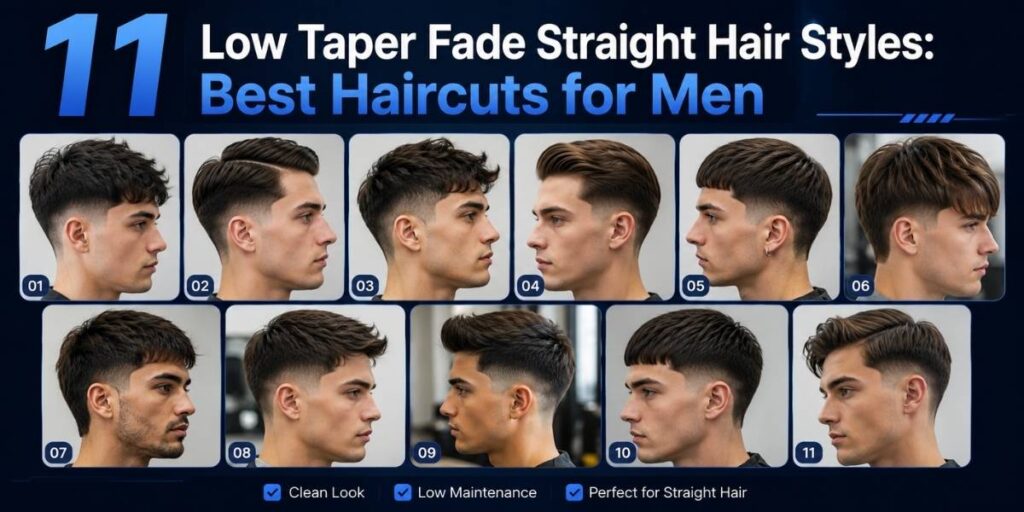
Got straight hair and tired of cuts that just don’t sit right? A low taper fade straight hair cut might be exactly what you’re missing. It’s sharp, it’s low maintenance, and it works with straight strands instead of fighting them.
Straight hair can be tricky. It doesn’t hold texture the way wavy or curly hair does. So a lot of trendy cuts just fall flat, literally. But a low fade haircut for straight hair solves that problem. It keeps things clean at the bottom and gives you room to play up top.
This guide walks you through everything. What it is, why it works, which styles to try, and how to keep it looking fresh. No fluff. Just the stuff you actually need.
What Is a Low Taper Fade?

A low taper fade is a haircut where the hair gradually shortens near the hairline, ears, and neck. Unlike a high or mid fade, the fading starts low, just above the ears. It’s subtle. It’s clean. And it doesn’t scream for attention.
Think of it as a quiet upgrade. You still keep length on top for styling, but the sides taper down smoothly. That’s the whole appeal of a low taper haircut for straight hair. It looks sharp without looking like you tried too hard.
Barbers love this cut because it’s forgiving. It suits almost any hair type, but it plays especially well with straight strands, which brings us to the next point.
Why It Works So Well on Straight Hair
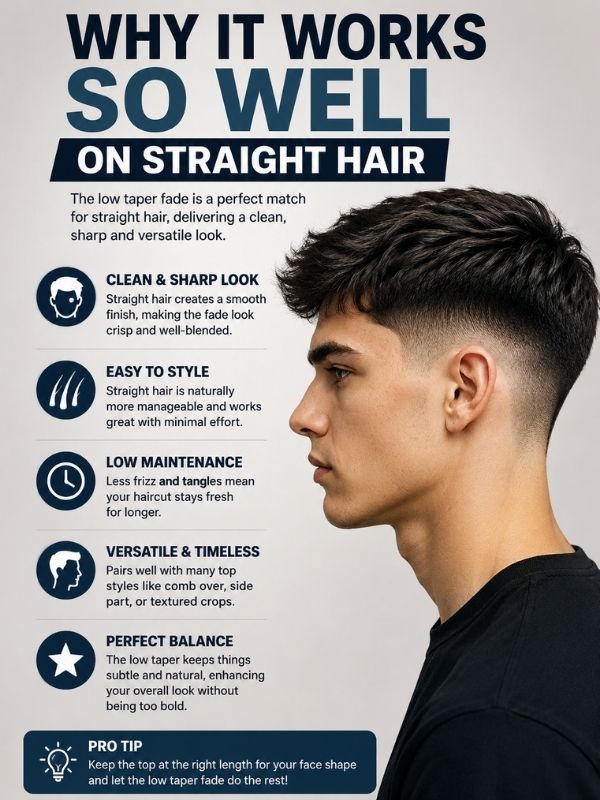
Straight hair has one job: to lie flat. That’s usually a challenge for cuts that need volume or texture. But a straight hair low fade actually uses that flatness to its advantage.
Since the taper is low and gradual, it doesn’t rely on your hair holding a shape. The top stays straight and sleek, while the sides taper smoothly into the skin or a short guard length. No cowlicks fighting you. No frizz ruining the line.
Here’s the honest truth: straight hair shows sharp lines better than any other texture. That crisp fade line? It pops on straight hair because there’s no texture blurring the edges.
Low Fade vs. Low Taper Fade Straight Hair

People mix these terms up all the time. A low fade haircut men ask for usually means the hair fades down to skin near the bottom. A low taper, on the other hand, tapers gradually without necessarily going all the way to skin.
So which one fits your straight hair better? A low fade gives a bolder, more defined contrast. A low taper feels softer and blends more naturally into your everyday look.
If you’re new to fades, start with the taper. It’s easier to grow out and less intimidating for a first-timer. Once you know what you like, you can always go bolder with a full low fade for straight hair.
The Best Styles to Try
Now for the fun part. Straight hair opens the door to a bunch of low taper combos. Here are ten worth showing your barber.
Classic Low Taper Fade
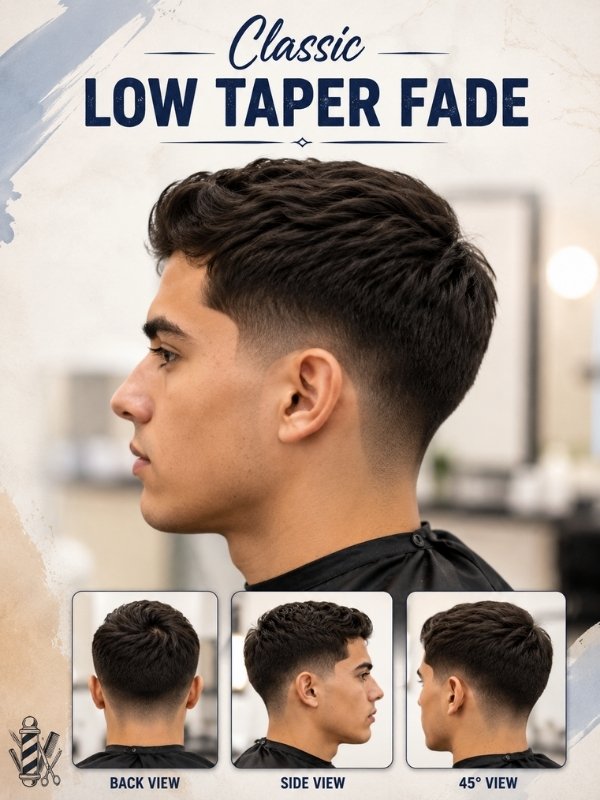
This is the one that never goes out of style. Short, clean sides that taper low, paired with slightly longer hair on top combed forward or left natural. It’s the safest bet if you want something professional yet current.
It works in any setting, office, gym, date night, you name it. If you’re not sure where to start, this classic low taper fade is your baseline.
Side Part Low Taper
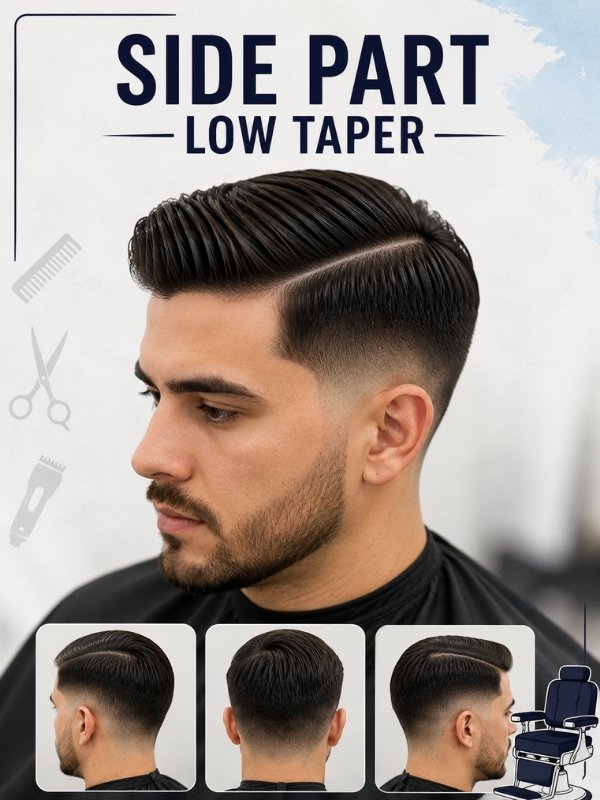
Add a crisp side part, and suddenly the whole cut feels more polished. Straight hair holds a part line beautifully since there’s no wave pulling it apart.
This combo is a favorite for guys who want something a little more refined. Pair it with a light pomade, and you’ve got a look that transitions from boardroom to weekend easily.
Slick Back Low Taper
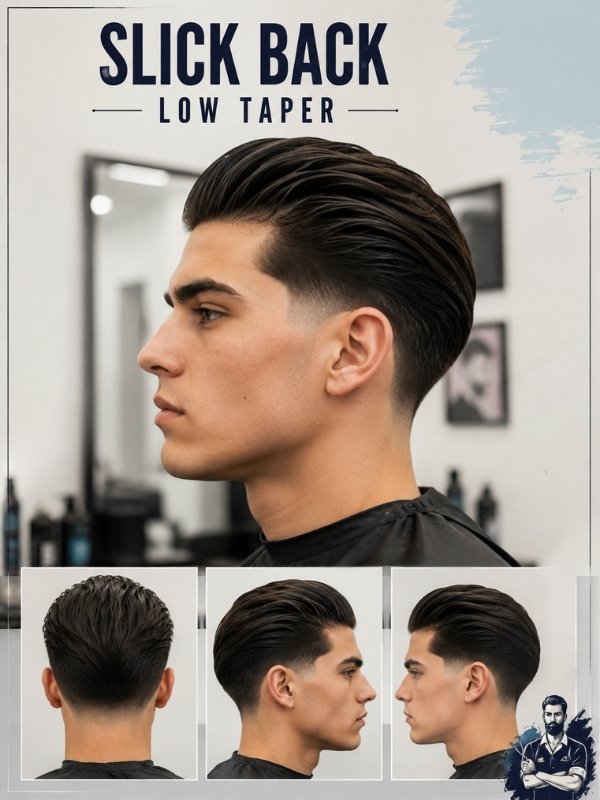
Want something with a bit more edge? Slick the top straight back. Straight hair slicks back cleanly without the flyaways curly hair often deals with.
A slick back low taper gives off confidence without trying too hard. It’s a strong pick for anyone with medium to long top hair who wants a grown up, put together vibe.
Textured Crop with Low Taper
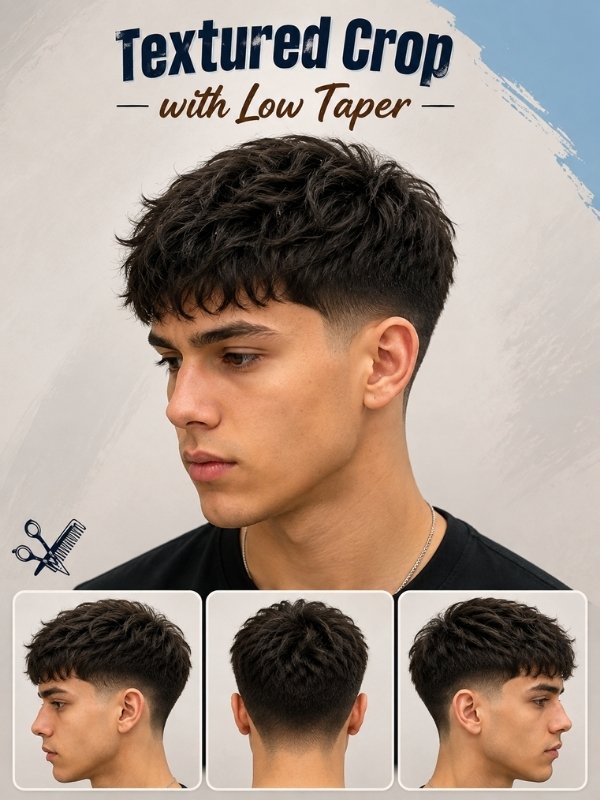
Not every look needs to be sleek. A textured crop with low taper adds a choppy, tousled finish on top while keeping the sides tight and low. Texture spray or clay helps fake some grit even on flat, straight strands.
It’s casual, low effort, and honestly kind of fun. Great for guys who don’t want to spend ten minutes styling every morning.
Low Taper Fringe
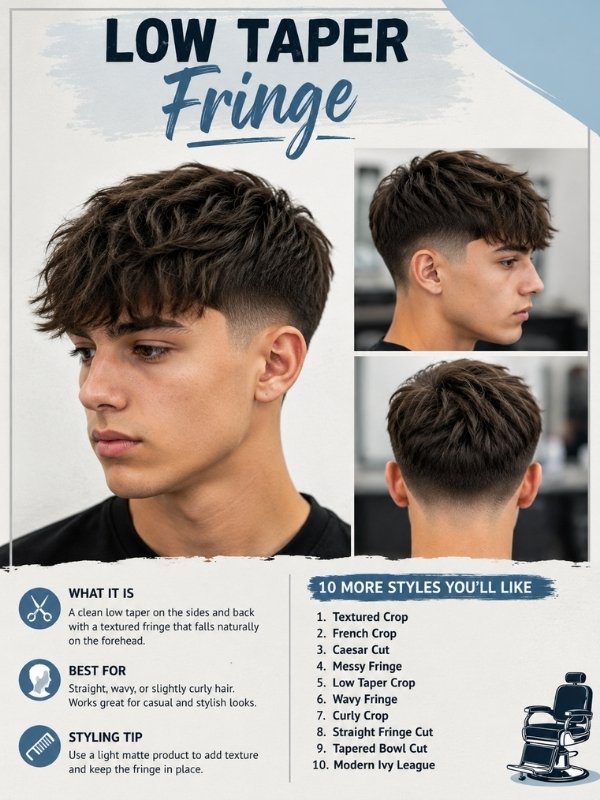
Fringe cuts have made a serious comeback. A low taper fringe brings the hair forward over the forehead while the sides stay tapered low. It softens your face and adds a youthful edge.
This one works particularly well if you’ve got thicker straight hair up top, since fringe needs a bit of weight to sit right.
Buzz Cut with Low Taper
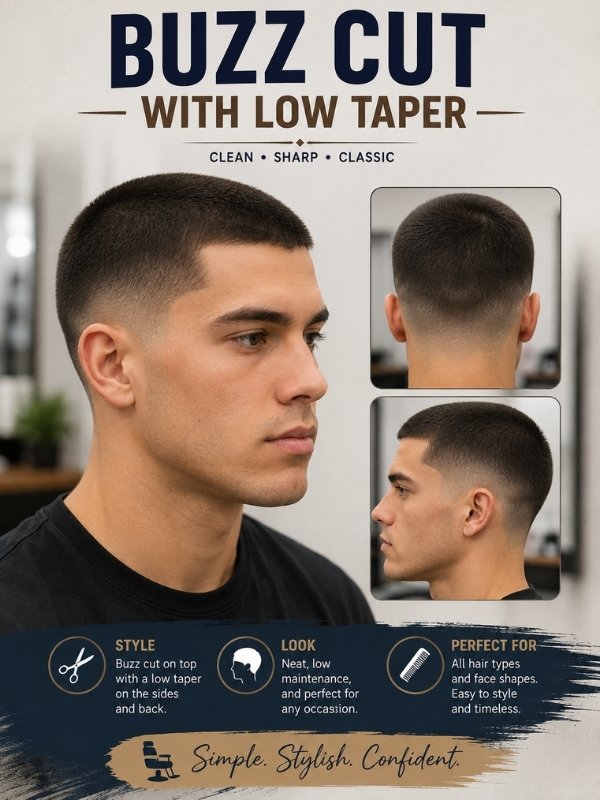
Sometimes less really is more. A buzz cut with low taper keeps everything short and uniform up top, with a subtle taper blending into the sides. Zero styling required.
It’s the busy man’s haircut. Wake up, and you’re done. No product, no comb, no fuss.
Short Straight Hair with Low Taper
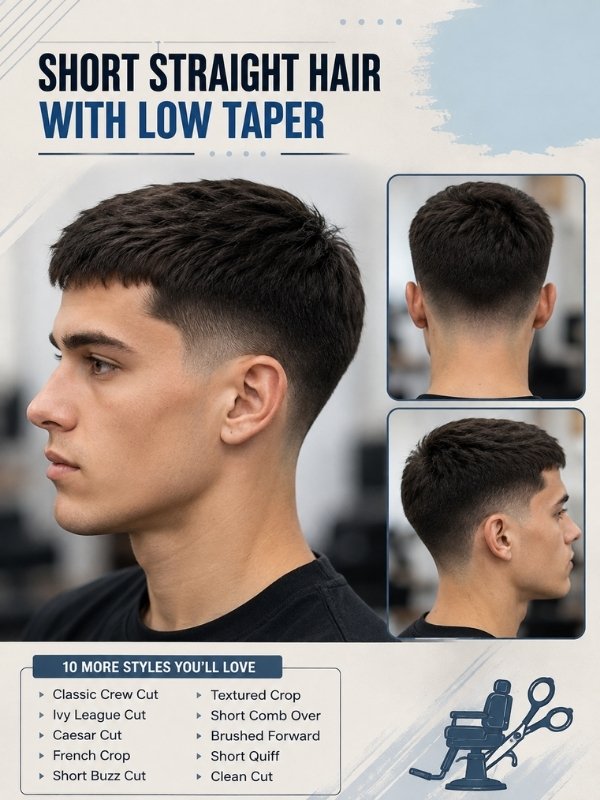
If you like keeping things neat and short overall, this style trims the top down close while the taper handles the sides and back. It’s a short straight hair low fade approach that reads clean and mature.
Perfect for guys heading into more formal environments where a wild top just won’t fly.
Messy Straight Hair Taper
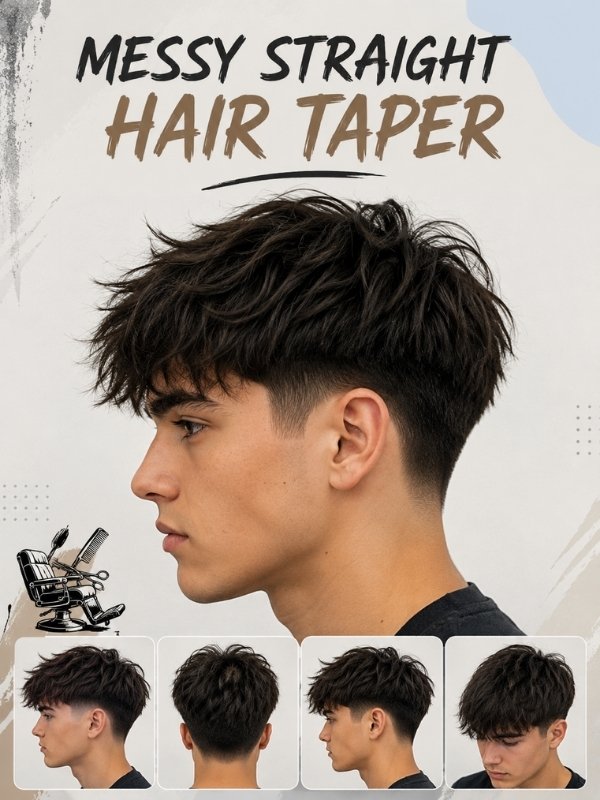
Contrary to what the name suggests, this isn’t actually messy at all, it’s intentional. A messy straight hair taper uses light texturizing on top for a lived in look while the low taper keeps things grounded.
Run some matte paste through damp hair, scrunch a little, and you’re set. Effortless is the goal here.
Pompadour Low Taper
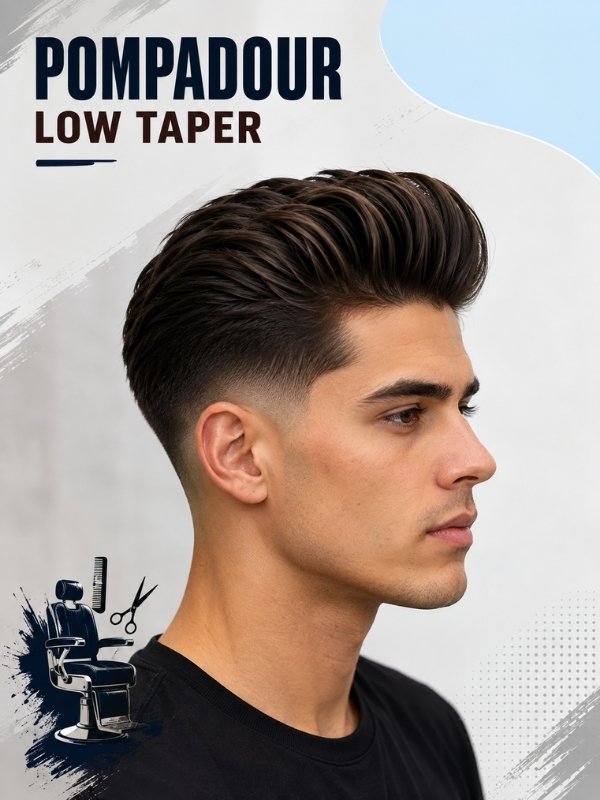
Craving some height and drama? The pompadour low taper combo lifts the front section up and back while tapering the sides down low. It’s bold, a bit retro, and always turns heads.
You’ll need some length on top plus a strong hold product, but the payoff is worth it for special occasions or just feeling extra sharp.
Middle Part with Low Taper
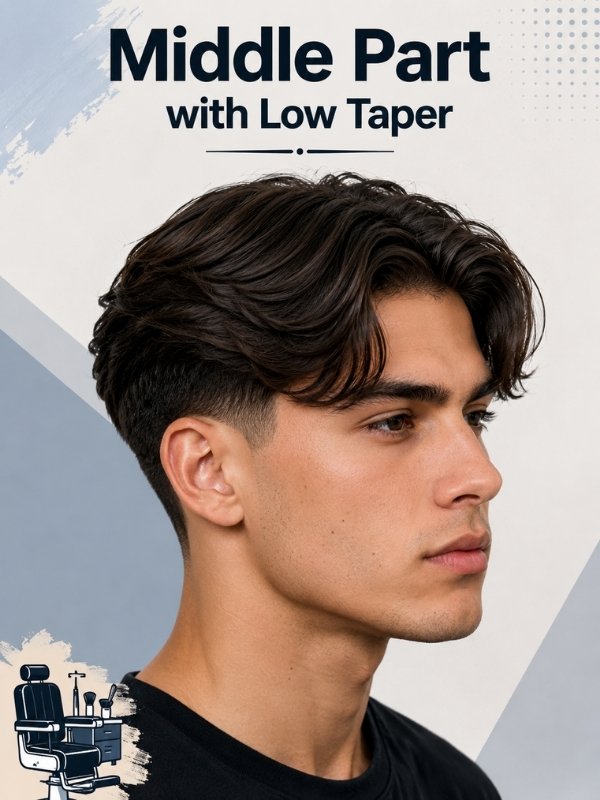
The middle part has quietly become one of the most requested cuts for straight hair. Paired with a middle part with low taper, it creates a balanced, almost model like finish.
It suits oval and round faces especially well, framing the face from both sides evenly.
Long Straight Hair with Low Taper
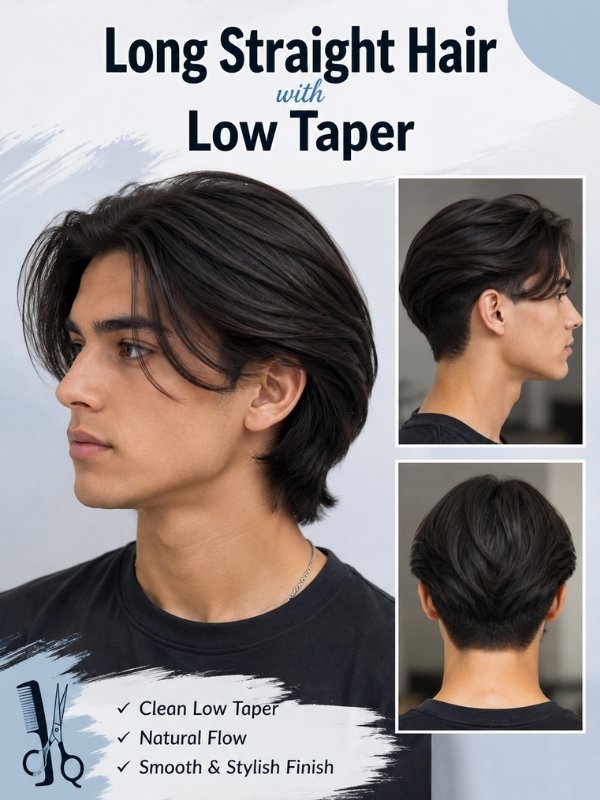
Not ready to cut it all short? You don’t have to. Long straight hair with low taper keeps generous length on top while quietly tapering the sides. It’s a great middle ground between a full haircut and just a trim.
This works especially well for guys growing out their hair but still wanting some shape and structure.
Best Low Taper Fade Lengths for Straight Hair
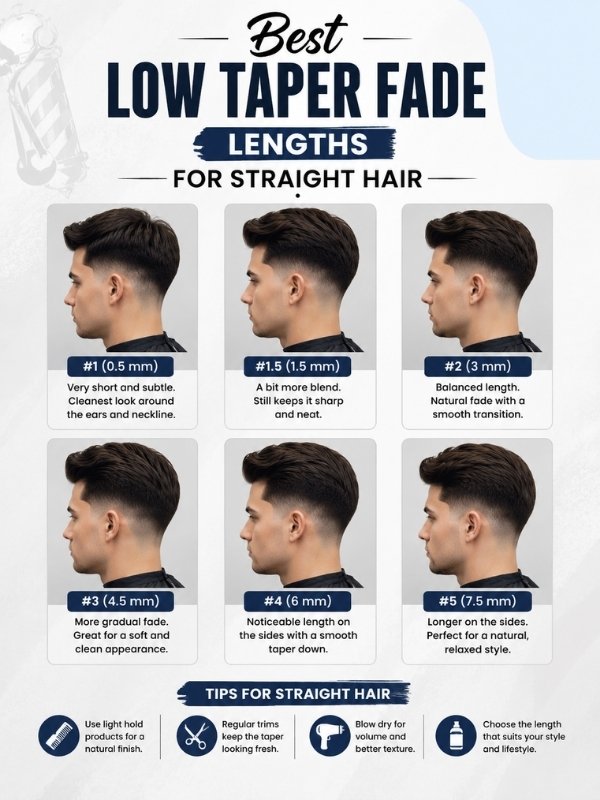
Length matters more than people think. For medium straight hair fade looks, aim for two to four inches on top. That gives you enough to style without it flopping everywhere.
For long straight hair fade styles, you’re looking at anything past four inches. This length suits slicked back or middle part looks best since there’s enough weight to control the strands.
Shorter lengths, around one to two inches, work great for buzz cuts or textured crops. They’re low maintenance and grow out gracefully too.
Low Taper Fade Guard Sizes for Straight Hair
Guard sizes decide how dramatic your fade looks. Low taper fade guard sizes usually range from a 1 to a 3 near the bottom, gradually blending into your natural top length.
A guard size 1 gives a tighter, closer cut near the ears and neckline. A size 3 leaves a bit more length, which some guys prefer for a softer transition.
Ask your barber to blend between a 1 and 3, then feather it up toward your natural hair length. That blend is what makes a fade look professional instead of choppy.
Matching the Style to Your Hair Type
Not all straight hair behaves the same. Some strands are fine and thin, others are thick and coarse. Matching your cut to your specific hair type saves you a lot of styling frustration down the road.
Low Taper Fade for Thin Straight Hair
Low fade for thin straight hair needs a little help creating visual density. Go for a low taper for fine hair approach with slightly shorter top lengths so it doesn’t look sparse or limp.
Texturizing sprays and light mousses add lift without weighing hair down further. Avoid heavy pomades, they’ll just make thin hair look flatter and greasier.
Low Taper Fade for Thick Straight Hair
Thick strands give you more room to experiment. A low taper for thick hair setup handles longer top lengths and bold styles like pompadours or slick backs without collapsing.
The challenge with thick hair is bulk. Ask your barber to thin it out slightly during the cut so it doesn’t feel heavy or hard to manage day to day.
Face Shape Considerations
Your face shape actually changes which version of this cut suits you best. A low fade for oval face shapes works with almost anything since oval faces are naturally balanced.
For a low fade for round face shapes, go for more height on top to elongate things visually. A low fade for square face shapes benefits from softer, textured tops that balance out strong jawlines.
If you’ve got a low fade for long face shape, keep the top shorter and avoid too much height. It’ll help balance out the length of your face instead of extending it further.
Talking to Your Barber
Knowing how to ask for a low fade saves you from a bad haircut day. Bring a photo. Seriously, photos communicate way better than words alone.
Mention specific details like low fade around ears and low taper fade neckline preferences. Barbers appreciate specifics, it means less guesswork and fewer redos.
Also tell them your low fade haircut length goals upfront. Whether you want it grown out in six weeks or kept tight, this shapes how they cut it today.
How to Style It at Home
Styling a low taper doesn’t need to be complicated. Start with slightly damp hair, since straight hair is easier to control that way.
Use pomade for straight hair if you want shine and hold, or a matte clay for straight hair for a more natural, non shiny finish. A quick spritz of sea salt spray for straight hair can add texture for messier looks.
If you’re air drying, comb through while damp. If you prefer heat, a quick blow dry straight hair session with a round brush adds volume before applying product.
How Often Should You Maintain a Low Taper Fade?
Low fade haircut maintenance typically means a trim every two to four weeks. Fades grow out fast near the taper zone, so waiting too long makes the lines blurry and undefined.
A solid low fade haircut maintenance schedule looks like this. Trim every three weeks if you want crisp lines constantly. Stretch to four weeks if you don’t mind a slightly grown out taper.
Some guys touch up their own neckline between barber visits using clippers at home. It’s optional, but it keeps things looking fresh between appointments.
What Does a Low Taper Fade Typically Cost?
Prices vary by location and barber experience, but expect anywhere from twenty to fifty dollars at a standard barbershop. Higher end salons or specialty barbers might charge more, especially in bigger cities.
Tipping ten to twenty percent is standard practice too. If your barber nails the blend on the first try, that tip is well earned.
Mistakes Worth Avoiding
Skipping regular trims is the biggest one. A grown out taper looks patchy instead of sharp, which defeats the whole purpose of the cut.
Another mistake is going too short too fast if you’re new to fades. Ease into shorter guard sizes over a few visits instead of jumping straight to skin.
Lastly, don’t ignore product. Even a great haircut looks unfinished without a little pomade or clay to hold things in place.
Conclusion
A low taper fade straight hair cut genuinely delivers on style without demanding hours of upkeep. Straight hair and low tapers just click together, sharp lines, clean transitions, easy styling.
Whether you go bold with a pompadour or keep it simple with a buzz cut, there’s a version of this cut that fits you. Show your barber a photo, mention your guard size preferences, and trust the process.
Your next haircut doesn’t have to be complicated. Sometimes the simplest cuts turn out to be the sharpest ones.
