
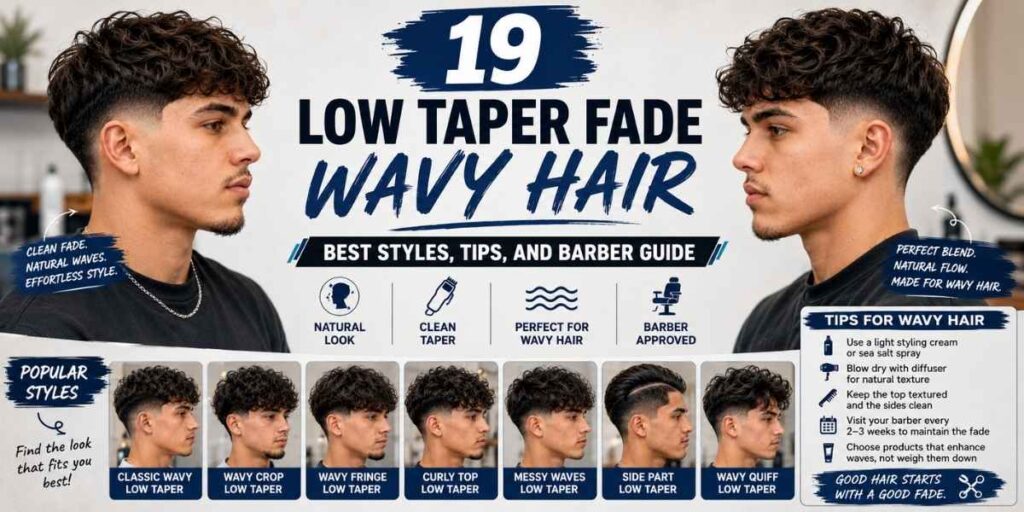
A low taper fade is the cut most barbers reach for when someone with wavy hair sits in the chair and says “just make it clean but not too short.” It keeps length on top so your natural waves can move, and it fades the sides low near the ear instead of high up the head. That combo is why it works so well on wavy hair taper fade requests, letting the waves do their thing while the sides stay sharp.
If you have been scrolling through photos tryinghair to figure out which version fits your hair, this guide walks through all of it, real styles, real differences between fades, and real talk about what to say to your barber.
What Is a Low Taper Fade?
A low taper fade starts the blending right above the ear and along the neckline, staying subtle instead of climbing up toward the temple. This is different from a high or mid fade because the fade line sits low, which means more hair stays visible on the sides. For guys with naturally wavy hair, this matters because it keeps the head looking balanced instead of top heavy.
Barbers usually use lower clipper guard sizes near the bottom, then blend upward into the length on top. It is a clean taper haircut that reads as tidy without looking like a buzz cut, and one of the most requested barber taper fade styles because it is low maintenance and still looks sharp two weeks later.
Why Wavy Hair and This Cut Go Together
Wavy hair has natural movement that straight hair does not have, so it needs a cut that gives it room to fall the way it wants. A low taper fade does exactly that. The sides stay tight and controlled while the top is left long enough for the waves to show their pattern, whether you have 2A wavy hair, 2B wavy hair, or thicker 2C wavy hair.
Straight hair can handle a lot of different fades, but wavy hair looks its best when there is contrast, tight on the sides, loose and textured up top. That is the whole idea behind a modern taper fade built for waves, and why it keeps showing up as one of the most searched men’s wavy hairstyles every year.
12 Best Low Taper Fade Styles for Wavy Hair
Here are the styles worth showing your barber, broken down so you know exactly what each one looks like and who it fits best.
Classic Wavy Low Taper Fade

Medium length on top, a clean low fade on the sides, and the natural wave pattern left alone instead of styled into something else. It works in almost any setting, from the office to a night out, which is why it stays one of the most requested classic taper haircut options.
Textured Wavy Low Taper Fade

This style breaks up the waves through a razor or point cutting technique so they look more separated instead of one solid mass. Guys with fine or thin waves benefit most here, since a textured wavy haircut paired with a light styling cream for waves tricks the eye into seeing more volume.
Messy Wavy Low Taper Fade
This one leans into a lived in, just rolled out of bed look, but the fade underneath stays crisp. It works great for casual days and anyone who does not want to spend ten minutes styling, and a little sea salt spray for wavy hair is often all a low taper fade with messy waves look needs.
Short Wavy Low Taper Fade

For guys who want something tighter, this keeps the top short, usually under two inches, while the sides fade low and clean. This low taper fade short wavy hair combo barely needs daily upkeep and still shows wave texture in a tighter, more compact pattern.
Long Wavy Hair with a Low Taper Fade
On the other end, this keeps serious length on top, sometimes three inches or more, contrasted against a low fade underneath. A low taper fade long wavy hair combo takes more product and drying time, but the payoff is a fuller, more dramatic wave pattern.
Low Taper Fade with Wavy Fringe

The front section is left longer and pushed forward into a soft fringe, while the rest fades low on the sides. A low taper fade wavy hair fringe look suits a straighter hairline, and a light hold cream keeps it in place without stiffness.
Side Part Wavy Low Taper Fade
A defined part cut into the side, then swept across, gives this style a side swept wavy hair finish that looks polished for meetings or events. Barbers often use a comb and a bit of pomade to lock the part while letting the waves show through on top.
Middle Part Wavy Low Taper Fade
A center part splits the top into two sections, letting the waves fall naturally on each side. It suits medium to long hair best, since shorter waves do not have enough length to fall into the part properly.
Fluffy Wavy Low Taper Fade
This style focuses on volume, using a blow dry and a diffuser for wavy hair to lift the roots before the waves set. Combined with a low fade, it creates height without extra length, a solid choice if your hair looks a little flat naturally.
Professional Wavy Low Taper Fade
Built for the office, this version keeps everything neat, moderate length, minimal texture, and a subtle fade that does not draw attention. It is one of the most reliable office-friendly haircut picks for wavy hair, needing only a small amount of matte product through the day.
Thick Wavy Low Taper Fade
Thick hair needs extra thinning to avoid looking bulky, so barbers often use thinning shears on top before shaping the fade below. This low taper fade for thick wavy hair look stays full but never heavy, and it is worth mentioning during your consultation.
Natural Wavy Flow with Low Taper Fade
No heavy styling here, just the waves left to dry and fall on their own with the fade doing the heavy lifting underneath. This natural wavy hairstyle is the lowest maintenance option on this list and works well between short and medium lengths.
Low Taper Fade for Men with Wavy Hair

This is really the umbrella style, a flexible base cut that every version above builds from. Once you have this foundation, you can switch between messy, textured, or slicked looks without needing a whole new haircut.
Low Taper Fade vs Mid Taper Fade vs High Taper Fade for Wavy Hair
Not every fade sits in the same spot on the head, and where it sits changes the whole feel of the haircut.
Mid Taper Fade for Wavy Hair
A mid taper fade wavy hair cut starts the blend around the temple area, sitting between low and high. It shows a bit more skin on the sides than a low fade, giving a sharper edge while still leaving enough length on top for waves to move.
High Taper Fade for Wavy Hair

A high taper fade wavy hair version starts even higher, closer to the crown, creating a bolder contrast between the sides and the top. It suits a more dramatic look, though it needs more frequent trims to keep the fade line sharp.
Which Taper Fade Looks Best on Wavy Hair?
For most people, low taper vs mid taper comes down to how much contrast you want and how often you can get to the barber. Low fades grow out slower and look good longer, mid fades sit in a nice middle ground, and high fades need upkeep every two to three weeks to stay clean.
Low Fade vs Low Taper Fade for Wavy Hair
These two get mixed up constantly, but they are not quite the same cut.
Key Differences Between a Low Fade and a Low Taper
A low fade wavy hair cut usually fades all the way down to skin near the bottom, creating a sharper, more defined line. A low taper blends gradually without necessarily going down to skin, giving a softer transition, and that is the core of the taper fade vs low fade debate barbers discuss.
Which Style Is Better for Wavy Hair?
A taper tends to suit wavy hair a little better because the softer blend does not compete with the natural texture on top. A low fade can look great too, just slightly more striking and less forgiving if you go a week or two past your usual trim.
Which One Is Right for You?
Think about your daily routine before picking a style. If you like low effort mornings, go for a shorter or messy version. If you enjoy styling, a fringe, part, or fluffy look gives you more to work with.
Also think about hair thickness. Fine wavy hair men should lean toward shorter or textured cuts for the appearance of volume, while thicker waves have more room to experiment with length and layering.
Talking to Your Barber
Knowing how to ask for a low taper fade makes a huge difference in the final result. Bring a photo, mention the guard size if you know it, and be specific about where you want the fade to start.
A short barber consultation before the clippers come out saves you from surprises. Mention your hair type too, thick, thin, curly leaning, or loose waves, and check in before they finish the neckline taper and sideburn taper, since those small details often make or break the overall look.
Keeping It Looking Good
Fade haircut maintenance is simpler than people expect. A trim every two to three weeks keeps the fade sharp, and using the right products on top protects the wave pattern between cuts.
A light curl cream for men or matte clay for wavy hair helps define texture without weighing hair down, while heavy oils or waxes tend to flatten waves instead. Washing less often, maybe two to three times a week, keeps natural oils intact, and a simple men’s hair routine with a sulfate free shampoo goes a long way here.
Mistakes Worth Avoiding
A lot of guys skip the consultation and just say “fade please,” which leads to a version they did not actually want. Always specify low, mid, or high before the clippers start.
Another common mistake is over styling with too much product, which makes hair look stiff instead of natural, so start small and build up. Waiting too long between trims is the last big one, since the fade line grows out unevenly. Stick to a haircut every 2 weeks schedule if you want the sharpest version of this cut at all times.
Extra Care for Different Wave Patterns
Not all waves behave the same way. Looser beach wave hairstyle types respond well to sea salt spray and air drying, while tighter waves closer to curls need a bit more curl cream to stay defined. Medium wavy hair sits in a nice sweet spot, flexible enough for almost every style on this list without needing heavy products.
How This Cut Pairs With Other Trends
A low taper fade is not locked into one single top style, which is part of why it stays so popular. It pairs naturally with a quiff with taper fade, a pompadour taper fade, or even a simple French crop wavy hair look, so you can change the top styling every few months while keeping the same reliable fade underneath.
Conclusion
A low taper fade gives wavy hair the structure it needs without taking away the natural movement that makes waves worth having in the first place. Whether you go short and low maintenance or long and textured, the fade underneath keeps everything looking sharp between trims.
Bring the right photo, ask the right questions, and stick to a regular trim schedule, and this cut will keep working for you no matter which of the twelve styles above you land on. If you have tried one of these looks, drop a comment about which version fit your hair best, it helps other readers figure out what to ask for too.
