
You want a haircut that actually suits you, not just one that looks good on someone else.
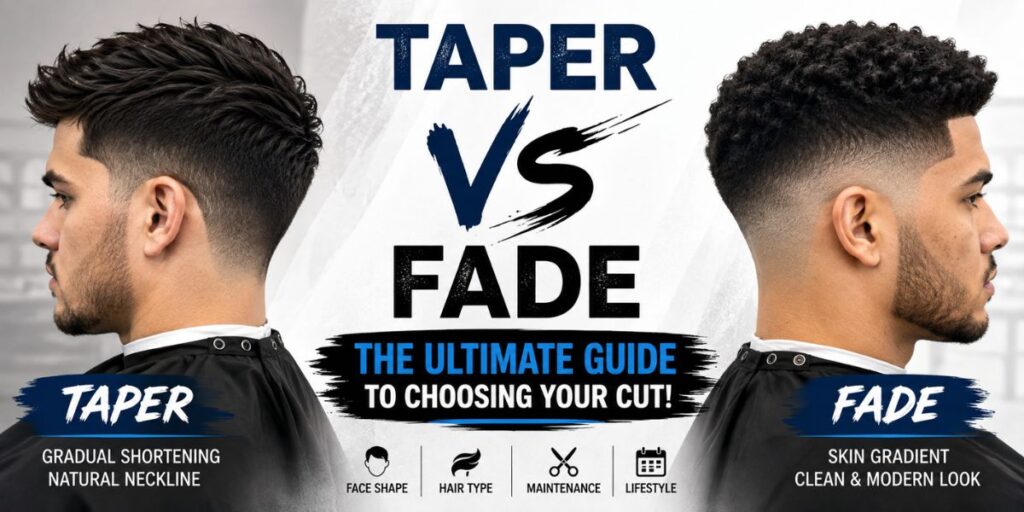
The short answer: a taper blends your hair gradually from long to short without touching the skin, while a fade cuts all the way down to bare skin for a sharper, more dramatic look.
Both styles clean up the sides and back. Both work with almost any hair type. But they hit very different notes, and picking the wrong one can throw off your whole look.
This guide breaks down every angle of the taper vs fade debate, from styles to face shapes to how often you’ll be sitting in a barber’s chair.
What Is a Taper?
A taper haircut shortens your hair slowly as it moves down toward your ears and neckline.
There’s no harsh line here. The hair just melts from longer on top to shorter at the edges, and it never touches bare skin.
This is why a taper reads as classic. It’s the haircut your dad probably got, and it still works today because it never really goes out of style.
Key Features of a Taper Haircut

A taper haircut for men keeps some length around the ears and neck, so you never see skin poking through.
The transition is soft. You won’t spot a hard line anywhere on the head, which makes it a genuinely low maintenance taper option.
Because the hair stays a bit longer everywhere, grow out looks natural too. You can skip a barber visit or two and still look put together.
Popular Taper Styles

Not every taper looks the same, and that’s the beauty of it. Here are the main types of taper haircuts worth knowing.
Classic Taper
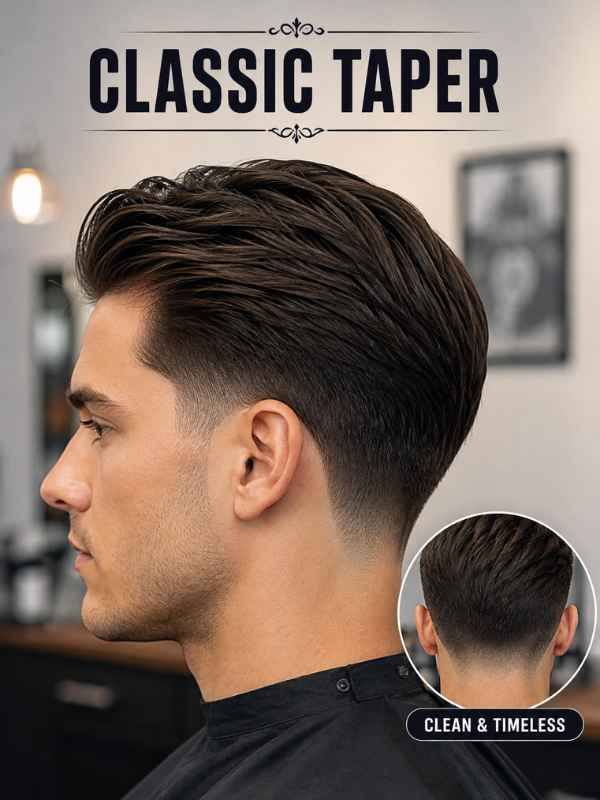
The classic taper is the one you picture when someone says “taper.” Hair gradually shortens around the ears without any skin showing.
It pairs with pretty much any top style, from a comb over to a simple crop.
High Taper
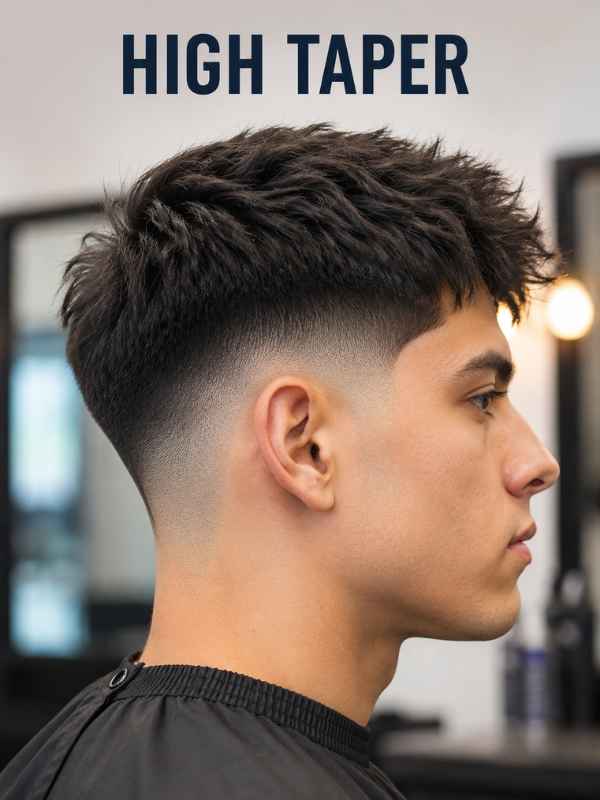
A high taper starts the taper higher up on the head, closer to the crown.
This gives a bit more contrast than a classic taper while still keeping that soft, blended edge.
Mid Taper
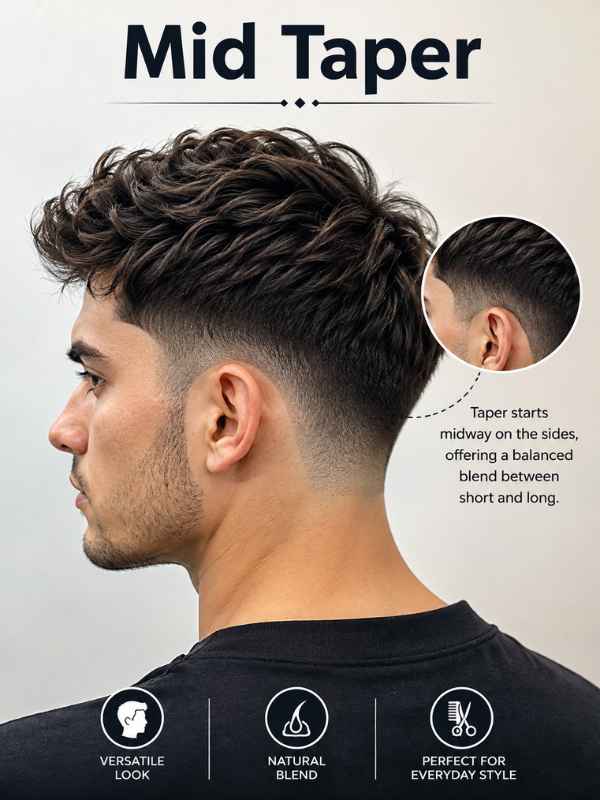
The mid taper starts around the temple area, right in the middle of the head.
It’s a nice middle ground. Not too flashy, not too plain, and easy to maintain.
Low Taper
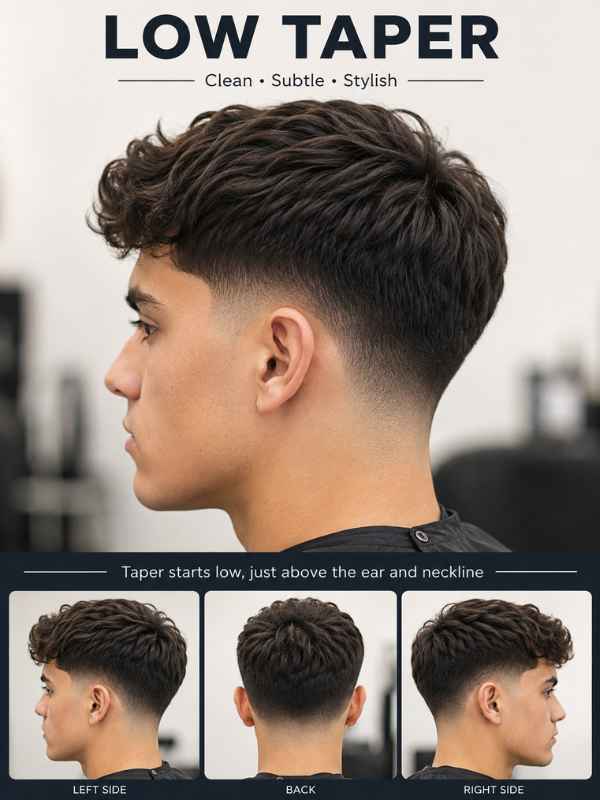
A low taper keeps the blend close to the hairline, so almost all the hair length stays intact.
This is the most subtle taper haircut you can get, and it’s a favorite for offices and formal settings.
Neckline Taper
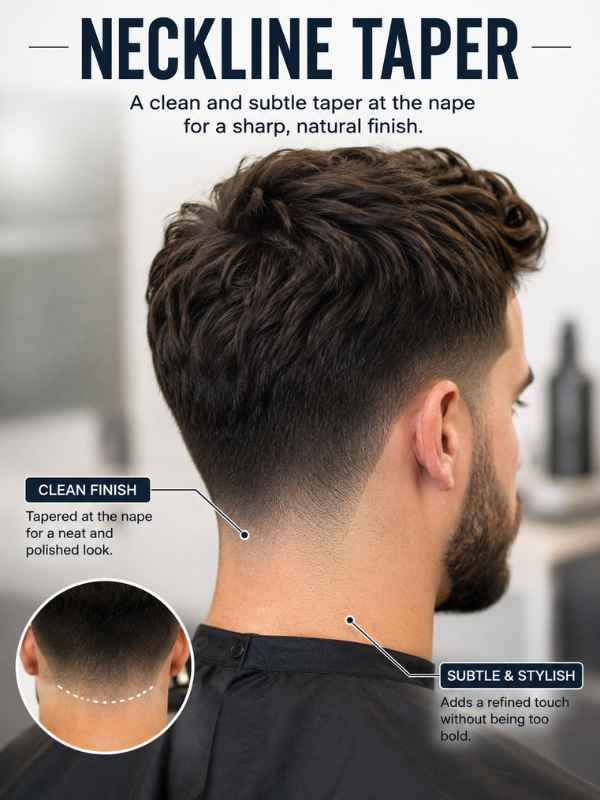
The neckline taper focuses only on cleaning up the back of the neck, leaving the sides mostly untouched.
It’s a quick fix between full haircuts, and barbers can knock it out in minutes.
Undercut Taper
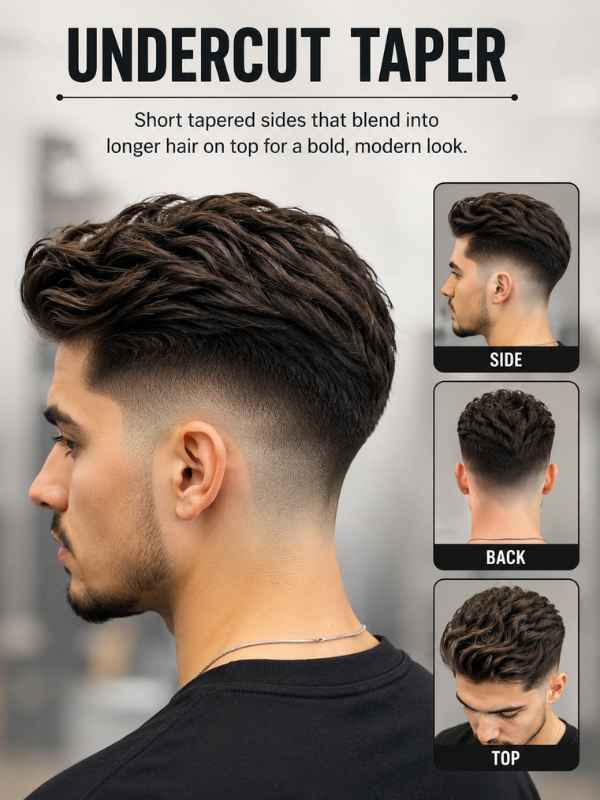
The undercut taper combines a tapered back and sides with more length and texture on top.
You get a soft blend below with room to style something bold up top.
What Is a Fade?
A fade haircut takes things further than a taper. The hair shortens all the way down to the skin, creating a much cleaner, sharper edge.
Where a taper fades into itself, a fade fades into nothing. That’s the whole point.
This is the go to pick for anyone who wants their haircut to make a statement.
Key Features of a Fade Haircut
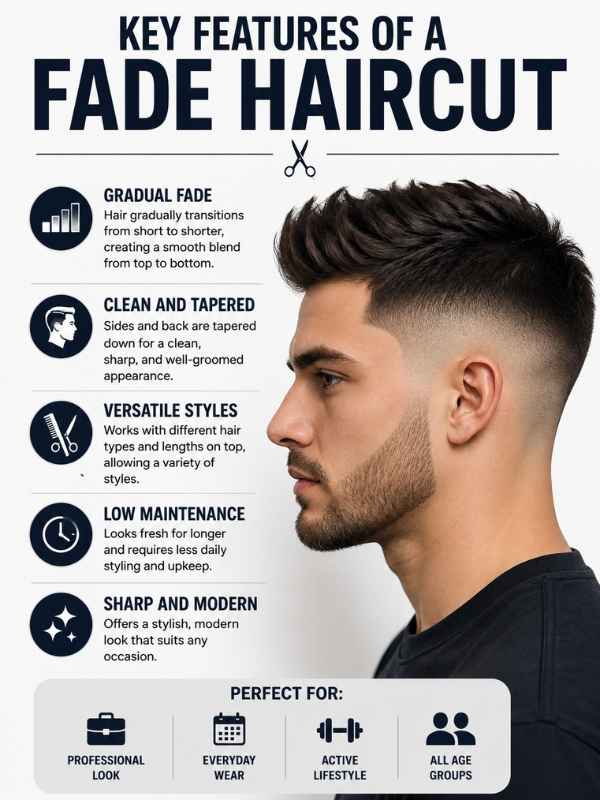
The defining trait of any fade hairstyle is that bare skin shows somewhere on the head, usually near the hairline or temple.
That skin exposure is what gives a fade its high contrast fade look, especially against thicker hair on top.
Fades also need more upkeep. Hair grows fast, and a fade grows out faster than a taper does visually.
Popular Fade Styles
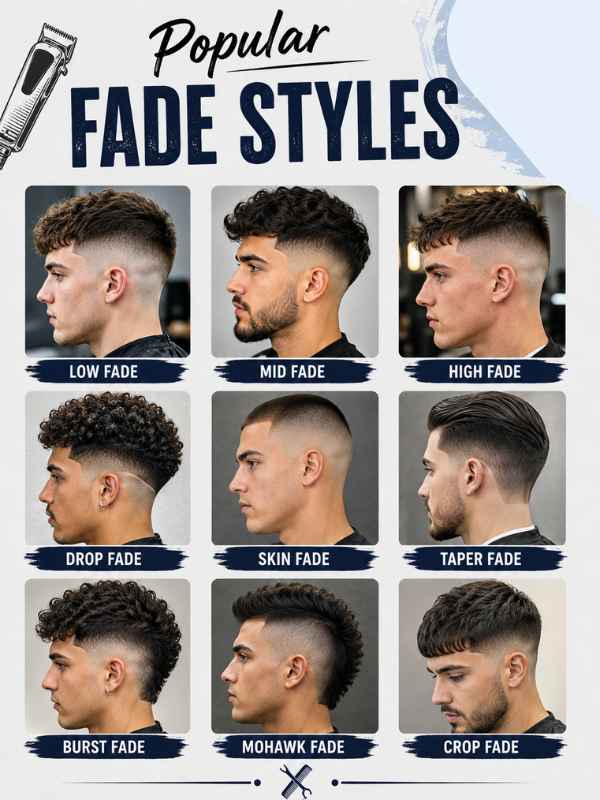
Fades come in more variety than tapers, mostly because of where the fade starts and how low it goes.
High Fade

A high fade starts near the top of the head, leaving a small amount of length up top and a lot of skin showing below.
It’s bold, it’s modern, and it’s one of the most requested styles at barbershops right now.
Mid Fade
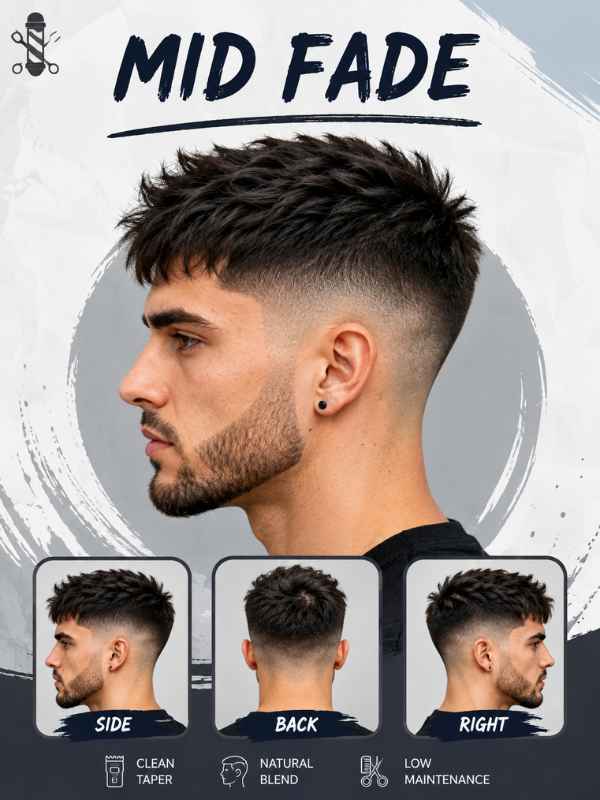
The mid fade starts around the temples, similar to a mid taper but with actual skin exposure.
It balances style and subtlety better than a high fade does.
Low Fade
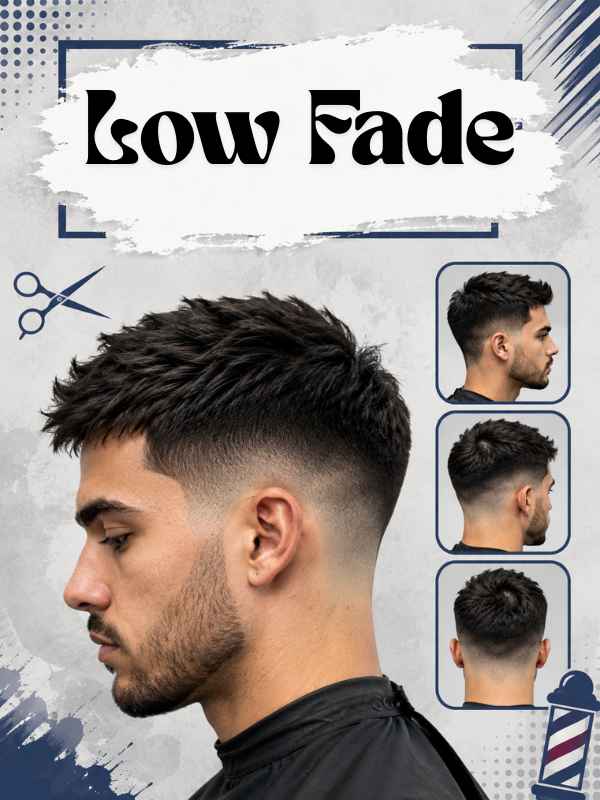
A low fade keeps the fade close to the ears and neckline, which makes it a great fade for straight hair or wavy textures that need a cleaner base.
Burst Fade
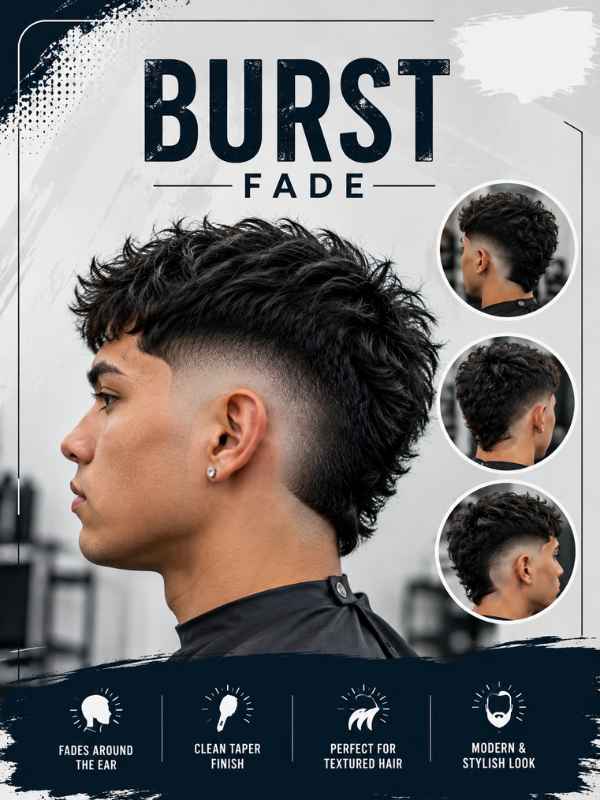
The burst fade curves around the ear instead of running in a straight line, which suits curly or textured hair nicely.
It’s a favorite pick for anyone who also wants longer hair in the back.
Temple Fade
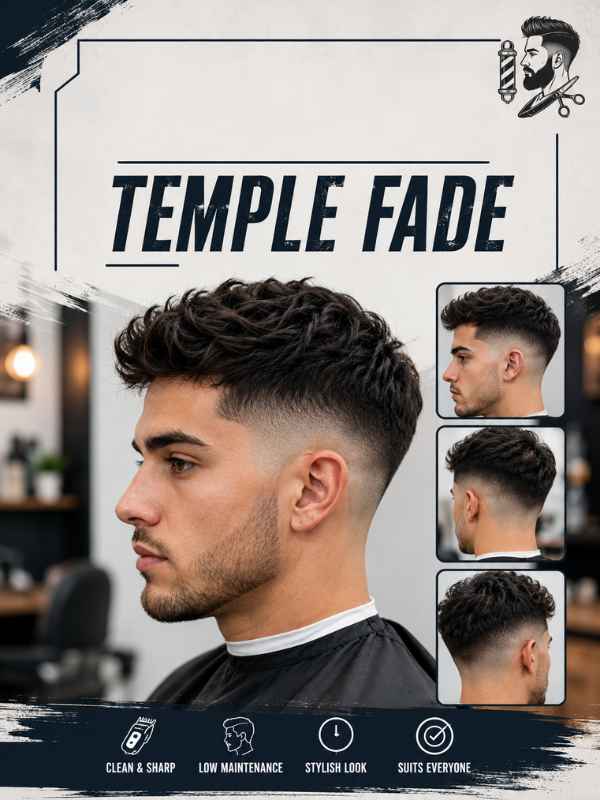
A temple fade focuses the fade around the temple area only, often paired with a taper elsewhere on the head.
It’s subtle but sharp exactly where it counts.
Skin Fade
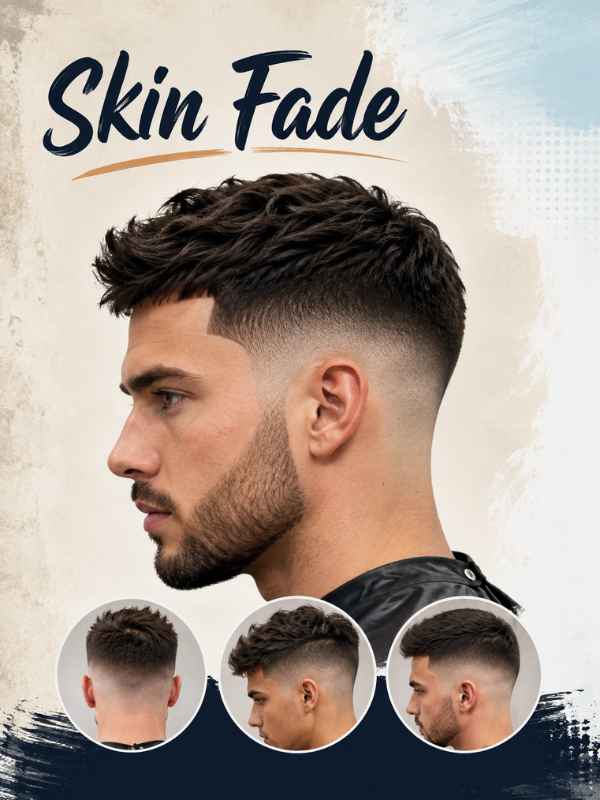
The skin fade haircut goes all the way down to bare skin, no stubble left behind.
This is the boldest fade option, and it demands the most frequent touch ups.
Drop Fade
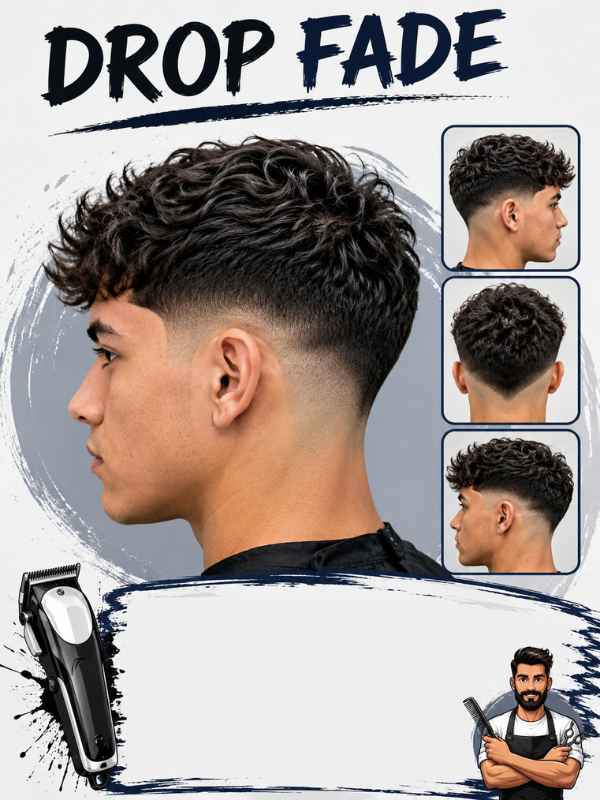
A drop fade curves downward behind the ear, dropping lower than a standard fade line.
It adds a bit of flair without going overboard, and it works especially well with fade haircut for thick hair.
Taper vs Fade – Key Differences
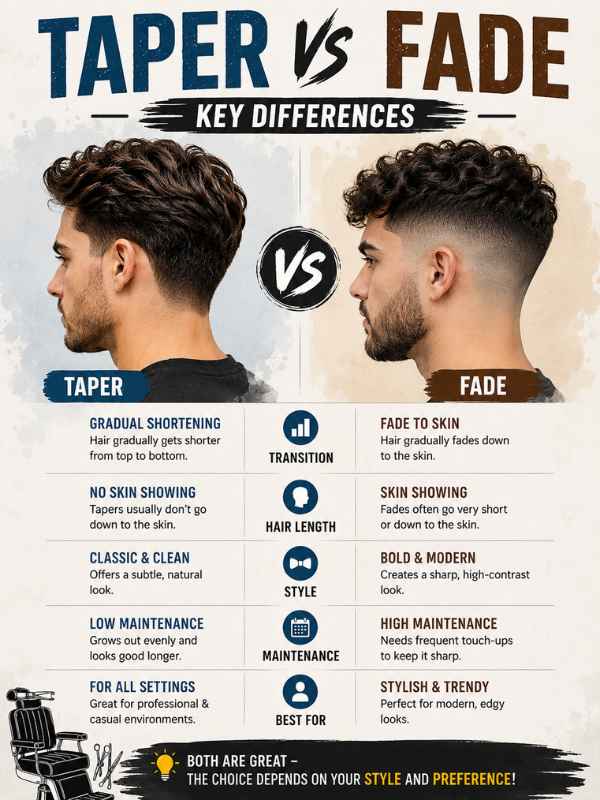
Here’s where the taper vs fade difference actually gets clear, because side by side, these two styles behave very differently.
Taper vs Fade: Main Difference
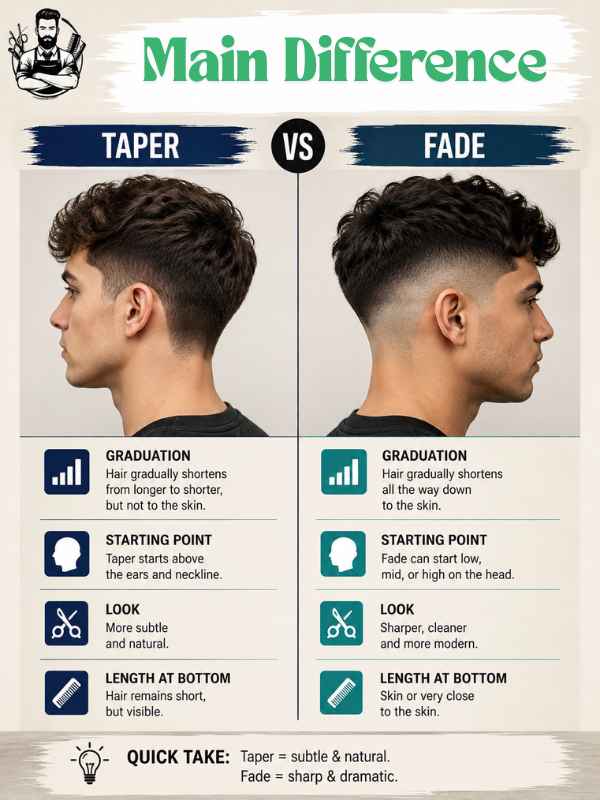
A taper blends. A fade cuts to skin. That’s the entire difference between taper and fade in one sentence.
Everything else, from maintenance to style options, branches off from that one distinction.
Low Taper vs Low Fade

A low taper keeps most of your natural hair length near the bottom, while a taper vs low fade comparison shows the fade version exposing skin even at that lower point.
Both sit close to the hairline, but only one of them shows scalp.
Taper vs Fade: Which One Is More Subtle?
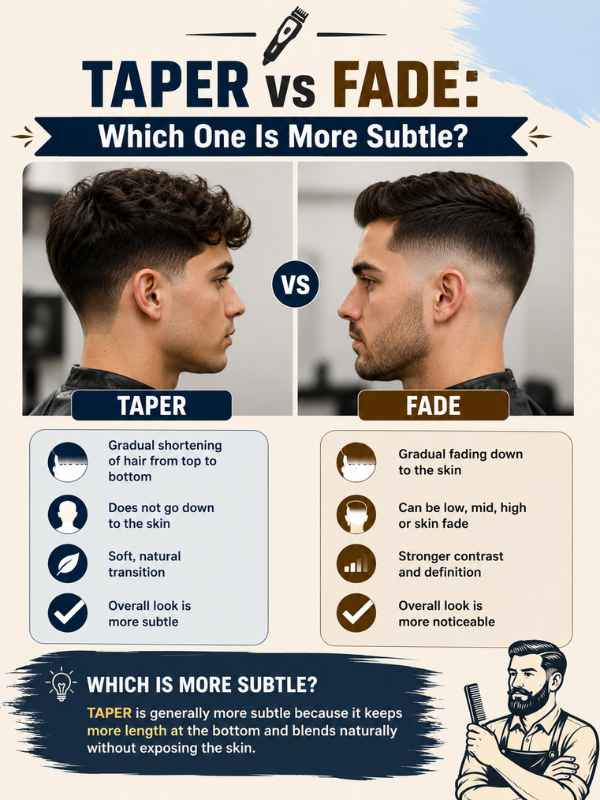
If subtlety is the goal, the taper wins every time. There’s no skin exposure and no sharp lines to draw attention.
A fade, even a low one, always reads as more noticeable because of that contrast against the skin.
Taper vs Fade: Which One Has More Contrast?
Fades bring way more taper vs fade contrast into the picture, especially high and mid fades.
Tapers stay smooth throughout, so there’s rarely a moment where you see a hard line.
Taper vs Fade: Maintenance and Hair Growth
This is the part people underestimate. A fade haircut maintenance routine usually means visiting the barber every two to three weeks.
A taper haircut maintenance schedule stretches longer, often three to five weeks, because the taper grow out process looks natural instead of patchy.
If frequent barber visits aren’t your thing, that alone might settle the taper vs fade decision for you.
Taper vs Fade for Different Hair Types
Your hair type changes how each style actually looks once it’s finished.
Taper vs Fade for Curly Hair
Fade for curly hair works really well because the shorter sides let the curls on top pop without extra bulk weighing things down.
A taper haircut for curly hair softens things instead, which suits guys who want their curls to look fuller and less structured.
Taper vs Fade for Straight Hair
Straight hair takes both styles cleanly since there’s no volume fighting the line.
A fade haircut for straight hair tends to look razor sharp, while a taper haircut for straight hair looks polished without feeling too formal.
Taper vs Fade for Thick Hair
Thick hair benefits from a fade because it removes bulk from the sides, letting the top hair stand out more.
That said, a taper still works fine for thick hair if you want to keep some weight around the ears.
Taper vs Fade for Wavy Hair
Taper for wavy hair keeps things looking effortless, almost like your hair just fell into place.
A fade gives wavy hair more edge, especially when paired with texture on top like a messy quiff.
Taper vs Fade for Black Men
Both styles are hugely popular in Black barbershops, but they get used for slightly different goals.
Best Taper Styles for Black Hair
A low or mid taper works beautifully with coily hair because it keeps volume intact while still cleaning up the edges.
These styles pair well with fades on top too, giving a soft transition into more textured length.
Best Fade Styles for Black Hair
A skin fade haircut or burst fade is extremely common, especially alongside designs or line ups along the hairline.
The sharp contrast against darker skin tones makes fades pop visually in a way that’s hard to match.
Taper vs Fade for Coily and Textured Hair
Coily hair holds its shape well with either style, but fades tend to show off curl definition more clearly since there’s less hair weighing things down at the sides.
Tapers, meanwhile, keep a fuller silhouette that some guys prefer for a softer everyday look.
Taper vs Fade vs Undercut
Throwing an undercut into the mix adds one more option worth understanding.
Taper vs Fade vs Undercut: Key Differences
An undercut shaves the sides short and leaves a hard, visible line where the long top hair begins.
A taper blends gradually, a fade goes to skin gradually, and an undercut just chops the length off abruptly. Three very different textures, three very different vibes.
Which Style Is Best for Your Look?
Pick a taper for something soft and wearable every day. Pick a fade for something sharp that turns heads. Pick an undercut if you want maximum contrast between top and sides.
There’s no wrong answer here, just different moods.
Taper vs Fade for Face Shapes
Your face shape plays a bigger role than most guys realize when picking between these two styles.
Taper for round face shapes works well because the added length on top and gentle sides create some visual height, which balances out the roundness nicely.
Fade for square face shapes tends to sharpen an already strong jawline, giving off a cleaner, more angular look overall.
If you’ve got an oval face, honestly, both styles work fine. Oval faces are the easiest shape to style around, so lean toward whichever level of contrast you personally prefer.
Taper vs Fade FAQs
Is a taper or fade more professional looking? A taper usually reads as more professional since there’s no bare skin showing, which fits conservative dress codes better.
Does a fade grow out faster than a taper? Visually, yes. A fade grow out shows roots and unevenness sooner because the contrast against skin is so obvious, while a taper grow out just looks slightly longer.
Can I switch from a fade to a taper easily? Absolutely. Just tell your barber to blend the fade line back into the hair instead of keeping it sharp, and you’ll transition smoothly over one or two visits.
How to Ask Your Barber for a Taper or a Fade
Walking in without the right words can get you a haircut you didn’t ask for.
For a barber taper, say exactly where you want the blend to start, like “low taper, keep it near my hairline.”
For a barber fade, mention the height and the type, such as “mid fade, skin tight at the bottom.” Bringing a reference photo never hurts either.
Taper vs Fade – Which One Should You Choose?
At this point you’ve got the full picture, so let’s narrow it down to your actual decision.
Choose a Taper If You Want a Natural Look
Go with a taper if you want something that looks like you barely tried, in the best way possible.
It’s also the safer pick for workplaces that lean traditional or conservative.
Choose a Fade If You Want a Sharper Look
Go with a fade if you want people to notice your haircut, not just your hair.
It suits guys who don’t mind a bit more time in the barber’s chair every few weeks.
Factors to Consider Before Choosing
Think about your taper haircut cost versus your fade haircut cost, since fades often run slightly higher due to the extra blending work involved.
Also weigh your schedule. If frequent barber visits sound like a hassle, that alone might tip you toward a taper.
Taper vs Fade: Quick Comparison
- Line style: taper blends, fade cuts to skin
- Contrast: fade has more, taper stays subtle
- Maintenance: taper lasts longer between visits, fade needs more frequent trims
- Best for: taper suits natural everyday looks, fade suits bold statement looks
- Cost: fades typically cost a bit more due to detailing
Conclusion
Both a taper and a fade can look sharp when done right, and neither one is objectively better than the other.
It really comes down to how much contrast you want, how often you’re willing to see a barber, and what kind of impression you’re going for.
Bring this guide with you next time you’re in the chair, and you’ll walk out with exactly the cut you asked for.
