

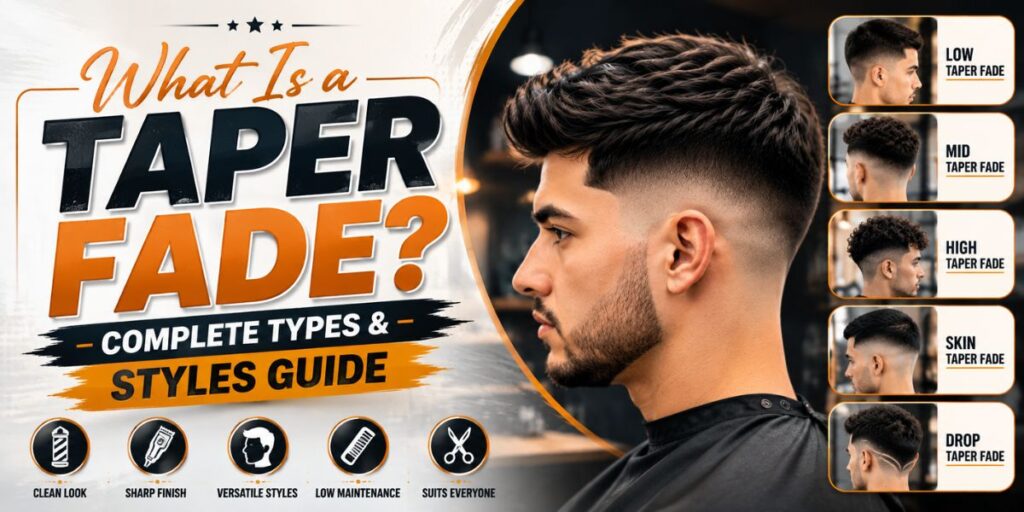
You’ve seen it on your favorite actor. You’ve seen it on the guy at the gym who somehow always looks put together. Now you want to know what it actually is before you sit in the barber’s chair and mumble something vague.
A taper fade haircut is one of the most requested cuts in barbershops today, and for good reason. It’s clean, it’s flexible, and it works with almost any face shape or hair texture. This guide breaks down everything, from the basics to the small details your barber wishes every client understood.
What Is a Taper Fade Haircut?

A taper fade haircut blends longer hair on top into shorter, closely trimmed sides and back. The hair doesn’t just get shorter, it fades. Think of it as a gradual hair transition, moving from thick length at the crown down to skin or near skin at the base.
This style sits at the crossroads of two techniques. One shortens hair gradually along the sides, the other blends length into near invisible skin. Together, they create that sharp, polished look barbers call blended sides.
People love it because it’s low maintenance compared to a full buzz, yet sharper looking than a basic trim. It photographs well, it grows out cleanly, and it suits everything from office jobs to weekend plans.
What Is a Taper Haircut?

A classic taper haircut is simpler than a fade. The sides get shorter as they move down, but there’s no dramatic skin exposure. It’s subtle, it’s safe, and it’s the cut your dad probably got in the nineties, minus the awkward part.
Tapers keep some length around the ears and neckline. There’s no harsh line, just a soft hair length transition that looks neat without screaming “I just got a haircut.”
Compare that to a fade, and you’ll notice the fade goes further. It pushes the fade line closer to the skin, sometimes all the way there. A taper stays modest. A fade gets bold.
How a Taper Fade Works
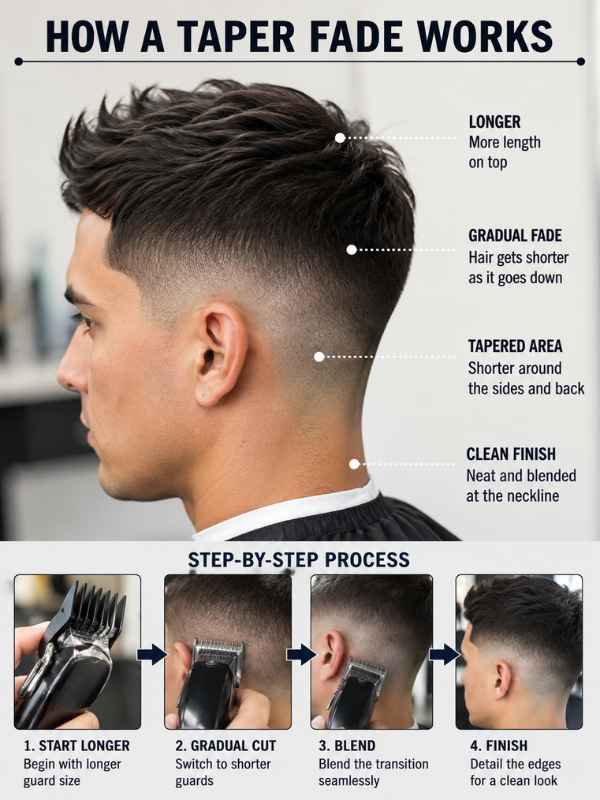
Barbers use clippers with different guard sizes, moving from longer guards up top to shorter ones near the hairline. This is the taper fade clipper technique, and it’s honestly more art than science.
The trick is blending. Nobody wants visible lines where one length stops and another starts. A skilled barber works the clippers in circular or flicking motions, softening every edge until the transition looks seamless.
Here’s what makes it tricky at home: rushing it. Good hair blending takes patience, several passes, and a steady hand. Skip a step and you’ll end up with stripes instead of a smooth gradient.
Taper Fade for Different Hair Types
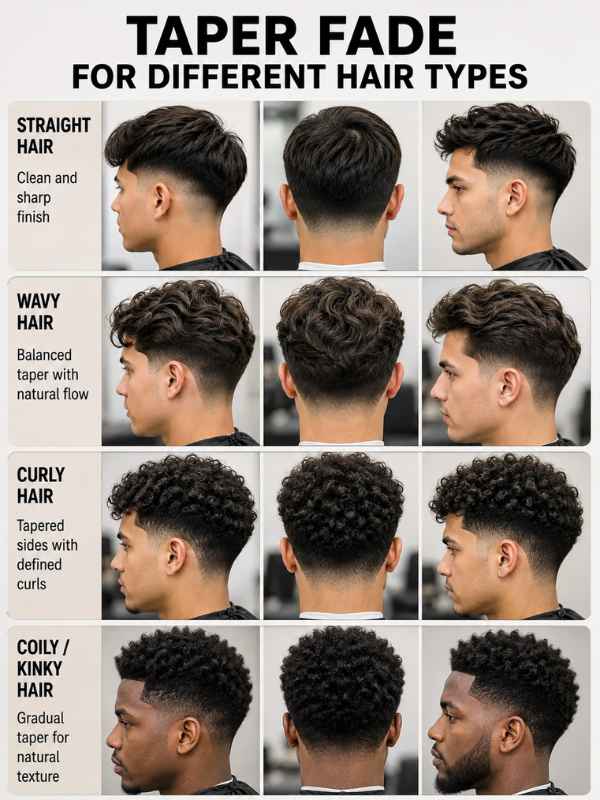
Not all hair behaves the same way under clippers, and that’s worth knowing before you ask for a specific style. Hair texture changes how the fade sits, how long it lasts, and how it should be maintained day to day.
Your barber should always look at your hair type first. Skipping that step is how people end up with a cut that looked great in a photo but flops on their own head.
Taper Fade for Straight Hair
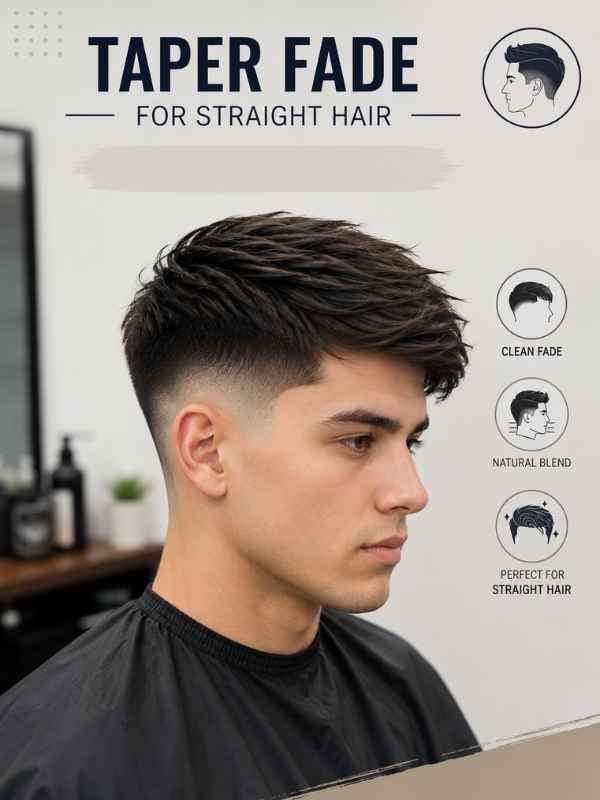
Taper fade straight hair cuts tend to look the cleanest right out of the chair. Straight strands lie flat, so the fade line shows up crisp and easy to spot.
The downside? Regrowth shows fast. You’ll notice the fade “growing out” within a couple weeks since there’s no natural volume to hide it.
Taper Fade for Curly Hair
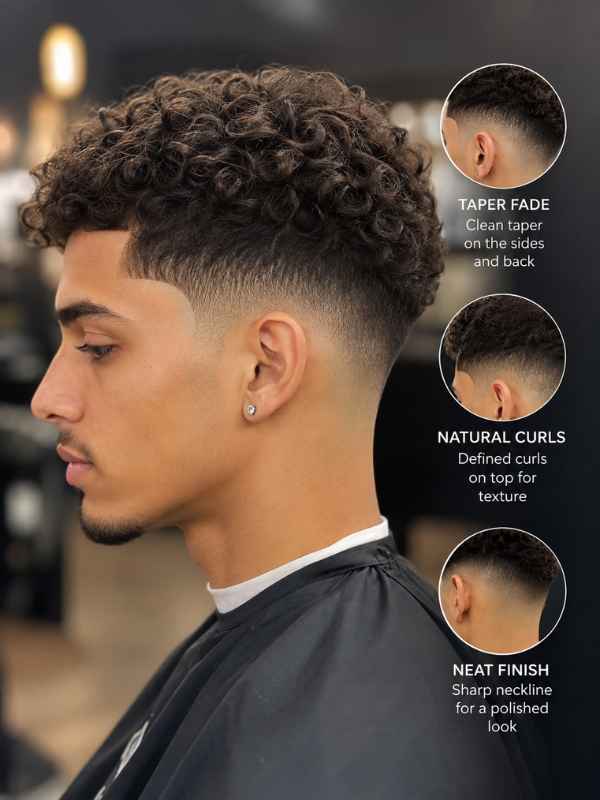
Taper fade curly hair styles need a bit more shaping since curls add volume on top. Barbers often leave extra length up top to let the curl pattern breathe.
Curly and taper fade coily hair types also fade differently. The curl shrinkage can make lengths look shorter than they are, so measuring twice before cutting matters here.
Taper Fade for Black Hair
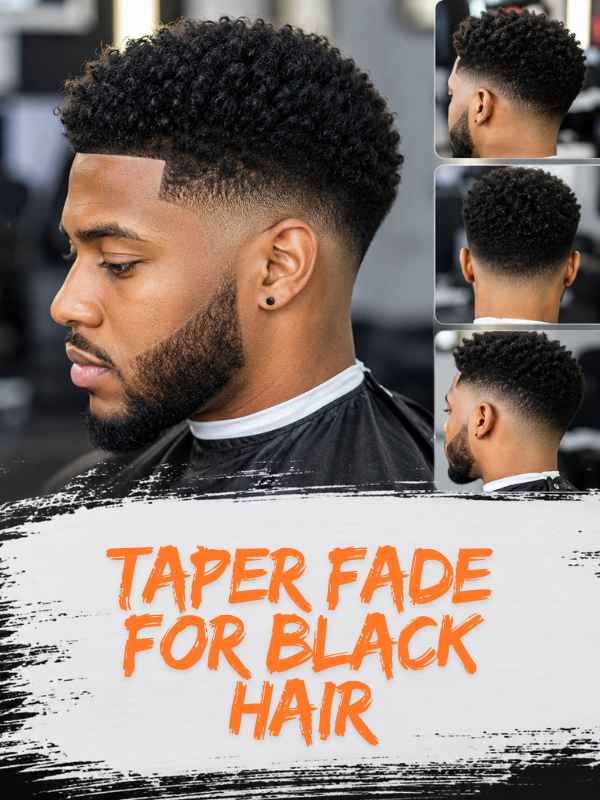
This is where skin taper fade styles genuinely shine. Coily and thick textures hold shape beautifully, and the contrast between tight coils on top and a smooth fade below looks sharp.
Many black hairstyles combine this cut with waves, twists, or an afro top, all of which we’ll cover further down.
Taper vs Fade: What’s the Difference?
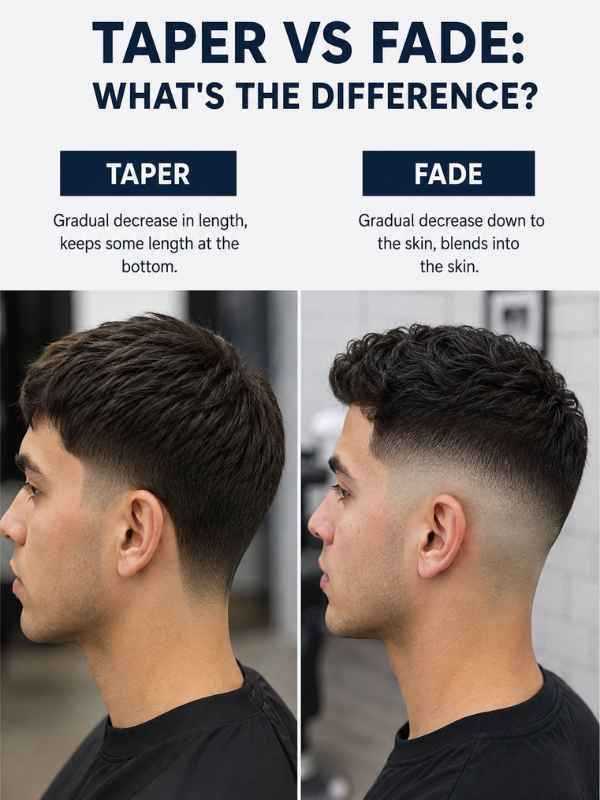
People mix these terms up constantly, and honestly, it’s understandable. Both involve shorter sides. Both use clippers. But they’re not interchangeable.
Taper vs Fade
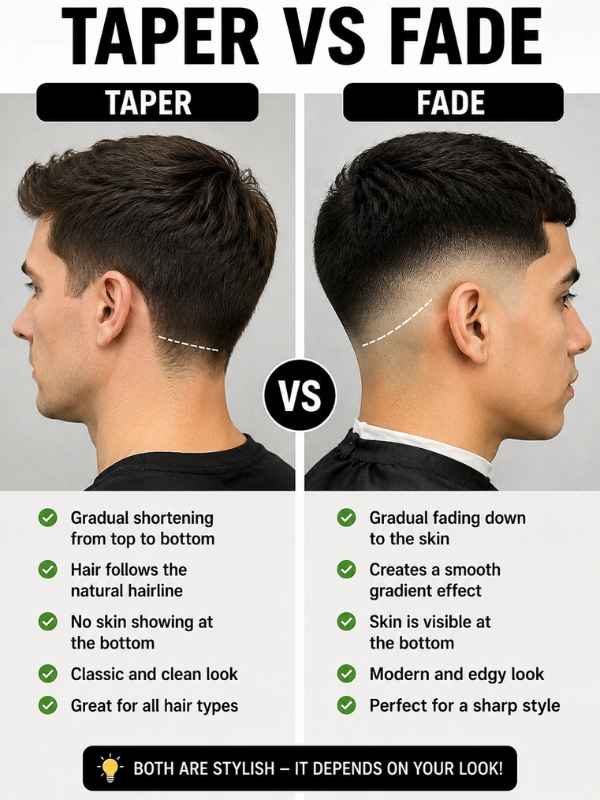
A taper keeps some length no matter how short it gets. A fade pushes toward skin, at least somewhere on the head. That’s the core difference between taper vs fade confusion once and for all.
Think of taper as “gradual shortening” and fade as “gradual disappearing.” One softens, the other erases.
Taper Fade vs Skin Fade

A taper fade vs drop fade or skin fade comparison comes down to how far the blend goes. A skin fade exposes scalp, often high up near the temple. A taper fade blends gradually but usually stops before reaching full skin exposure at the top sections.
Some folks want the skin fade look but with a softer landing near the ears. That’s exactly what a taper fade delivers, best of both without going full buzzed at the base.
Types of Taper Fade
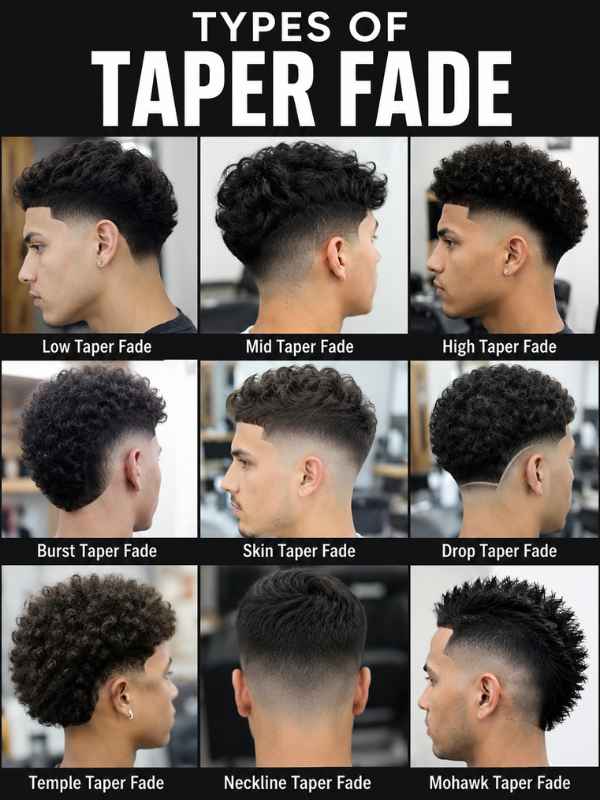
Not every taper fade looks the same, and where the fade starts changes the entire vibe of the cut. Here’s a breakdown of the major taper fade types.
- Low taper fade: starts near the ears, subtle and office friendly
- Mid taper fade: starts around temple level, balanced and versatile
- High taper fade: starts higher on the head, bold and modern
- Burst taper fade: curves around the ear in a semicircle shape
Low Taper Fade
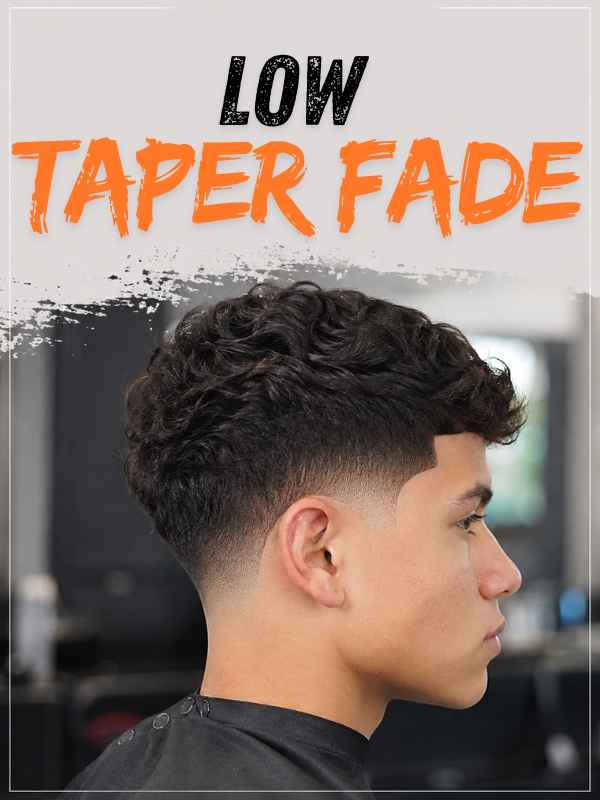
The low taper fade haircut keeps things understated. The fade begins just above the ears, leaving most of the head fuller looking. It’s the go to pick for formal settings, interviews, or anyone who wants sharp without shouting about it.
This is arguably the most versatile of the bunch. It suits thick hair, thin hair, straight or curly, without much fuss.
Mid Taper Fade
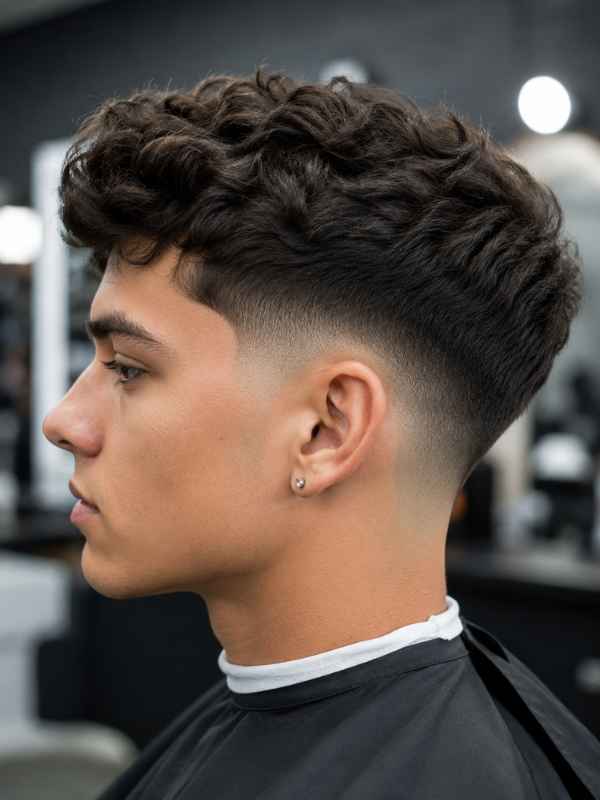
The mid taper fade haircut sits right in the middle, literally. The fade starts around the temple area, giving a bit more contrast without going extreme.
It’s the crowd pleaser. Not too safe, not too loud. If you’re unsure which type to ask for, this is a solid default.
High Taper Fade
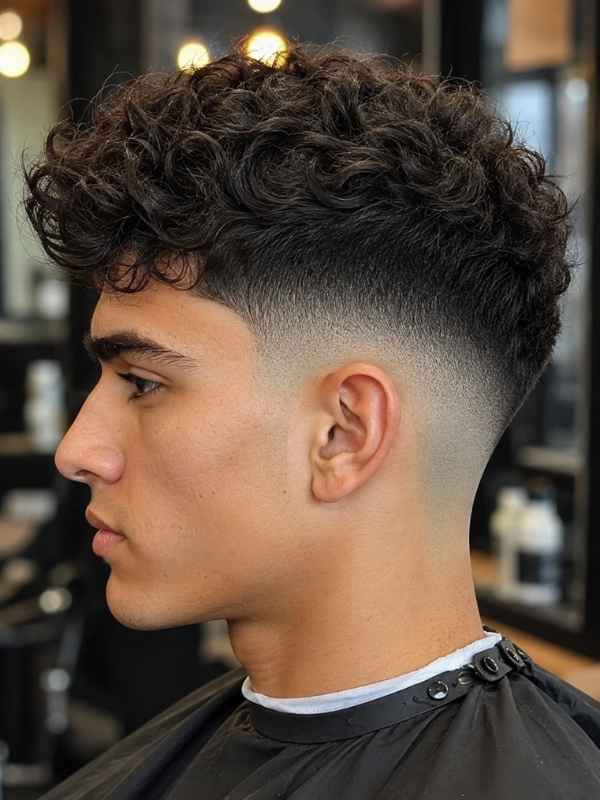
Want people to notice? The high taper fade haircut starts near the top of the head, creating a dramatic contrast between long top hair and short sides. It pairs well with textured or spiky top styles.
This one takes more upkeep since the fade grows out visibly within two to three weeks.
Burst Taper Fade
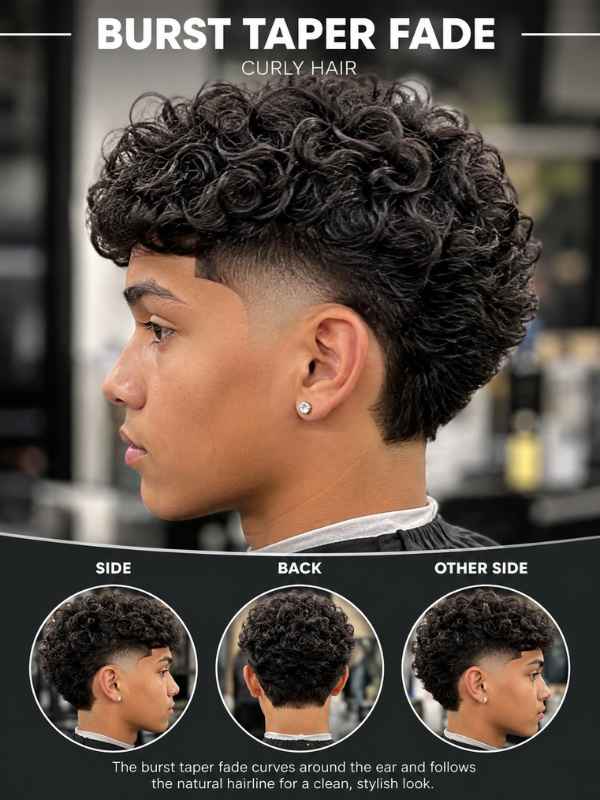
The burst fade haircut curves around the ear instead of running in a straight line. It’s a favorite for guys who want something a little different from the standard silhouette, often paired with longer top hair or a mullet.
Popular Taper Fade Styles
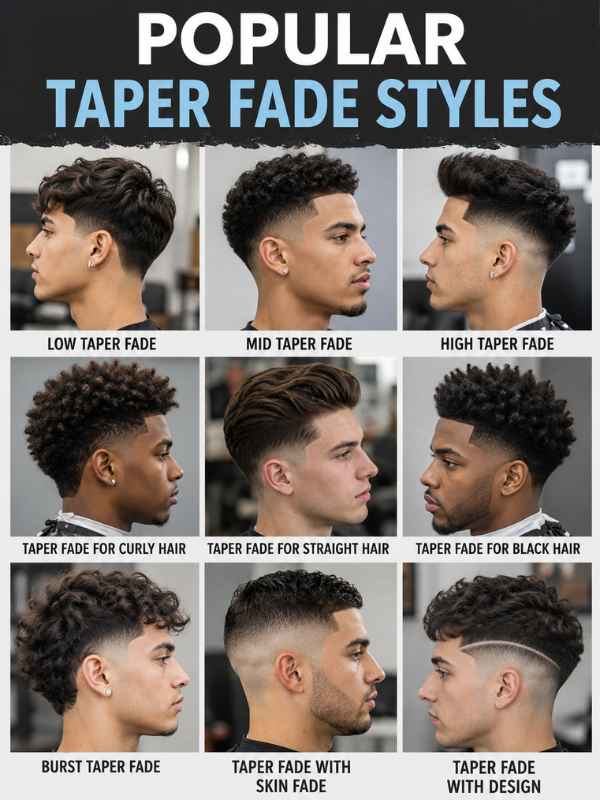
Once you’ve picked your fade height, the next question is what to do with the top. Here are a few combinations that keep showing up in barbershops right now.
Taper Fade with Mullet
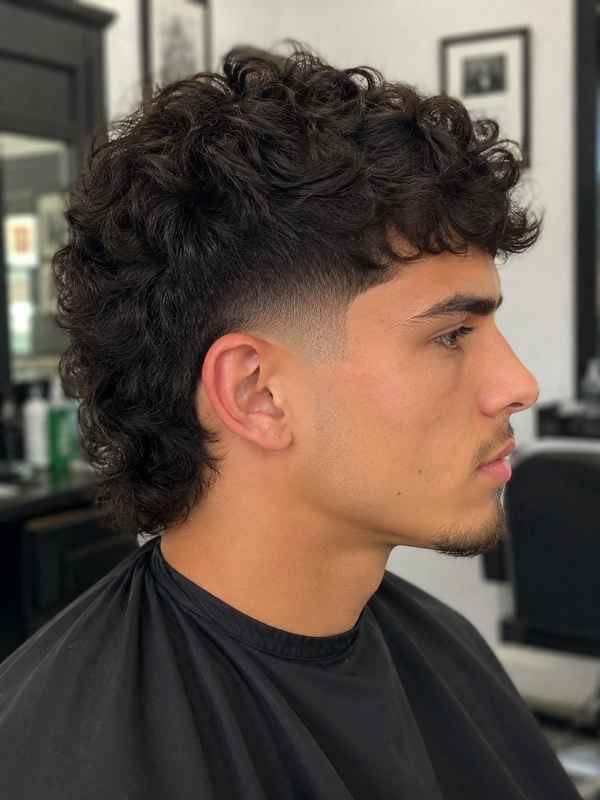
Yes, mullets are back, and pairing one with a taper fade softens the whole look. The sides stay clean while the back keeps some length, giving a modern spin on a throwback style.
Taper Fade with Afro
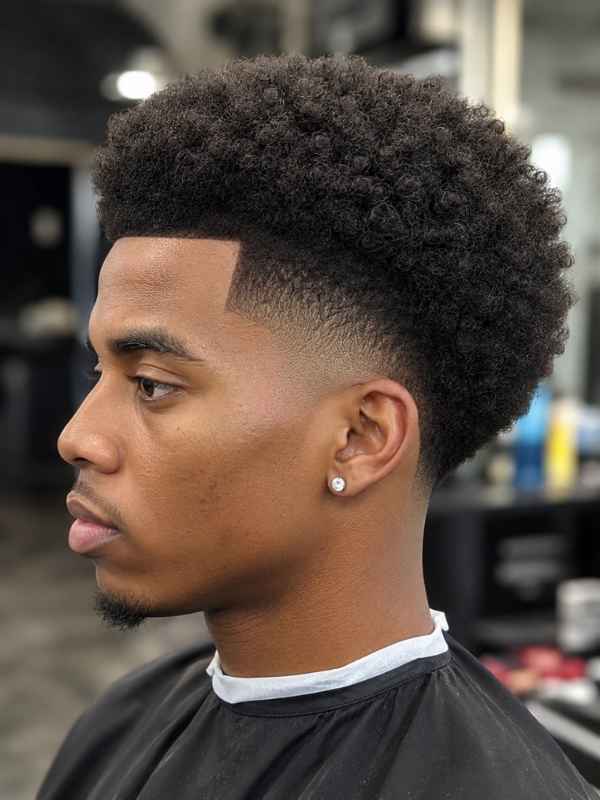
For guys with taper fade coily hair, keeping an afro on top while fading the sides creates serious contrast. It’s bold, it’s textured, and it photographs incredibly well.
Blowout Taper Fade
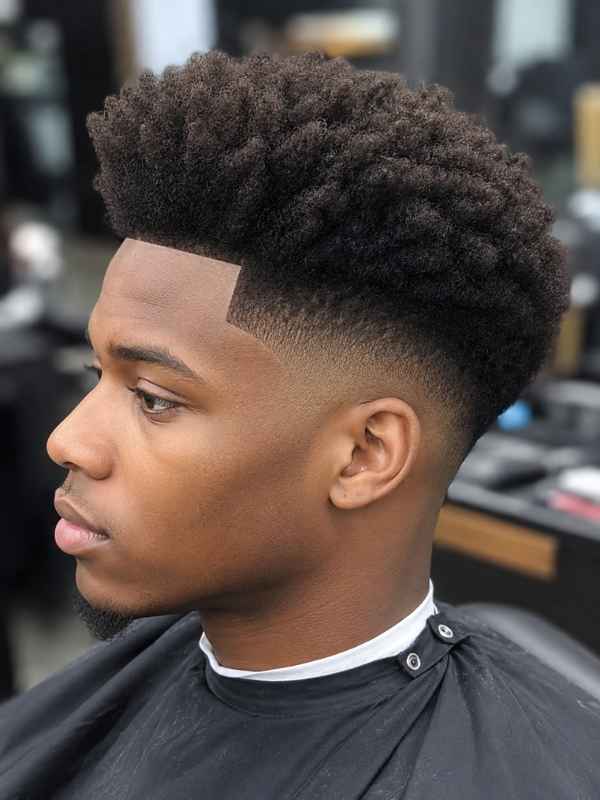
The blowout takes the top section and rounds it outward, almost like a soft afro shape, while the sides taper down sharply. It’s a favorite among curly haired guys who want volume without losing that clean tapered sides finish.
How to Get a Taper Fade Haircut
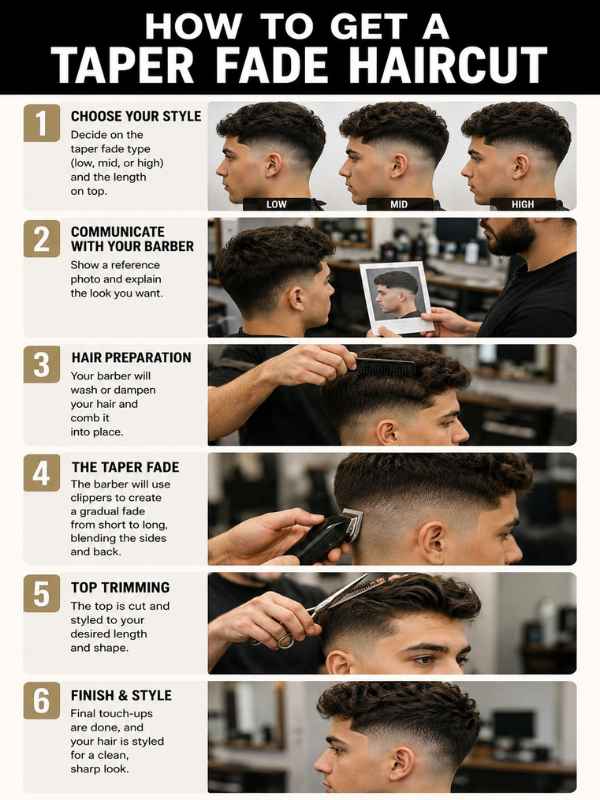
Knowing what you want is half the battle. Communicating it to your barber, or pulling it off yourself, is the other half.
At the Barber Shop
Bring a photo. Seriously, just bring one. Verbal descriptions get lost in translation more often than you’d think, and a picture removes all the guesswork.
Mention your hair type too. A good barber will already ask, but volunteering that info speeds things along and helps them plan the clipper fade approach before they even pick up the trimmer.
What to Ask Your Barber
Here’s a simple checklist for your next appointment:
- Specify low, mid, or high for the fade line
- Mention if you want a temple fade or straight across
- Ask about neckline taper and sideburn taper shaping
- Bring reference photos, even rough ones help
Being specific about the taper fade haircut cost upfront also avoids awkward surprises at checkout, since pricing varies by shop and city.
DIY Taper Fade
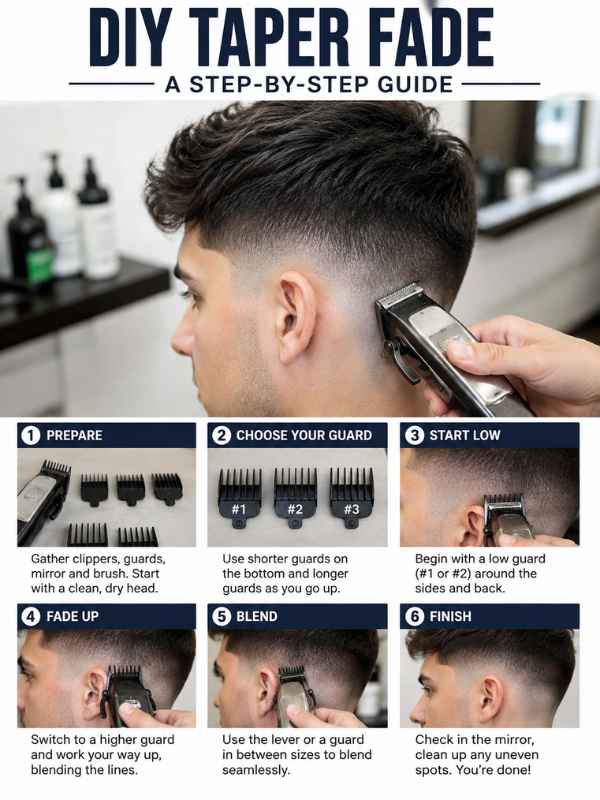
Trying this at home? It’s doable, but it takes practice, patience, and honestly, a bit of nerve for your first attempt.
Tools Required
You’ll need clippers with multiple guard attachments, a trimmer for edging, a comb, and a mirror setup that lets you see the back and sides clearly.
Basic Steps
Start with the longest guard on top, then work down the sides in stages, switching to shorter guards as you move toward the neckline. Blend between each stage using light, upward flicks rather than one straight pass.
Mistakes to Avoid
Rushing the blend is the biggest one. Visible lines happen when you skip guard sizes instead of stepping down gradually. Also, don’t forget the back, it’s easy to focus on the sides and leave the back looking patchy.
Choosing the Right Taper Fade
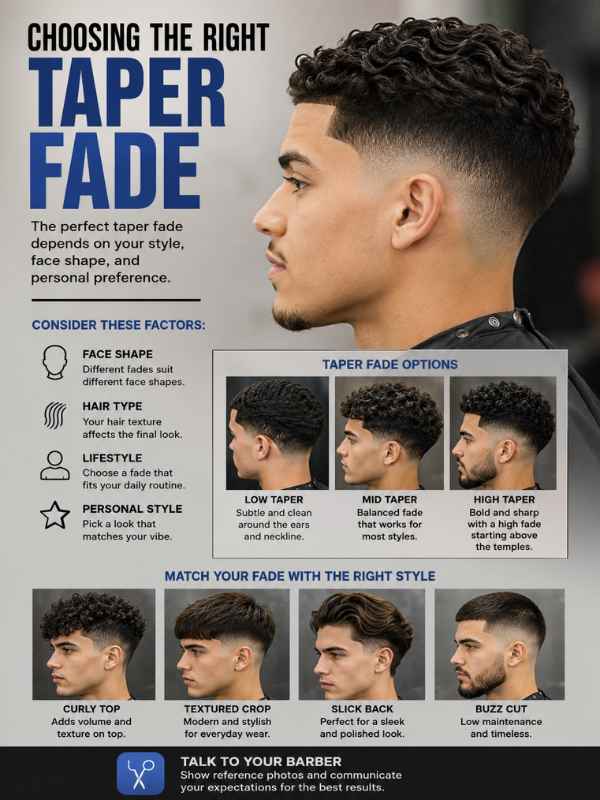
With so many combinations, picking the right one can feel overwhelming. Here’s how to narrow it down.
Best Taper Fade for Your Hair Type
Thicker hair handles higher fades well since there’s more contrast to work with. Taper fade for thin hair usually looks best with a lower fade, since thin strands can look sparse against a dramatic skin exposure.
Choosing Between Low, Mid, and High Taper
If you’re new to fades, start low. It’s forgiving, grows out gracefully, and won’t feel jarring if you decide the style isn’t for you. Once you’re comfortable, work your way up to mid or high.
Taper Fade Based on Your Hairstyle
Match the fade to your face shape and top style. Round faces often benefit from higher fades that add visual length, while square jaws pair nicely with almost any fade height thanks to strong natural structure.
Maintenance and Styling Tips
A fresh fade looks incredible. Keeping it that way takes a bit of routine.
How Often to Get a Taper Fade Trimmed
Most guys need a touch up every two to three weeks. Taper fade maintenance depends on how fast your hair grows and how sharp you want the fade line to stay.
Washing and Hair Care
Wash regularly but don’t overdo it, stripping natural oils dries out both scalp and hair. A gentle shampoo two to three times weekly keeps things balanced without drying out shorter sections.
Maintaining Sideburns and Neckline
Sharp sideburns and a clean neckline make the difference between a fade that looks fresh and one that looks a week overdue. A trimmer at home can extend the life of your cut between barber visits.
Recommended Styling Products
Matte clay works well for textured tops, while pomade suits a slicker finish. Whatever you choose, a little goes further than you’d expect on shorter styles.
Everyday Taper Fade Styling Routine
Mornings don’t need to be complicated. Damp your top section, apply a small amount of product, and shape with your fingers or a comb depending on the look you’re after.
For curly or coily top styles, a light curl cream keeps definition without weighing hair down. Straight styles usually just need a quick comb through and a dab of matte paste for texture.
Give it thirty seconds, not ten minutes. That’s the whole appeal of this modern men’s hairstyle, quick to maintain, sharp all day.
Conclusion
A taper fade haircut isn’t just a trend, it’s a genuinely practical style that adapts to different hair types, face shapes, and personal tastes. Whether you go low and subtle or high and bold, the key is clear communication with your professional haircut provider and a bit of regular upkeep.
Now that you know the difference between a taper and a fade, the types available, and how to maintain one, you’re ready to walk into your next appointment and actually know what you’re asking for. That alone puts you ahead of most people in that chair.
